Guide to cleaning and maintaining IKEA pots and pans
Bought yourself a new pot or pan and already noticed that it's not working the same as on the first day? Don't worry – it happens more than you think. A lot of the time, the only thing you need to know is how to properly look after them so that they last longer and help you cook better. Ready to cook? Read on!
What material is your pot or pan made from?
Each material requires specific care so that it lasts longer and works better:
Sol‑Gel non-stick coating | Stainless steel | Carbon steel | Cast iron
Pots and pans with sol-gel non-stick coating
Pots and pans with sol-gel non-stick coating help stop food sticking and allow you to cook with less oil. To make the non-stick last longer:
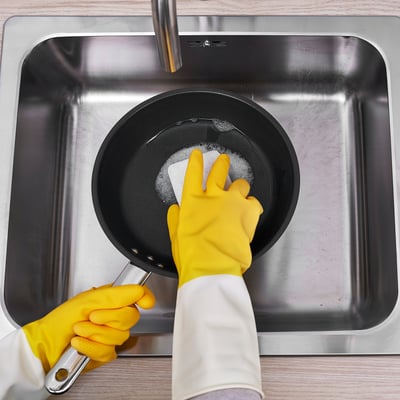
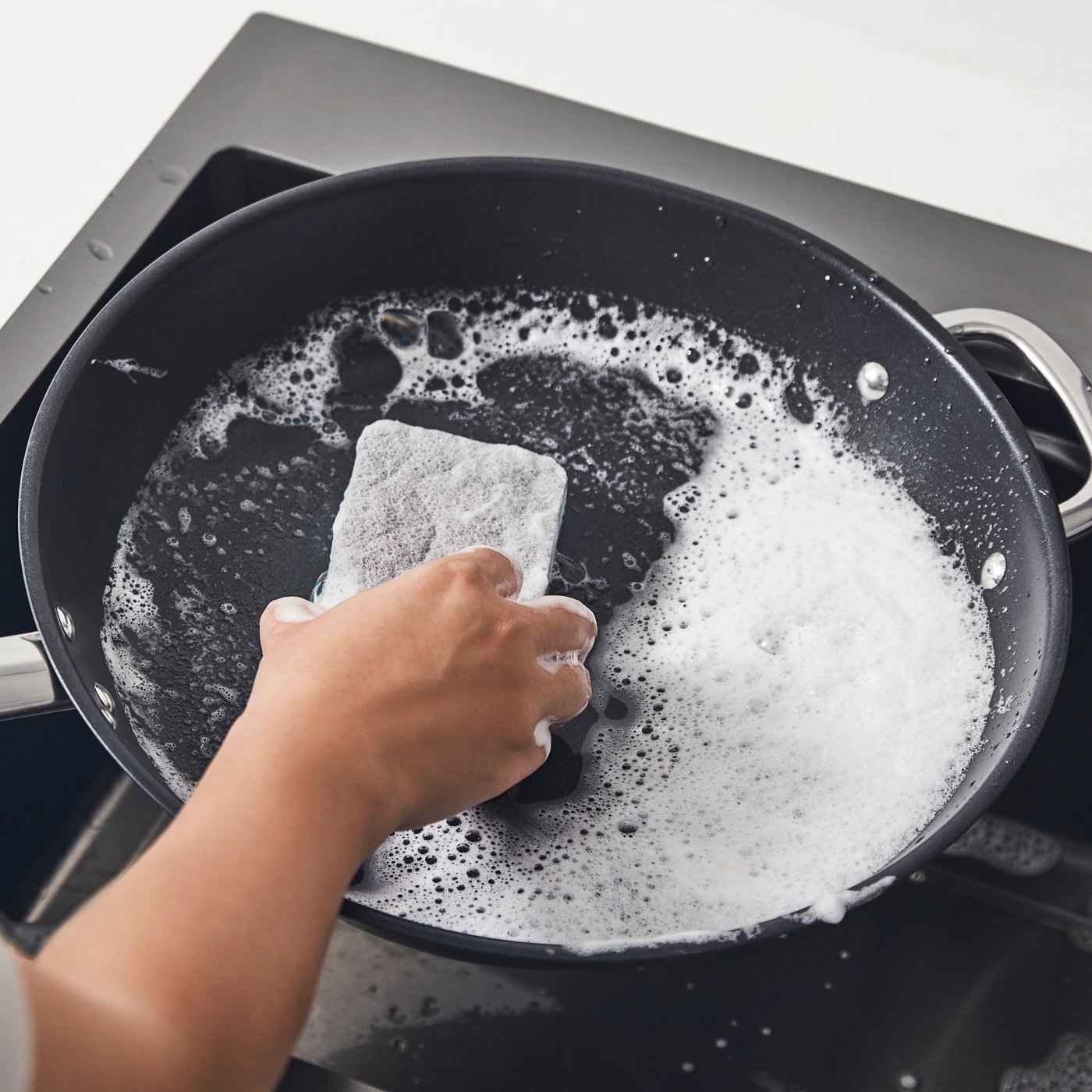
- Always wash them by hand, with warm water, detergent and a soft sponge.
- Don't use the dishwasher or metal scourers.
- Always use wooden or silicone utensils, never metal ones.
- Let the pan cool before you wash it, to avoid damaging the coating.
- Got burnt-on food that's impossible to remove? Fill the pan with water and add four or five tablespoons of detergent. Put it on the hob and bring it to a boil for a few minutes. Stir and carefully scrape with a wooden or plastic spatula until the food unsticks. Then, wash it as normal, give it good dry and grease it with a layer of oil before putting it away.

Pots and pans with sol-gel non-stick coating
Pots and pans with sol-gel non-stick coating help stop food sticking and allow you to cook with less oil. To make the non-stick last longer:
- Always wash them by hand, with warm water, detergent and a soft sponge.
- Don't use the dishwasher or metal scourers.
- Always use wooden or silicone utensils, never metal ones.
- Let the pan cool before you wash it, to avoid damaging the coating.
- Got burnt-on food that's impossible to remove? Fill the pan with water and add four or five tablespoons of detergent. Put it on the hob and bring it to a boil for a few minutes. Stir and carefully scrape with a wooden or plastic spatula until the food unsticks. Then, wash it as normal, give it good dry and grease it with a layer of oil before putting it away.
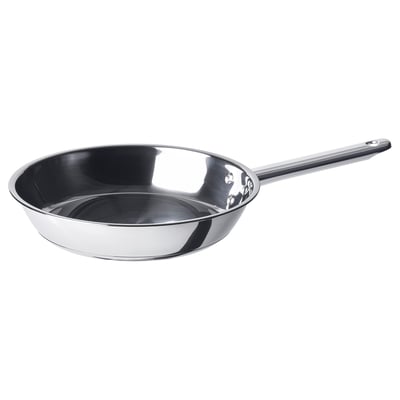
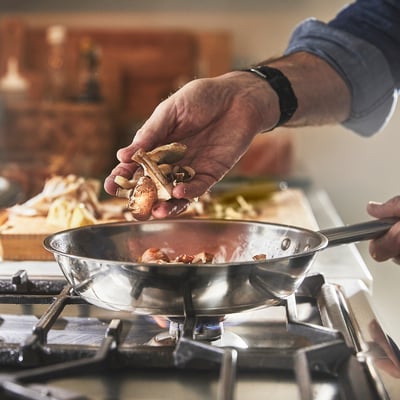
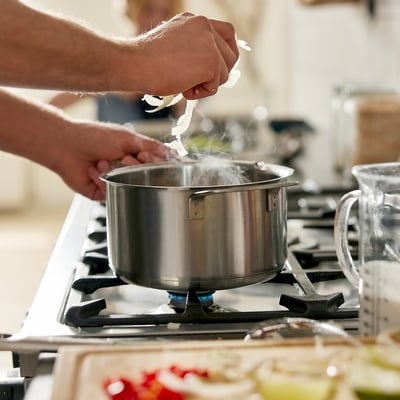
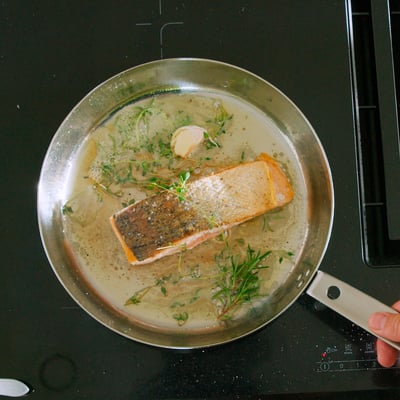
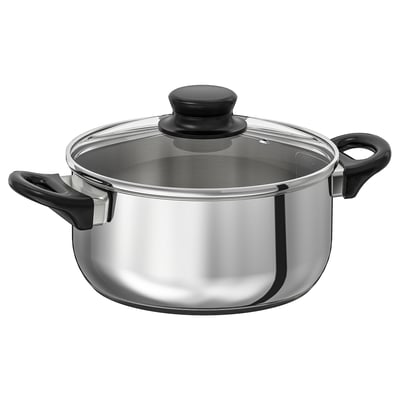
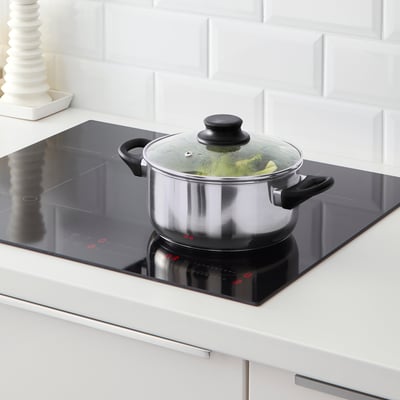
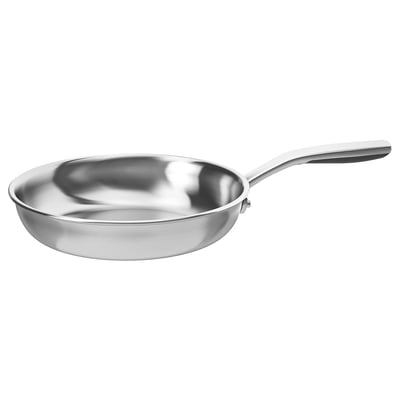
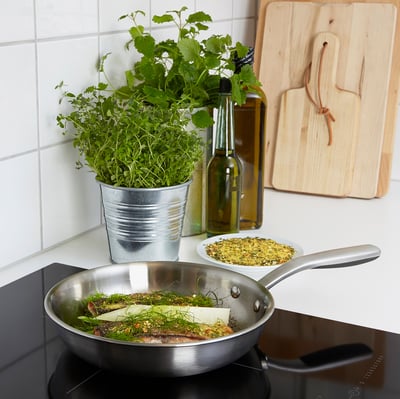
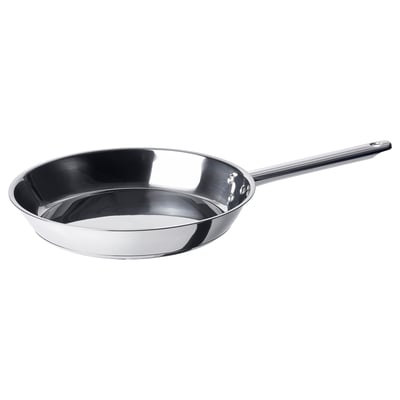
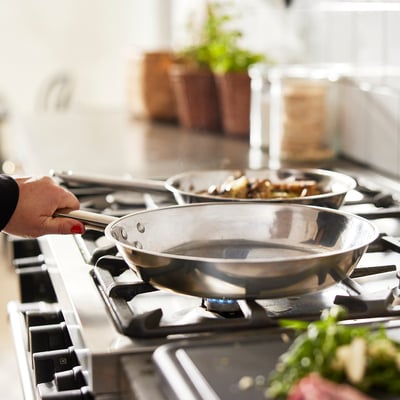
Stainless steel pots and pans
- Unless they're non-stick, you can put them in the dishwasher.
- Don't use steel wool or abrasive products, as they can scratch the surface. Always use a soft sponge and detergent.
- If the food is still sticking, add water and a little detergent, put the pot or pan on the hob and bring it to a boil. Then, wash it as normal.
- To avoid stains from limescale, salted water or acidic foods like lemon, properly dry the item straight after washing it. While you're cooking, we'd recommended adding them only once the water is already boiling.
- IKEA tip: If you can't get rid of stains, boil some water with one teaspoon of vinegar per litre. That'll bring the original shine back.
Stainless steel pots and pans
- Unless they're non-stick, you can put them in the dishwasher.
- Don't use steel wool or abrasive products, as they can scratch the surface. Always use a soft sponge and detergent.
- If the food is still sticking, add water and a little detergent, put the pot or pan on the hob and bring it to a boil. Then, wash it as normal.
- To avoid stains from limescale, salted water or acidic foods like lemon, properly dry the item straight after washing it. While you're cooking, we'd recommended adding them only once the water is already boiling.
- IKEA tip: If you can't get rid of stains, boil some water with one teaspoon of vinegar per litre. That'll bring the original shine back.


Cast iron pots and pans
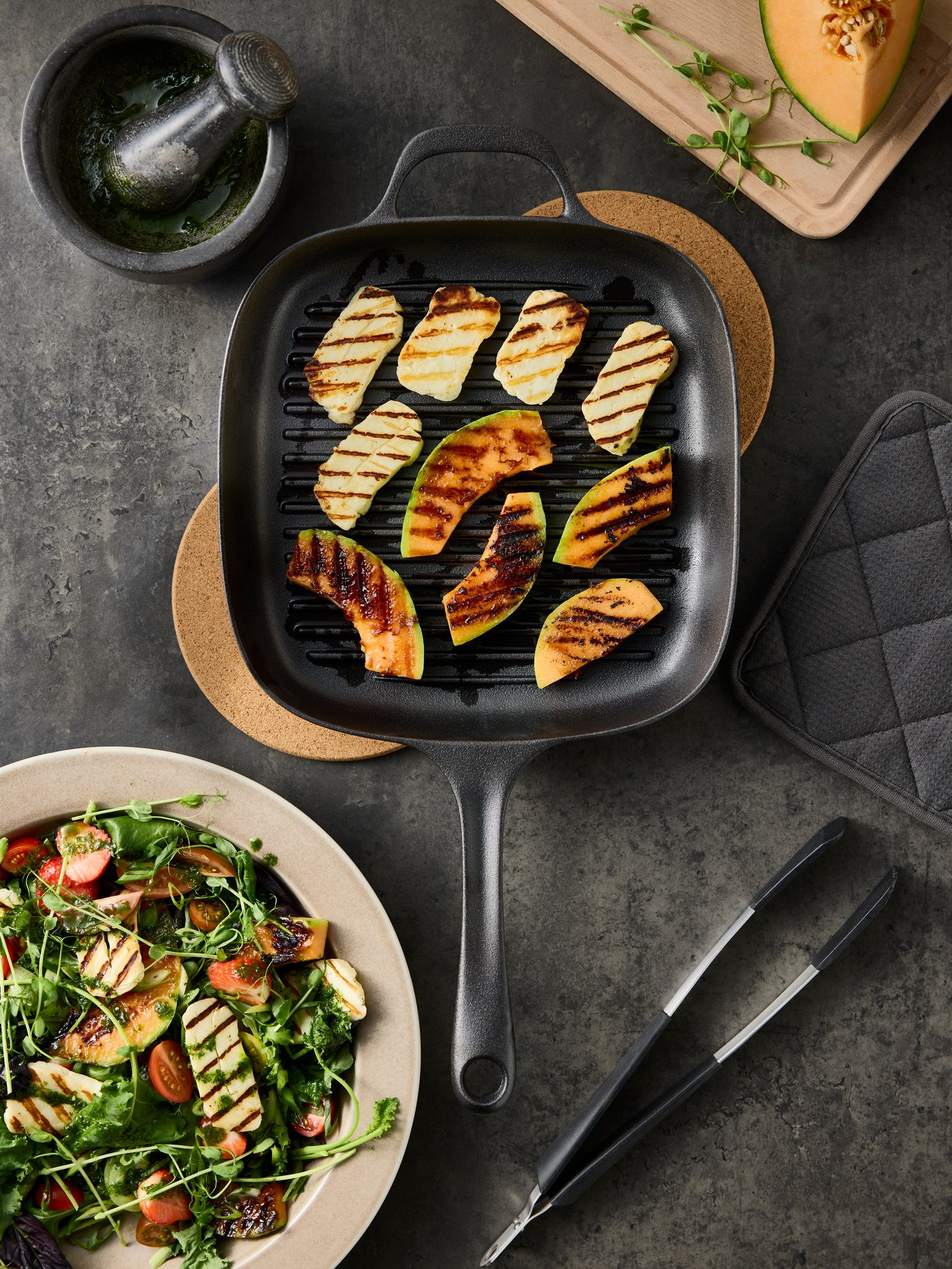
Cast iron is known for improving with time and use. Cooking grease and oil form a natural non-stick coating that protects the pan and makes it work better with use.
- Don't put it in the dishwasher. You can wash it with a hard sponge or steel wool – just make sure to only use a little detergent and rinse it off properly.
- If your pan doesn't have a shiny or enamelled coating (see here for how to season a pan), apply a thin layer of oil on the inside before using it.
- Each time you wash it, properly dry it and, if you want to, put a little oil on the inside. That'll stop rust forming and you'll improve the non-stick
- IKEA tip: sprinkle some salt in the pan and clean it with kitchen roll or a cloth to soak up any grease so it's ready for next time.
Cast iron pots and pans
Cast iron is known for improving with time and use. Cooking grease and oil form a natural non-stick coating that protects the pan and makes it work better with use.
- Don't put it in the dishwasher. You can wash it with a hard sponge or steel wool – just make sure to only use a little detergent and rinse it off properly.
- If your pan doesn't have a shiny or enamelled coating (see here for how to season a pan), apply a thin layer of oil on the inside before using it.
- Each time you wash it, properly dry it and, if you want to, put a little oil on the inside. That'll stop rust forming and you'll improve the non-stick
- IKEA tip: sprinkle some salt in the pan and clean it with kitchen roll or a cloth to soak up any grease so it's ready for next time.
Carbon steel pots and pans
Carbon steel is durable and lightweight, but it needs a bit of love so it can last years:
- always wash it by hand, with hot water and a soft sponge.
- Don't use the dishwasher or strong soap, as they can remove the protective layer. Properly dry it as soon as you wash it and, if you can, apply a thin layer of oil to the inside.
- If food is still stuck to it, sprinkle on some coarse salt and rub it with kitchen roll or a cloth.
- Always keep your pots and pans fully dry and apply a fine layer of oil to stop them from rusting.
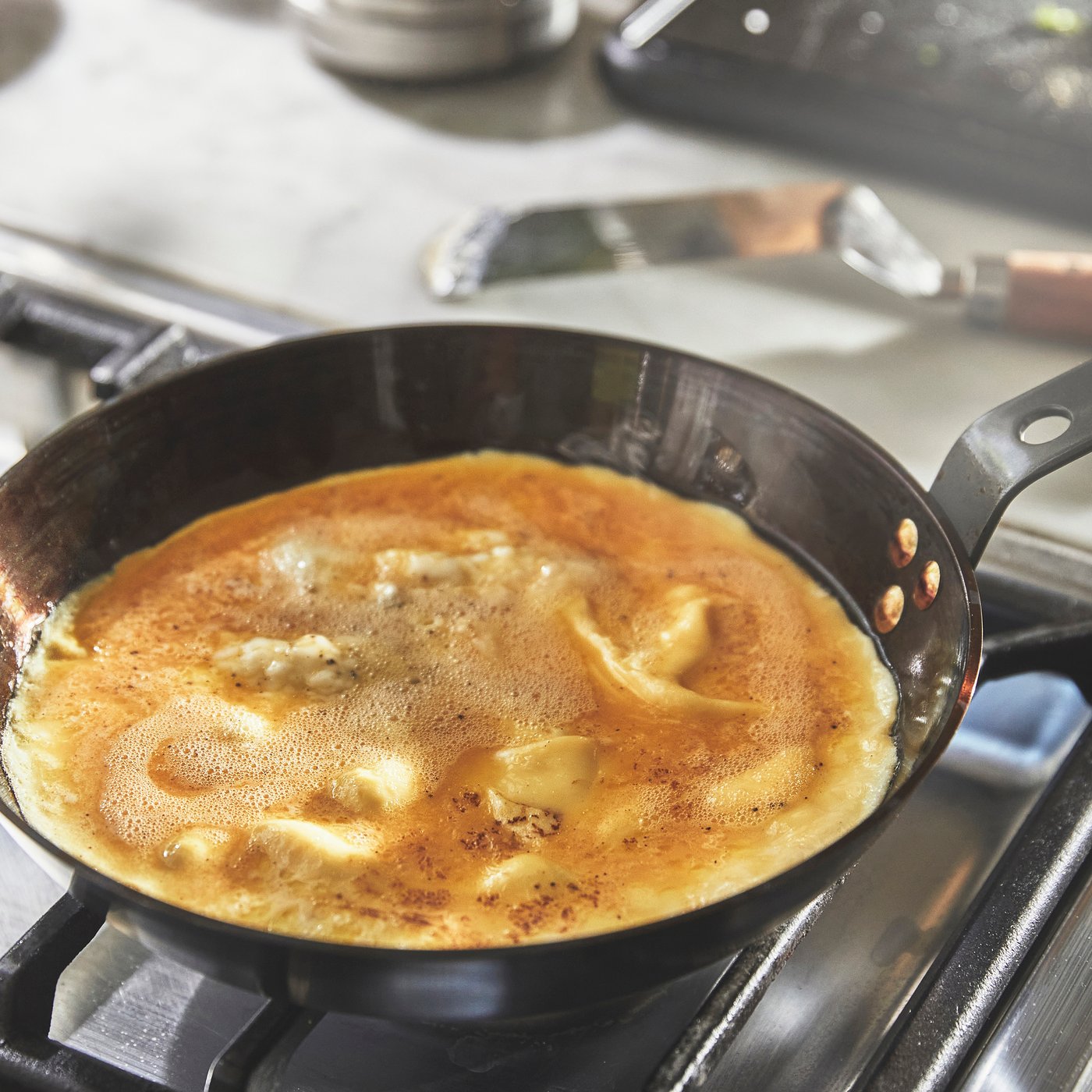
Carbon steel pots and pans
Carbon steel is durable and lightweight, but it needs a bit of love so it can last years:
- always wash it by hand, with hot water and a soft sponge.
- Don't use the dishwasher or strong soap, as they can remove the protective layer. Properly dry it as soon as you wash it and, if you can, apply a thin layer of oil to the inside.
- If food is still stuck to it, sprinkle on some coarse salt and rub it with kitchen roll or a cloth.
- Always keep your pots and pans fully dry and apply a fine layer of oil to stop them from rusting.