How to wash shower curtains: a guide to a fresh-smelling bathroom
Imagine your shower curtain is a gateway to another world, where pure well-being awaits. But what if it’s dirty? Or how about preventing it from getting dirty in the first place? This guide will teach you how to properly wash and care for your shower curtain, making cleaning a breeze.

Why is it so important to wash and clean shower curtains?
In everyday life, shower curtains quickly become covered in moisture, soap scum and limescale. Without regular cleaning, stains, mould or mildew can appear. Not only does a clean shower curtain look more inviting, it is also more hygienic and lasts longer.
- Enjoy your product for longer by cleaning it regularly.
- Prevent stubborn stains, mould, and discolouration.
- Keep your bathroom looking inviting.
How often should you wash the shower curtain? As often as necessary. Take a quick look when you’re cleaning the bathroom – if it's dirty, it’s time to wash it. As a rule of thumb, this should be done at least twice a year, or ideally once a month.
Why is it so important to wash and clean shower curtains?
In everyday life, shower curtains quickly become covered in moisture, soap scum and limescale. Without regular cleaning, stains, mould or mildew can appear. Not only does a clean shower curtain look more inviting, it is also more hygienic and lasts longer.
- Enjoy your product for longer by cleaning it regularly.
- Prevent stubborn stains, mould, and discolouration.
- Keep your bathroom looking inviting.
How often should you wash the shower curtain? As often as necessary. Take a quick look when you’re cleaning the bathroom – if it's dirty, it’s time to wash it. As a rule of thumb, this should be done at least twice a year, or ideally once a month.
Fabric care: How to care for fabric, plastic and polyester shower curtains
The care required for a shower curtain depends on the material. Whether it’s polyester, plastic or PVC, each material has its own characteristics to consider when it comes to maintenance and cleaning.
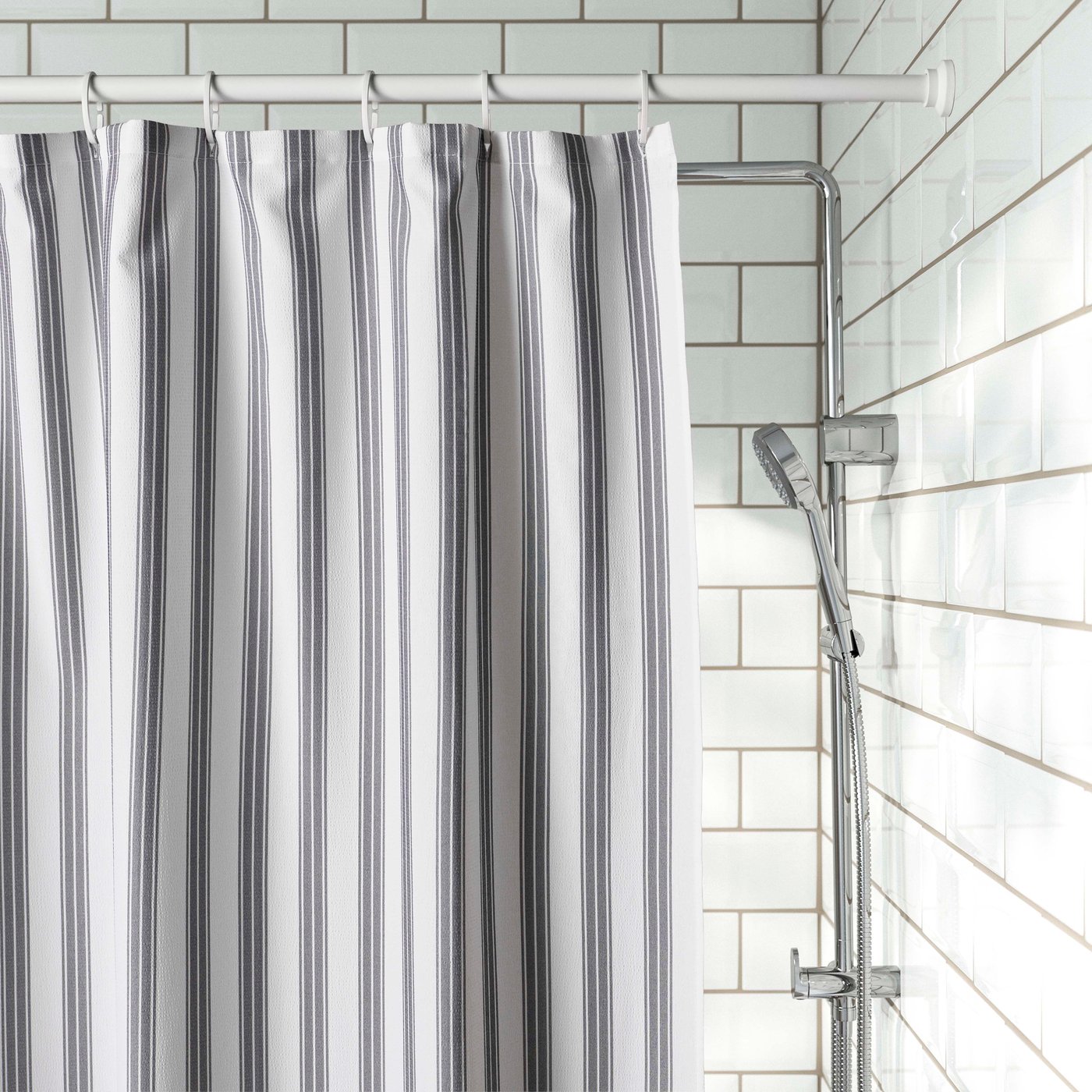
- Washing fabric shower curtains: This is usually straightforward in the washing machine, but you should always follow the care instructions.
- Washing plastic shower curtains: Gently hand wash PEVA/EVA, as machine washing can cause damage.
- Washing PVC shower curtains: Take care with high heat; it is better to use a mild detergent and lukewarm water.
- Washing polyester shower curtains: These are suitable for the washing machine and are resistant to everyday dirt.
- Washing shower curtains with fabric softener: This is not recommended for most shower curtains, but the product-specific care instructions will provide more information.
Fabric care: How to care for fabric, plastic and polyester shower curtains
The care required for a shower curtain depends on the material. Whether it’s polyester, plastic or PVC, each material has its own characteristics to consider when it comes to maintenance and cleaning.
- Washing fabric shower curtains: This is usually straightforward in the washing machine, but you should always follow the care instructions.
- Washing plastic shower curtains: Gently hand wash PEVA/EVA, as machine washing can cause damage.
- Washing PVC shower curtains: Take care with high heat; it is better to use a mild detergent and lukewarm water.
- Washing polyester shower curtains: These are suitable for the washing machine and are resistant to everyday dirt.
- Washing shower curtains with fabric softener: This is not recommended for most shower curtains, but the product-specific care instructions will provide more information.
A deep clean: an easy way to wash your shower curtain
Whether you want to wash your shower curtain in the washing machine or prefer to give it a quick hand wash, there are a few basic things you should bear in mind. Doing so will help to keep your curtain hygienically clean and looking well-maintained for a long time.
- Machine wash: Always check the care label first. A gentle wash cycle is usually suitable for shower curtains. Avoid using fabric softener.
- Tip: Wash one or two towels at the same time to help ensure the shower curtain is thoroughly cleaned.
- What temperature should you wash your shower curtain at? The ideal temperature varies depending on the material: 30°C for delicate fabrics, 40°C for sturdy fabrics, and 60°C only if explicitly permitted on the care label.
- Hang up after washing and allow to dry thoroughly.

A deep clean: an easy way to wash your shower curtain
Whether you want to wash your shower curtain in the washing machine or prefer to give it a quick hand wash, there are a few basic things you should bear in mind. Doing so will help to keep your curtain hygienically clean and looking well-maintained for a long time.
- Machine wash: Always check the care label first. A gentle wash cycle is usually suitable for shower curtains. Avoid using fabric softener.
- Tip: Wash one or two towels at the same time to help ensure the shower curtain is thoroughly cleaned.
- What temperature should you wash your shower curtain at? The ideal temperature varies depending on the material: 30°C for delicate fabrics, 40°C for sturdy fabrics, and 60°C only if explicitly permitted on the care label.
- Hang up after washing and allow to dry thoroughly.
Clean shower curtain: remove mould, limescale, and mildew stains
In damp bathroom environments in particular, stains such as mould, limescale and water marks can be particularly annoying. However, if you treat them properly, they can usually be removed quite easily.
- How to remove mould from a shower curtain: Vinegar solutions or specialised cleaners work quickly.
- Removing limescale from shower curtains: Citric acid or household remedies such as vinegar can dissolve stubborn limescale.
- Removing mildew stains from shower curtains: Soak the curtain in salt water or treat it with a baking soda paste.
- Test all methods on an inconspicuous area first to avoid discolouration.
Home remedies, laundry additives and tips: How to clean shower curtains with vinegar and bicarbonate of soda.
In damp bathroom environments in particular, stains such as mould, limescale and water marks can be particularly annoying. However, if you treat them properly, they can usually be removed quite easily.
- How to remove mould from a shower curtain: Vinegar solutions or specialised cleaners work quickly.
- Removing limescale from a shower curtain: Citric acid or household remedies such as vinegar can dissolve stubborn limescale.
- Removing mildew stains from a shower curtain: Soak the curtain in salt water or treat it with a baking soda paste.
- Test all methods on an inconspicuous area first to avoid discolouration.
1. Cleaning a shower curtain with vinegar
Vinegar is an effective household remedy for removing dirt, limescale and light mould stains from shower curtains. These instructions are suitable for most fabric and plastic shower curtains (please follow the care instructions for your particular model).
Step-by-step guide:
- Mix one part vinegar with three parts lukewarm water.
- Remove the shower curtain and lay it flat on a level surface, such as the bath.
- Generously apply the vinegar solution over the entire curtain or directly onto any stains.
- Leave it to soak for 20–30 minutes to dissolve the limescale and dirt.
- Rinse the curtain thoroughly with clean water.
- Hang it up while it is still damp and leave it to dry completely. Open a window or switch on the bathroom extractor fan while doing so.
- Tip: For stubborn stains, repeat the process or add a little bicarbonate of soda.

1. Cleaning a shower curtain with vinegar
Vinegar is an effective household remedy for removing dirt, limescale and light mould stains from shower curtains. These instructions are suitable for most fabric and plastic shower curtains (please follow the care instructions for your particular model).
Step-by-step guide:
- Mix one part vinegar with three parts lukewarm water.
- Remove the shower curtain and lay it flat on a level surface, such as the bath.
- Generously apply the vinegar solution over the entire curtain or directly onto any stains.
- Leave it to soak for 20–30 minutes to dissolve the limescale and dirt.
- Rinse the curtain thoroughly with clean water.
- Hang it up while it is still damp and leave it to dry completely. Open a window or switch on the bathroom extractor fan while doing so.
- Tip: For stubborn stains, repeat the process or add a little bicarbonate of soda.
2. Cleaning a shower curtain with bicarbonate of soda
Bicarbonate of soda is an easy and gentle way to clean your shower curtain, especially if it has unpleasant odours or mould stains. This method is generally suitable for both fabric and plastic curtains, but please follow the care instructions for your particular curtain.
Step-by-step guide:
- Mix a paste using 2–3 tablespoons of bicarbonate of soda and a little water.
- Remove the shower curtain and lay it flat, for example in the bath. Apply the bicarbonate of soda paste to the dirty areas and rub in gently.
- Leave it to work for 30 minutes so that the bicarbonate of soda neutralises dirt and odours.
- Then rinse off with clean water.
- Hang the shower curtain back up while still damp and leave it to dry completely.
- Tip: For stubborn stains, you can repeat the treatment or add a little vinegar to the paste.
2. Cleaning a shower curtain with bicarbonate of soda
Bicarbonate of soda is an easy and gentle way to clean your shower curtain, especially if it has unpleasant odours or mould stains. This method is generally suitable for both fabric and plastic curtains, but please follow the care instructions for your particular curtain.
Step-by-step guide:
- Mix a paste using 2–3 tablespoons of bicarbonate of soda and a little water.
- Remove the shower curtain and lay it flat, for example in the bath. Apply the bicarbonate of soda paste to the dirty areas and rub in gently.
- Leave it to work for 30 minutes so that the bicarbonate of soda neutralises dirt and odours.
- Then rinse off with clean water.
- Hang the shower curtain back up while still damp and leave it to dry completely.
- Tip: For stubborn stains, you can repeat the treatment or add a little vinegar to the paste.
3. Washing a shower curtain with bicarbonate of soda
Baking powder is excellent for freshening up your shower curtain, restoring its whiteness, removing light stains, and eliminating unpleasant odours. This household remedy is a practical alternative to chemical cleaners, particularly for fabric and plastic curtains. Please follow the care instructions for your curtain.
Step-by-step guide:
- Mix two to three tablespoons of bicarbonate of soda with lukewarm water to form a spreadable paste.
- Take the curtain down and lay it flat in the bath or on a large surface.
- Apply the bicarbonate of soda paste directly to the stains or to the entire shower curtain and rub in gently.
- Leave to work for about 20 to 30 minutes to neutralise discolouration and odours.
- Rinse thoroughly with clean water to remove all residue.
- Hang the curtain back up whilst still damp and leave to dry thoroughly.
- Tip: For extra freshness, you can also treat the curtain with vinegar if required.
3. Washing a shower curtain with bicarbonate of soda
Baking powder is excellent for freshening up your shower curtain, restoring its whiteness, removing light stains, and eliminating unpleasant odours. This household remedy is a practical alternative to chemical cleaners, particularly for fabric and plastic curtains. Please follow the care instructions for your curtain.
Step-by-step guide:
- Mix two to three tablespoons of bicarbonate of soda with lukewarm water to form a spreadable paste.
- Take the curtain down and lay it flat in the bath or on a large surface.
- Apply the bicarbonate of soda paste directly to the stains or to the entire shower curtain and rub in gently.
- Leave to work for about 20 to 30 minutes to neutralise discolouration and odours.
- Rinse thoroughly with clean water to remove all residue.
- Hang the curtain back up whilst still damp and leave to dry thoroughly.
- Tip: For extra freshness, you can also treat the curtain with vinegar if required.
4. Clean the shower curtain with citric acid
Citric acid is an environmentally friendly way to remove limescale stains and light discolouration from your shower curtain. This method is suitable for both fabric and plastic curtains. However, please check the care label and test the citric acid on an inconspicuous area first.
Step-by-step guide:
- Mix one litre of lukewarm water with two tablespoons of citric acid powder.
- Take the shower curtain down and lay it flat in the bath or on a mat.
- Using a sponge or cloth, apply the citric acid solution to the stains and gently work it in.
- Leave it to work for about 20 minutes to dissolve limescale and stains.
- Rinse the curtain thoroughly with clean water.
- Hang it up again while still damp and leave it to dry thoroughly.

4. Clean the shower curtain with citric acid
Citric acid is an environmentally friendly way to remove limescale stains and light discolouration from your shower curtain. This method is suitable for both fabric and plastic curtains. However, please check the care label and test the citric acid on an inconspicuous area first.
Step-by-step guide:
- Mix one litre of lukewarm water with two tablespoons of citric acid powder.
- Take the shower curtain down and lay it flat in the bath or on a mat.
- Using a sponge or cloth, apply the citric acid solution to the stains and gently work it in.
- Leave it to work for about 20 minutes to dissolve limescale and stains.
- Rinse the curtain thoroughly with clean water.
- Hang it up again while still damp and leave it to dry thoroughly.
Here's how to clean the bottom of your shower curtain
Dirt, limescale and even mould tend to build up particularly quickly along the bottom edge of the shower curtain. Targeted cleaning keeps the bottom edge hygienic and ensures that the whole shower area stays fresh. Bonus: with shower curtains that can be washed in the washing machine, the machine does the cleaning for you – leaving you free to relax.
Step-by-step guide:
- Take the shower curtain down and lay it flat in the bath or on a clean surface.
- Dampen a sponge or soft brush with a mixture of lukewarm water and mild soap or a little household vinegar (not concentrated vinegar).
- Scrub the hem thoroughly, paying particular attention to the seams and folds. For stubborn stains on the hem, alternatively apply a paste of bicarbonate of soda (or baking powder) and water, leave it to work for a short while and then scrub gently again.
- Then rinse the curtain with clean water to ensure no soap or bicarbonate of soda residue remains.
- Hang the clean shower curtain back up immediately and leave it to dry flat. This prevents new stains from forming.

Here's how to clean the bottom of your shower curtain
Dirt, limescale and even mould tend to build up particularly quickly along the bottom edge of the shower curtain. Targeted cleaning keeps the bottom edge hygienic and ensures that the whole shower area stays fresh. Bonus: with shower curtains that can be washed in the washing machine, the machine does the cleaning for you – leaving you free to relax.
Step-by-step guide:
- Take the shower curtain down and lay it flat in the bath or on a clean surface.
- Dampen a sponge or soft brush with a mixture of lukewarm water and mild soap or a little household vinegar (not concentrated vinegar).
- Scrub the hem thoroughly, paying particular attention to the seams and folds. For stubborn stains on the hem, alternatively apply a paste of bicarbonate of soda (or baking powder) and water, leave it to work for a short while and then scrub gently again.
- Then rinse the curtain with clean water to ensure no soap or bicarbonate of soda residue remains.
- Hang the clean shower curtain back up immediately and leave it to dry flat. This prevents new stains from forming.
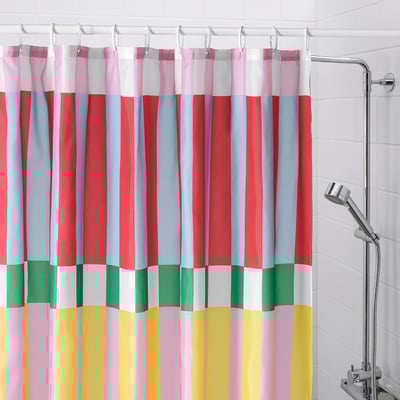
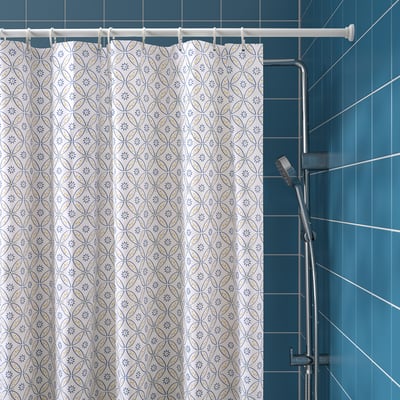



Waterproof your shower curtain
Important when using any home remedies: Please check beforehand whether your shower curtain can withstand cleaning with bicarbonate of soda, vinegar and the like. Often, a quick look at the care label or the enclosed instructions will suffice; otherwise, you can also contact the manufacturer or a specialist for the necessary information. Our staff will be happy to help with any questions you may have about your IKEA shower curtain. And that’s not all: whether it’s showers, washbasins, bathroom storage or lighting – we’re here to offer advice and assistance.
Drying and care: How to properly look after your shower curtain
Once you’ve washed it, it’s time to look after it. Drying and storing it properly will ensure that your shower curtain stays hygienic and looks good for a long time.
- After every shower, pull the shower curtain fully open so that it dries more quickly. Good ventilation in the bathroom helps prevent new stains and odours.
- It is best to remove any remaining splashes of shampoo or shower gel from the shower curtain with a little water after showering.
- Do not leave the bottom hem of the shower curtain lying in damp conditions. Ensuring the curtain is the right length or removing water from the shower tray can help here.
- Cleaning frequency: Clean the shower curtain at least twice a year. If you have particularly hard water and frequent limescale stains, cleaning it more frequently is advisable.
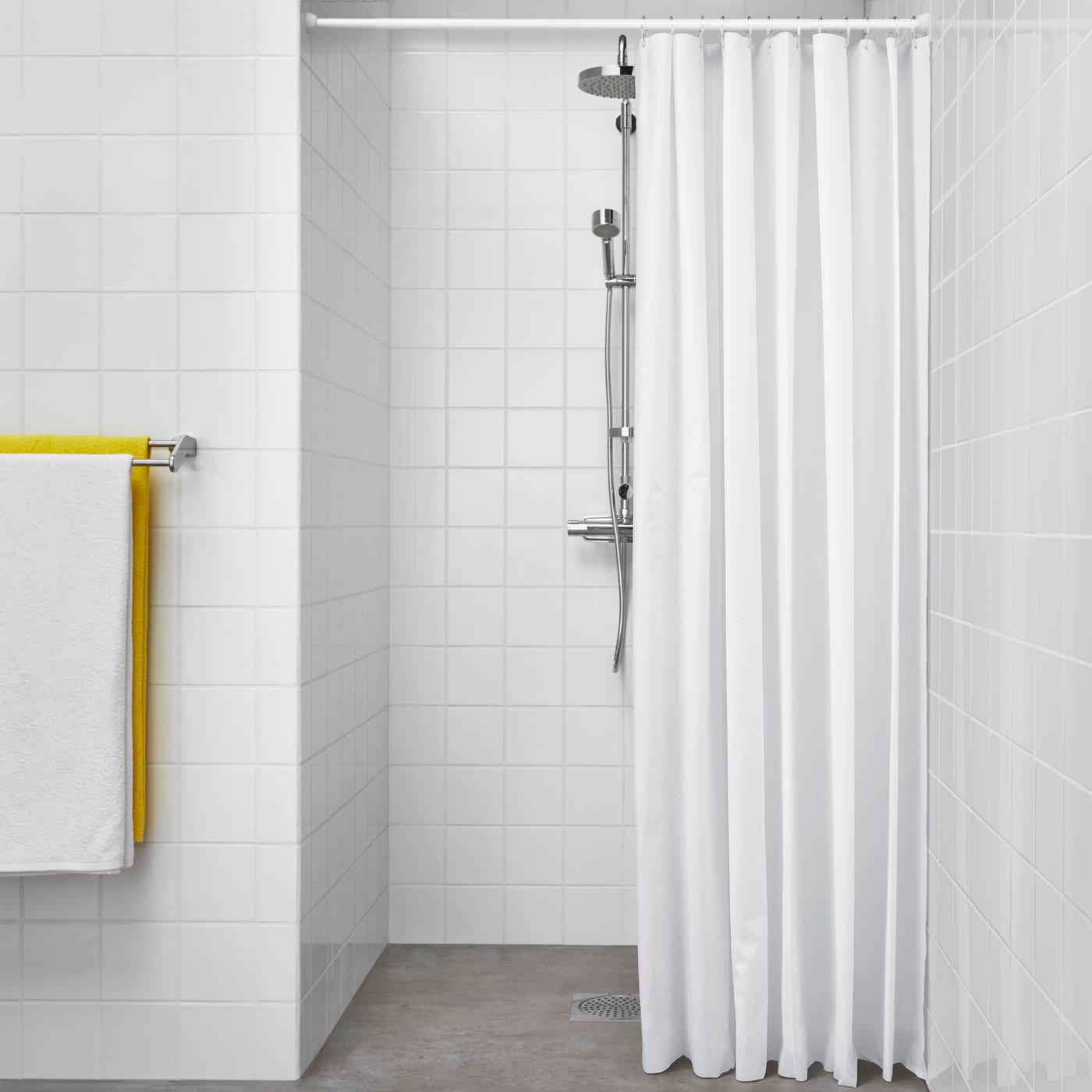
Drying and care: How to properly look after your shower curtain
Once you’ve washed it, it’s time to look after it. Drying and storing it properly will ensure that your shower curtain stays hygienic and looks good for a long time.
- After every shower, pull the shower curtain fully open so that it dries more quickly. Good ventilation in the bathroom helps prevent new stains and odours.
- It is best to remove any remaining splashes of shampoo or shower gel from the shower curtain with a little water after showering.
- Do not leave the bottom hem of the shower curtain lying in damp conditions. Ensuring the curtain is the right length or removing water from the shower tray can help here.
- Cleaning frequency: Clean the shower curtain at least twice a year. If you have particularly hard water and frequent limescale stains, cleaning it more frequently is advisable.
With our tips and a simple routine, your shower curtain will look as good as new even after many showers. Are you looking to buy a new shower curtain that’s easier to clean – perhaps one you can put in the washing machine? We offer easy-care, practical curtains in a wide range of colours and styles. And if you have any other questions, you’ll find plenty more useful guides.