Guide to buying pots and pans

To cook the right way, it's vital to have the right tools, utensils, knives and, most importantly pots and pans. In our guide, you'll find the ones that best suit your needs, whether you're just starting off in the culinary world or you're already quite the chef.

Tips for everyone

If you don't identify with any of these kinds of chef, we've got you covered with these general tips
The basic set: a solid start

If your goal is everyday cooking without the frills, a large pot (3 to 5 l), a small saucepan (2 l), a medium-sized pan (28 cm) and a sauté pan should cover your needs. In this case, opt for Teflon Select durable non-stick coating so you can cook using very little oil. It's also super simple to clean. As it's made of aluminium, the heat is distributed uniformly and efficiently to avoid food burning or sticking. They are suitable for all hobs and you can add utensils to complete your set, depending on your needs.

See the HEMLAGAD series
Three stainless steel pots and one black OUMBÄRLIG frying pan standing on a marble worktop with a matching marble wall panel.
See the HEMLAGAD series

Essential utensils: pots

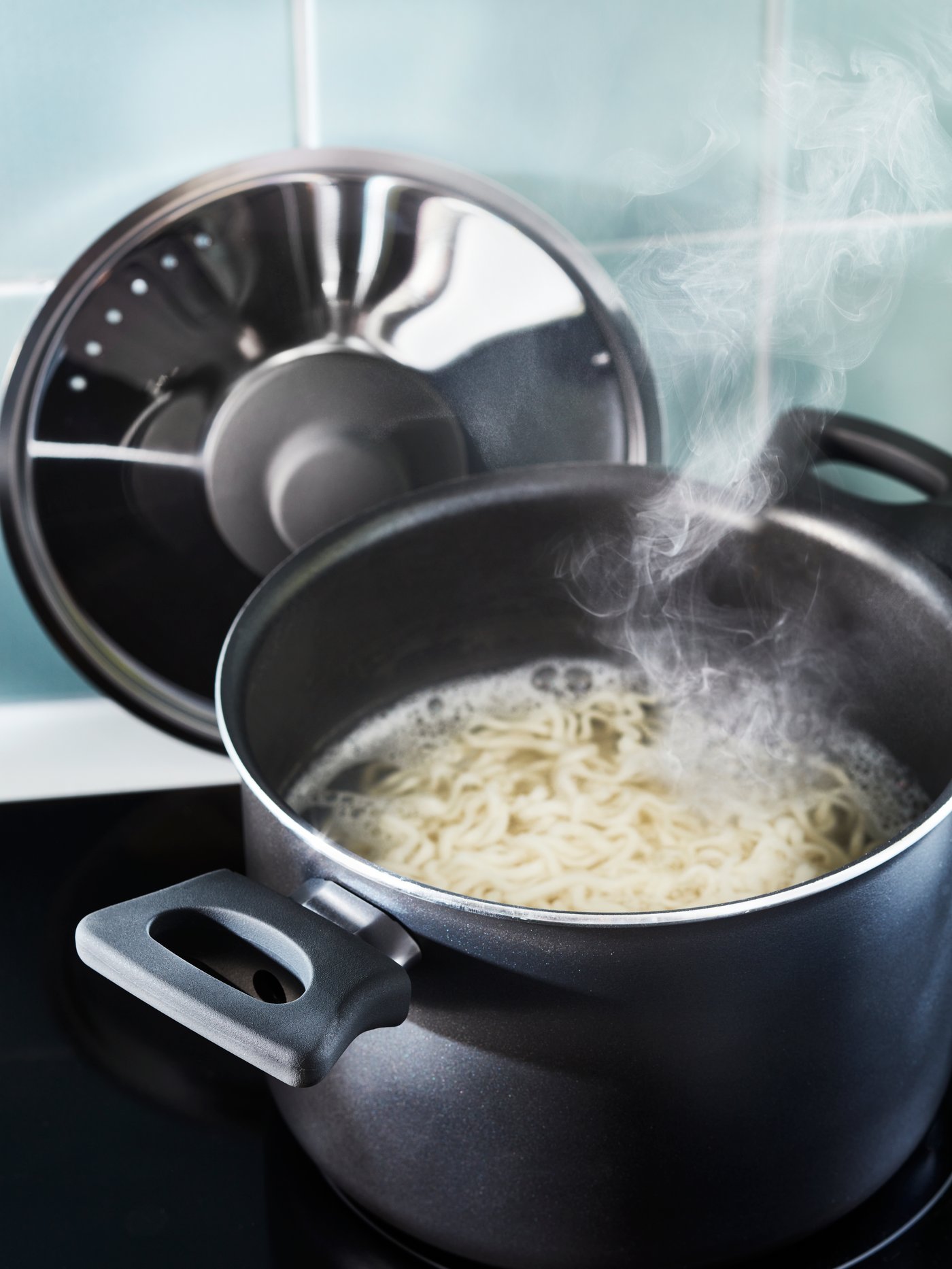
Pots are larger than saucepans – they can hold at least 2 l. They have two handles that mean they can be carried from one place to another, despite their size and weight. They can be used to cook for the entire family or prepare dishes that require a lot of water. For example, boiling pasta.

See all pots
A pan with cooked vegetables on a cork pot stand on top of a table set for dinner. There is a wooden spoon in it.
See all pots

Essential utensils: saucepans

Saucepans are small pans that can hold 0.5 to 2 l and have a long, straight handle. In most cases, they are used to prepare small-sized foods, such as vegetables and sauces.

See all saucepans
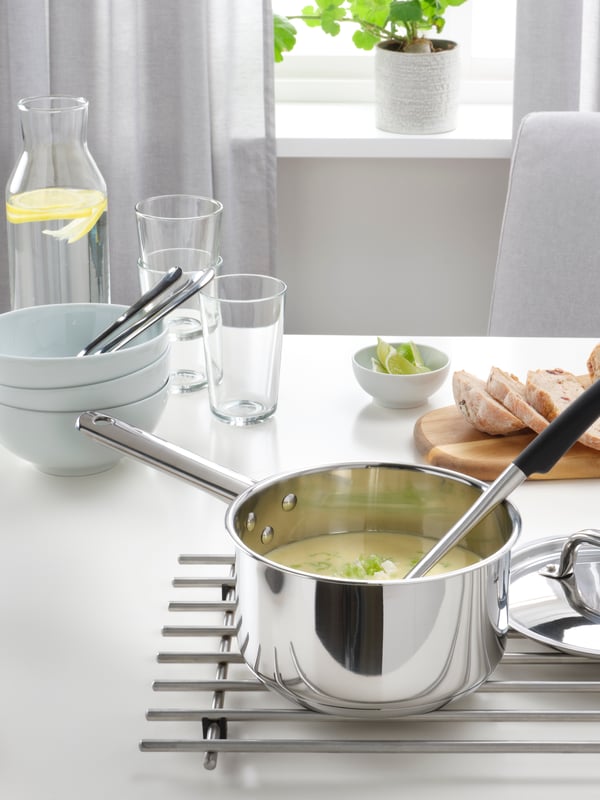
A stainless steel saucepan in front of a pot made of the same material on a marble countertop with a matching wall panel.
See all saucepans

Essential utensils: pans

You can never go wrong with aluminium pans with a non-stick coating, since that stops food from easily burning, making cleaning simpler and avoiding having to use so much oil. Cast iron pans brown the food evenly, due to the material being able to conduct heat evenly and retain that heat for long periods.

See all pans
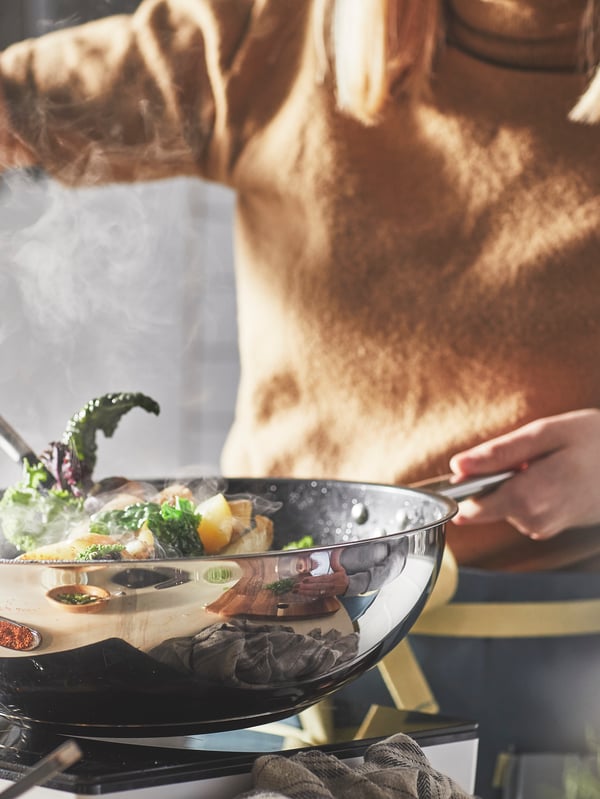
A person holds a pan with a cloth around the stainless steel handle. They are frying napa cabbage next to a wooden chopping board.
See all pans

Save time with a sauté pan

Sauté pans are used to brown pieces of meat or fish, sauté vegetables and reduce sauces. With their raised edges, you can avoid spilling and splashing food when you flip and toss it. They often come with a lid that partly or completely covers them so you can cook the food through once browned.

See all sauté pans
A sauté pan with meatballs and sauce over a black induction hob.
See all sauté pans

Grill pans as an alternative to the classic barbecue

When you cook with grill pans, the food stays moist on the inside and goes crisp on the outside. To achieve this, you need a very high temperature over a short period. Grill pans with a ridged surface give food a distinctive look. What's more, the amount of fat in the food is reduced and concentrated at the bottom.

See all grill pans
A grill pan in which chopped onions are being fried over a stone countertop, next to a bowl of red sauce.
See all grill pans

Woks: fried food made healthy

You don't need oil when you use a wok to fry food, which makes it a lighter option. Woks have tall and sloped sides, which means that heat is distributed efficiently and evenly to the ingredients in them, where the temperature is higher. If you want to cook with an open flame (like a gas hob), we recommend a wok with a rounded base. For electric and glass ceramic hobs, flat-based woks work best.

See all woks
Wok with fresh vegetables, including broccoli, on top of a grey kitchen countertop.
See all woks
FINMAT pots and pans series

Materials and maintenance

Proper maintenance of your pots and pans is key to extending the life of these utensils. Remember to check the product labels where you'll find how to clean them and what type of hobs they are suitable for. Take the utmost care of your cooking utensils by following these simple tips

See maintenance tips