
How to choose a fridge and freezer
Need a new fridge and/or freezer? Whether you’re looking for appliances as part of planning a brand-new kitchen or want to replace or upgrade what you currently have at home, picking the right fridge and freezer doesn’t have to be as difficult as you may think. Start with this refrigerator buying guide to find the right questions you need to ask yourself before starting your appliance-buying journey.
- Product information page
4 different fridge and freezer types
When choosing appliances, it’s helpful to think about your kitchen layout, the size of your household, and your cooking, socializing, and shopping habits. These are the main IKEA types:
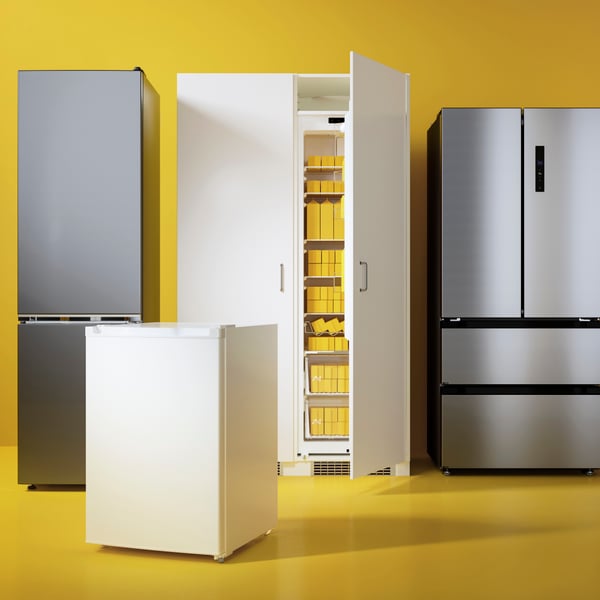
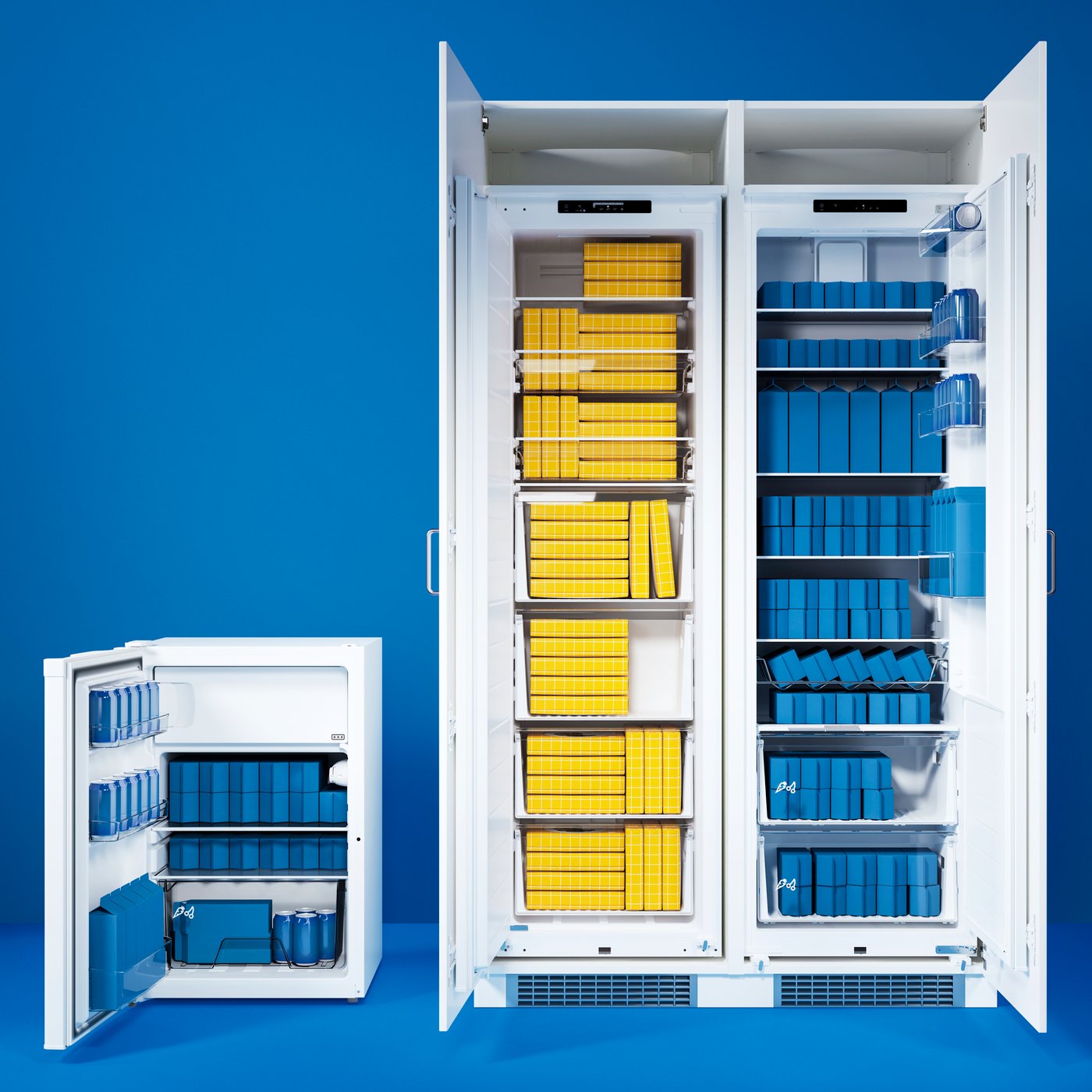
- Integrated or freestanding under-cabinet fridges, freezers, or fridges with freezer compartments are perfect for very small kitchens or 1-person households. They’re also practical if you need additional space to complement your regular appliances.
- Fridge/freezer combos are ideal for small kitchens and households of 2 to 3 people. Available as an integrated or freestanding, a combo uses available space efficiently with a decent amount of storage space.
- Full-size fridges/freezers – integrated or freestanding – are for large families and people who have a keen interest in cooking or prefer to buy groceries in bulk.
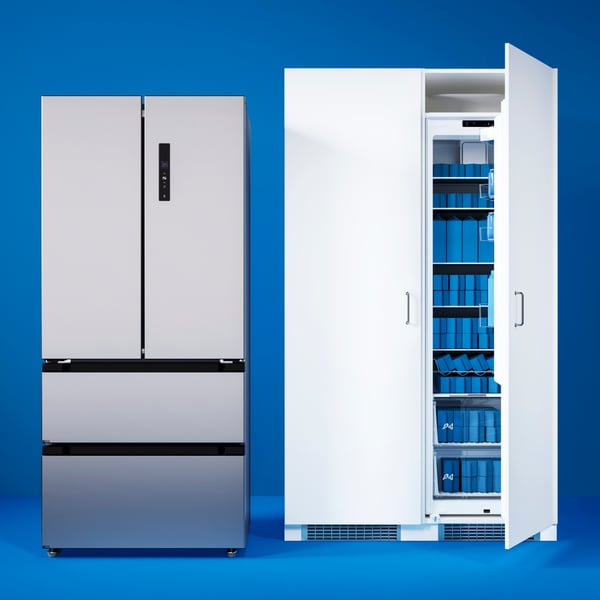
- A freestanding French door fridge with two doors and freezer drawers is many people’s dream solution – extensive storage capacity, great overview and easy organization.
- Product information page
Integrated or freestanding fridge/freezer?
Consider what works in your kitchen when choosing an integrated or freestanding fridge/freezer. If you can choose, here are the pros and cons of both types.
Integrated fridge/freezer
Pros: An integrated solution is installed in a kitchen cabinet with a front that matches the rest of your kitchen style, allowing for a sleek and uniform look.
Cons: Since the fridge/freezer is placed inside a cabinet, it has less capacity than a freestanding solution, and you lose out on storage space.
Freestanding fridge/freezer
Pros: It generally has more storage capacity than an integrated appliance of a similar size and is easy to install – just place it where you want it and plug it in.
Cons: With a freestanding fridge/freezer, you won’t get a uniform kitchen look.
- Product information page
Cool efficiently, store wisely
Fridges and freezers run around the clock, so choosing a product with a high energy rating can help lower your electricity bills. There are also simple everyday habits that can boost efficiency and help reduce food waste — especially when combined with smart fridge storage and organizers that keep everything visible and easy to access.
- Keep it airtight. If the door is left slightly open, the appliance has to work harder and use more energy. IKEA fridges and freezers include acoustic door alarms to help prevent this.
- Don’t go too cold. A fridge only needs to be set between 3–5°C, and a freezer between -15 to -18°C, for efficient cooling and freezing.
- Defrost regularly. Frost build-up makes the freezer work harder. Choose a no-frost or low-frost model to make maintenance easier.
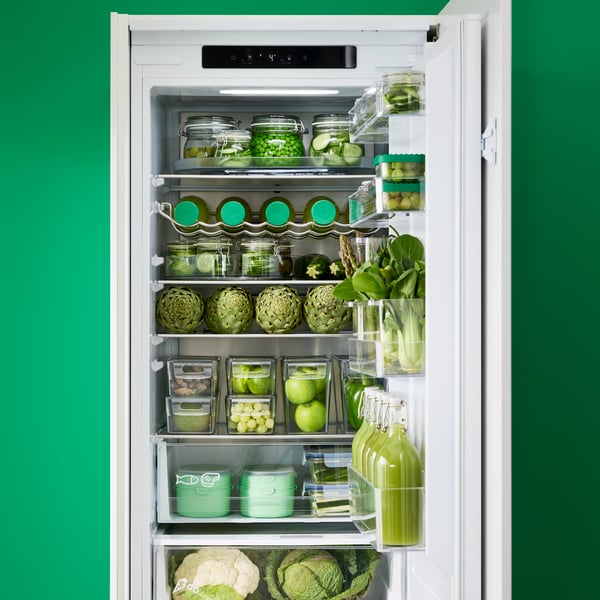
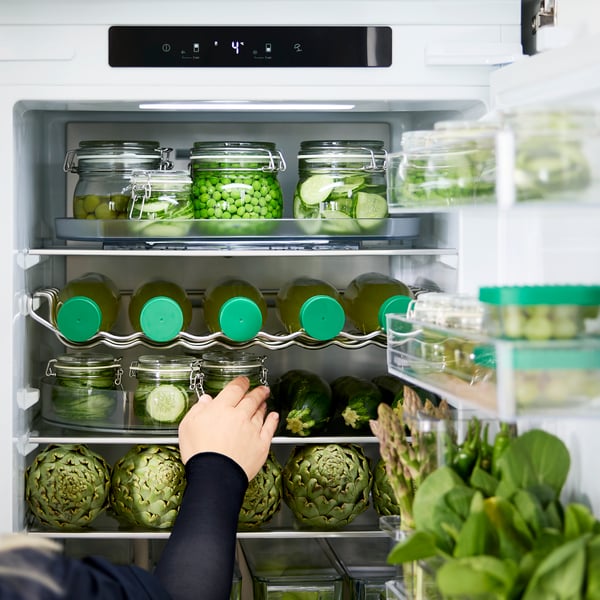
- Organize for freshness. Use containers, bins and fridge organizers to group similar items together and keep food visible. Label containers, place older items at the front and newer ones at the back, so nothing gets forgotten.
- Defrost in the fridge. It’s the safest way to thaw food, and the fridge can reuse the cold air to help save energy.
How do I know what size refrigerator I need?
Choosing the right size refrigerator starts with how you live. As a general guide, plan for about 100 litres of fridge space for one person, and add 50 litres for each additional household member. If you cook often or prefer fewer grocery trips, consider sizing up for extra flexibility. For the freezer, think about your food habits. If you like to batch cook or stock up, aim for 30–50 litres of freezer space per person. It’s all about finding the right balance to match your everyday routine and make life at home a little easier.
- Product information page
Chill smarter, waste less – with fuss-free functions
Clever features can really help you keep your food fresh and save energy, contributing to less food waste and lower electricity bills. Here are three important ones to consider:
- No-frost prevents ice build-up, so your freezer doesn’t have to work harder than it needs to.
- Fast cool and fast freeze quickly bring new groceries down to the right temperature, protecting the food you already have inside.
- Fan cooling circulates air evenly, so everything stays consistently chilled, no matter where it’s placed. There are many other handy features, like vacation mode and low-temperature and humidity drawers, to help you get the most out of your appliance. And remember, storing wisely means clever fridge organization — using drawers and compartments thoughtfully to keep food visible, fresh and easy to reach, while making the most of every shelf.