
IKEA Canada Public Affairs


2026 Federal budget submission
IKEA Canada continues to demonstrate that we are there for Canadians. We have invested more than $130 million in price reductions across thousands of products, ensuring that essential home furnishings remain accessible without compromising quality, design, nor sustainability. Our As Is, Sell Back, and circular retail programs continue to expand, enabling Canadians to access second life furniture at lower cost while reducing waste. Canadians know that wasting less in their homes means more money in their wallets.
At IKEA we firmly believe that government, businesses, and individuals each play a vital role in advancing affordable, sustainable solutions. Together we can strengthen housing affordability, accelerate the circular economy, improving the cost of living, and ensuring economic resilience.
2026 Ontario budget submission
At IKEA Canada, we believe Ontarians deserve not just a place to live, but a home they can afford to furnish, maintain, and feel comfortable in. With the rising cost of living putting pressure on families, there are some clear opportunities to create a better life for the many.
A Home Essentials Tax Credit to help people afford the basic furnishings that make their home functional and healthy.
Second, the creation of an Ontario Circular Economy Infrastructure Fund can expand reuse, repair, and refurbishment capacity—reducing waste and creating local jobs.
Finally, broader rebates for everyday energy‑saving products can help families can cut costs even if they cannot afford major home renovations.
These measures would complement Ontario’s housing agenda and help ensure that more people can live well—and affordably—in the homes they work so hard to secure.



The IKEA Sustainability Strategy
We have big ambitions for 2030. We are committed to doing our part to tackle climate change, unsustainable consumption, and inequality. Our three major focus areas are Healthy & sustainable living, Climate, nature & circularity and Fair & equal. We will inspire and enable people to move towards healthy and sustainable lifestyles, by making them a desirable choice that is affordable, attractive, and accessible for as many people as possible.
By increasing climate action and accelerating circularity, we can regenerate resources while growing the IKEA business. The planet is our only home and needs us now more than ever. But home has always been what we make it. And we’re determined to make healthy and sustainable living attractive, affordable and accessible for as many people as possible.
IKEA Canada 2025 Summary Report
In this August 2024 pre-budget submission, IKEA Canada presents three core recommendations to the federal government designed to enhance affordability and sustainability for all Canadians.
Addressing rising cost-of-living pressures, the report advocates for aligning HST/GST on second-hand sales and repairs to eliminate double taxation and promote a circular economy. It also proposes a $500 furniture and home essentials tax credit for low-income households to combat "furniture poverty" and ensure basic necessities are accessible.
Finally, IKEA calls for increased investment in electric vehicle (EV) infrastructure to support Canada's net-zero goals. These proposals aim to modernize tax rules while building a more stable, affordable future.

One Home, One Planet
The One Home, One Planet (OHOP) report details IKEA Canada’s first national forum focused on making circular living—through repair, reuse, and recycling—a practical and affordable reality for all Canadians.
Held in Toronto with over 100 leaders from across government and business, the event prioritized action-based solutions to combat rising cost-of-living pressures. This report introduces "Canada’s Circular Roadmap," a framework designed to humanize the circular economy, foster local partnerships like "Repair Cafés," and coordinate existing infrastructure.
By humanizing sustainability and identifying waste as an economic resource, this document serves as a strategic call to action to build a more affordable and inclusive sustainable future for all Canadians.
The IKEA Canada Indigenous Reconciliation Strategy
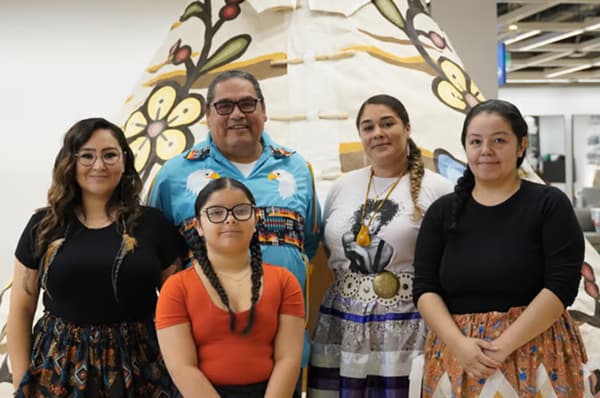
The Indigenous Reconciliation Strategy presents a long-term vision for IKEA Canada that respects the needs, values, and perspectives of Indigenous communities. Reconciliation is fundamentally about building positive and respectful relationships between Indigenous and non-Indigenous Peoples. Building trust, understanding, and cooperation takes time and ongoing engagement.
IKEA Canada understands this and will continue to work towards Reconciliation in all levels through ongoing dialogue, collaboration, and relationship-building efforts. Our strategy will continue to unfold under three key pillars: learning and teaching, conversation and amplification, and reciprocity with the Indigenous community. All initiatives will include meaningful consultation with each community and citizen experts.
ABOUT IKEA CANADA
Founded in 1943 in Sweden, IKEA is a leading home furnishing retailer, offering a wide range of well-designed, functional home furnishing products at prices so low that as many people as possible can afford them. IKEA Canada is part of Ingka Group which operates 574 IKEA stores in 31 countries, including 15 stores and 11 Plan and order points in Canada. Last year, IKEA Canada welcomed 33.3 million visitors to its stores and 199.9 million visitors to IKEA.ca. IKEA Canada operates business through the IKEA vision - to create a better everyday life for the many people and does so through its local community efforts and sustainability initiatives. For more information on IKEA Canada, please visit IKEA.ca.
For more information:
Timothy Fuchs
Head of Public Affairs
timothy.fuchs@ingka.ikea.com