
Stackable stools are what people reach for when they need “just one more seat” without rearranging the whole room. IKEA stackable stools are designed such that you can keep several seats ready without sacrificing floor space. Instead of spreading chairs across the room, you simply stack them vertically and pull them apart when needed.
Sort and Filter
Results list
Top seller

Top seller

Top seller
Showing 7 of 7 results
Recommended for you
Related categories



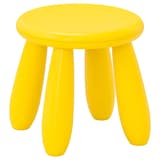
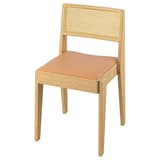
Buy IKEA Stackable Stools for Smart & Flexible Seating
Every home has moments when the available seating suddenly feels insufficient. Most people buy stackable stools as a backup plan, but they rarely stay in storage for long. One ends up near the shoe rack, another beside a study table, one in the kitchen for quick breaks. Because they are so easy to move, stacking stools slowly become part of everyday routines rather than occasional furniture.
Here’s why many homes rely on stackable stools more than expected:
- Extra seating without permanence: Use only when needed.
- Takes almost no floor space when stacked: Ideal for compact homes.
- Easy to grab and carry: Even children can move them.
- Works in multiple rooms: Kitchen, balcony, study, or living area.
- Good for casual seating: Not everything needs a formal chair.
- Fits under tables or counters: Can disappear when not in use.
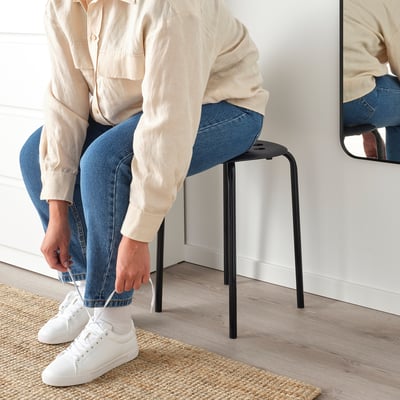
- Useful near entryways: For putting on shoes or bags.
- Light enough for daily shifting: No heavy lifting involved.
- Practical alternative to bulky Dining furniture: Especially in small homes.
- Supports flexible tables & chairs arrangements: Move as layouts change.
- Can act as temporary side seating anywhere: Very little planning required.
If you are planning to buy stackable stools online, think about where they will actually live when not in use. The best stackable stools are the ones you can store easily and forget about until you suddenly need them.
How to Choose the Right Stackable Stool for Your Space
Not all stacking stools feel the same once you start using them. Some are perfect for quick sitting but uncomfortable for longer periods. Others feel stable enough to use at a dining table or work surface.
Before you buy stackable stools, it helps to imagine real situations. Someone sitting for a full meal. A child climbing on and off. Multiple stools being moved at once. Practical details matter more than appearance.
Things worth checking before selecting stackable stools:
- Seat height: Should match the table or counter you plan to use.
- Stacking stability: Stools should nest securely without sliding.
- Weight: Light enough to carry but not flimsy.
- Seat size: Wider seats feel more comfortable for adults.
- Base spread: Affects stability during movement.
- Material durability: Important for repeated stacking.
- Grip on flooring: Prevents accidental sliding.
- Ease of separating stacked stools: Should not stick together.
- Storage location: Corner, cupboard, or under furniture.
- Frequency of use: Daily use requires sturdier designs.
- Compatibility with existing Dining furniture: Should not look out of place.
- Safety for children: Rounded edges and stable structure help.
Picture pulling out several stacking stools quickly during a gathering. If that feels effortless in your mind, the design will likely work in practice too.
Design, Durability & Space-Saving Features of IKEA Stackable Stools
Stackable stools may look simple, but the engineering behind them determines whether they remain useful over time. Repeated stacking, movement, and daily sitting put stress on joints and surfaces, so durability matters more than decorative styling.
IKEA stackable stools are typically built to handle regular handling rather than occasional use. Many households end up using them alongside primary Dining furniture, especially when seating needs fluctuate.
Features that make stackable stools reliable for everyday life:
- Strong seat construction: Prevents bending under regular weight.
- Balanced leg positioning: Reduces wobbling.
- Smooth contact points for stacking: Protects surfaces.
- Compact footprint: Stores neatly in tight areas.
- Durable materials: Withstand frequent use and movement.
- Low visual bulk: Keeps rooms feeling open.
- Easy-to-clean surfaces: Useful in kitchens and dining areas.
- Lightweight frames: Simplifies relocation.
- Uniform shape: Enables stable vertical stacking.
- Rounded corners: Safer in busy households.
- Versatile look: Blends with different table & chair styles.
- Practical rather than decorative design: Focus on usability.
Stacking stools rarely become the centrepiece of a room, but they often become the most used seats because they are always available and never in the way.
Care, Cleaning & Maintenance Tips for Stackable Stools
Stackable stools tend to have very active lives. They are relocated, stacked, pulled out for guests, pushed back into corners, and even used as additional side tables. The best part is that they do not require complicated maintenance. A few simple practices will help keep them in good condition and looking presentable for many years to come.
Simple methods for maintaining stackable stools
- Clean the seats frequently: Prevent dust, grease, and grime from building up.
- Clean spills immediately: This is especially important if the stool has a fabric or wooden seat.
- Use gentle detergents: Using harsh chemicals can cause the finish to fade with time.
- Dry before stacking: Helps to prevent moisture from damaging the surface.
- Lift, do not drag: Protect both the stool legs and the floors.
- Stack them properly: Prevent scratches and bending.
- Keep them away from moisture: This is especially important for the metal components.
- Avoid direct sunlight: Helps to prevent fading or brittleness.
- Store them indoors if possible: Extends the overall lifespan of the stools.
Top-Rated IKEA Stackable Stools for Everyday Use
The options provided are some of the most popular and useful stackable stools from IKEA’s collection of tables & chairs. Each of these products is designed with ease of use, storage, and comfortable seating in mind.
- MARIUS (Black)
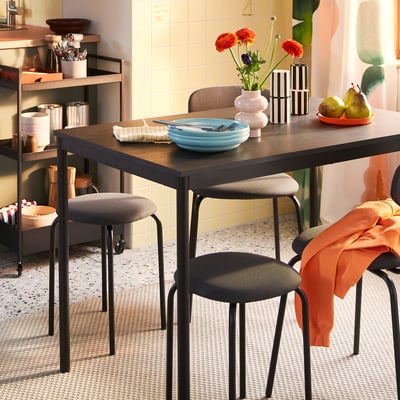
Simple, sturdy, and very easy to handle. The round seat and slim legs make it easy to slide under tables or stack without fuss. Often used in kitchens where quick seating matters more than comfort.
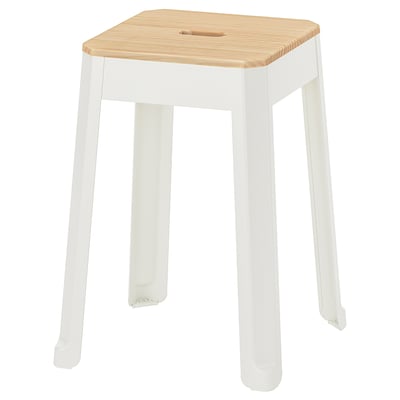
- TRÄNNÖ (White/Pine)
Feels a little calmer visually. The flat seat works well for short sitting sessions, whether it’s morning tea or a quick laptop break. Doesn’t crowd smaller rooms.
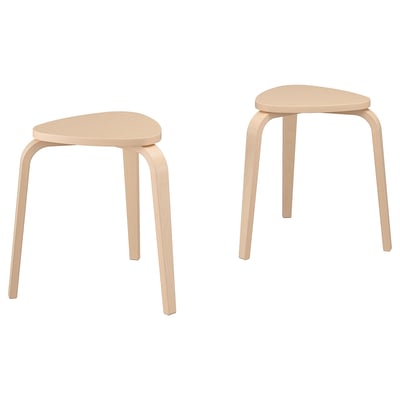
- KYRRE (Birch)
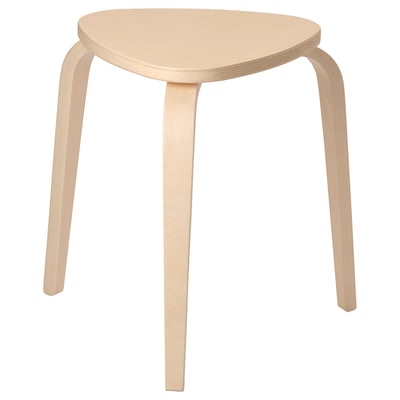
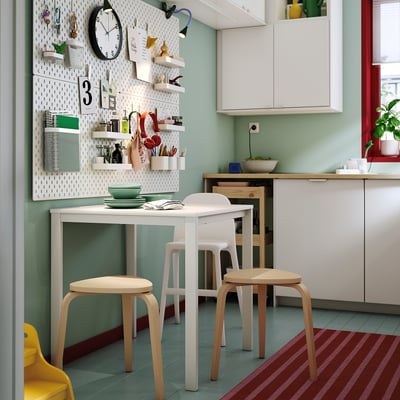
Slightly more refined in shape, so it doesn’t look like “temporary seating.” Many people leave it out permanently because it blends nicely with other furniture.
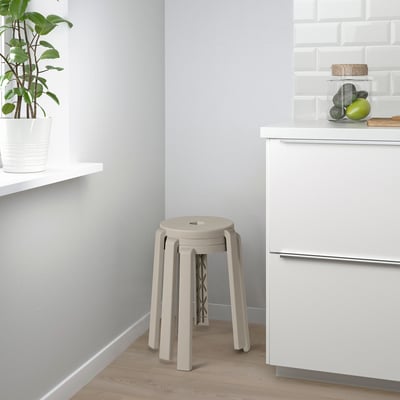
- IBBARBO (Beige)
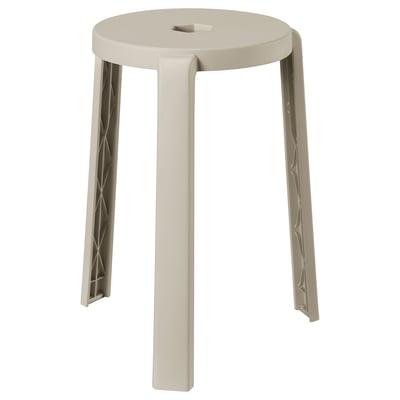
Very light and unobtrusive. Good for homes where you want extra seating available but not visually dominant.
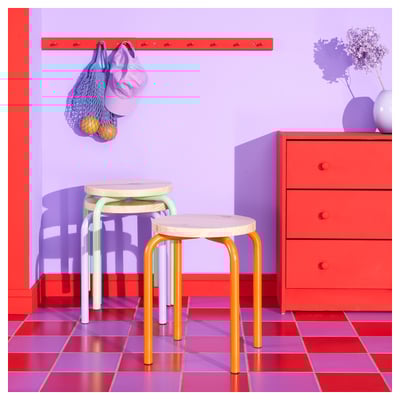
- DOMSTEN (Lilac/Pine)
Adds a bit of personality without losing practicality. Often ends up in informal corners, kids’ rooms, or creative spaces.
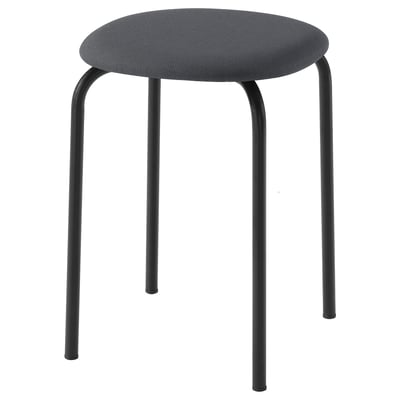
- GULTARP (Anthracite)
Feels slightly more robust than ultra-light stools. Works well for frequent use rather than occasional sitting.
What all of these share is that none of them demands a fixed place. They move easily, stack neatly, and show up wherever a seat suddenly becomes necessary.
FAQs
- Are stackable stools suitable for everyday seating at home?
Yes, especially for short to medium sitting periods. Many households use them daily for meals, quick work sessions, or extra seating when regular chairs are occupied.
- How many stackable stools can be safely stacked together?
This varies by design, but most models allow several stools to be stacked securely. Keeping the stack on a flat surface helps maintain stability.
- Do stackable stools work well in small apartments?
They are particularly useful in compact homes because they take up very little space when stacked. A corner or narrow gap is often enough to store multiple stools.
- Are stackable stools easy to move and rearrange?
Yes. Their lightweight build makes them easy to carry from room to room, which is helpful in homes where furniture needs change frequently.
- Can stackable stools be used in kitchens or dining areas?
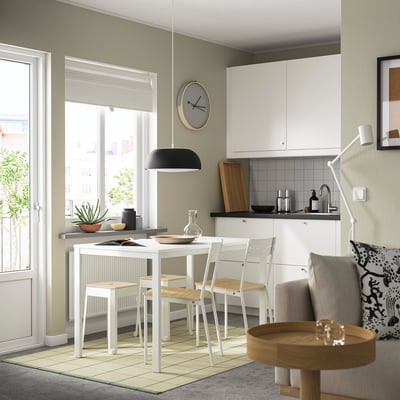
Absolutely. They are commonly used for quick meals, extra dining seating, or as temporary chairs when more people gather around the table.