
IKEA and End Food Waste Australia unveil 10,000-container installation to help Australians cut food waste and save money
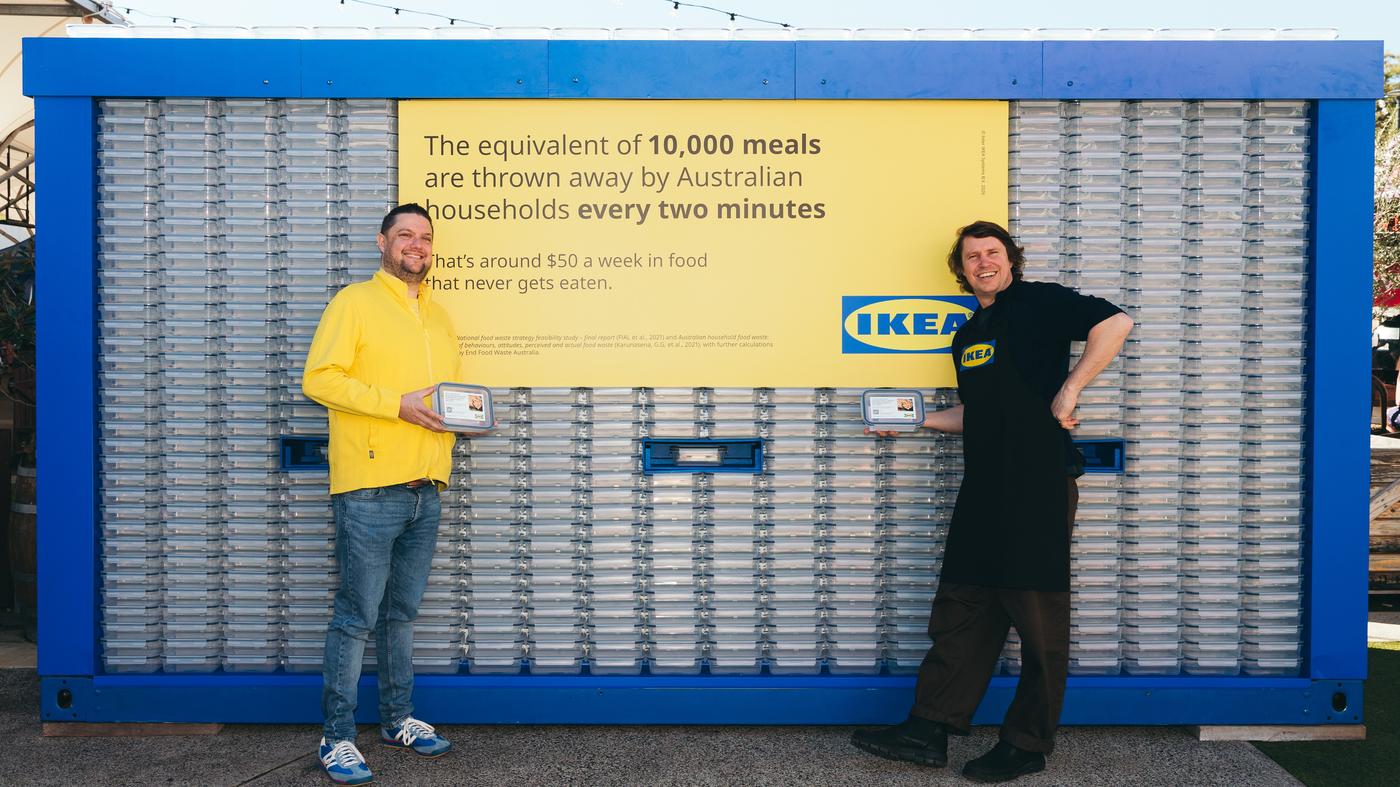
For the average household, that adds up to more than $2,500 worth of food thrown away each year, or around $50 a week. Households are the nation's largest source of food waste.
To help tackle the issue, IKEA Australia has partnered with End Food Waste Australia and chef and sustainability advocate Simon Toohey to unveil a large-scale 10,000-container installation.
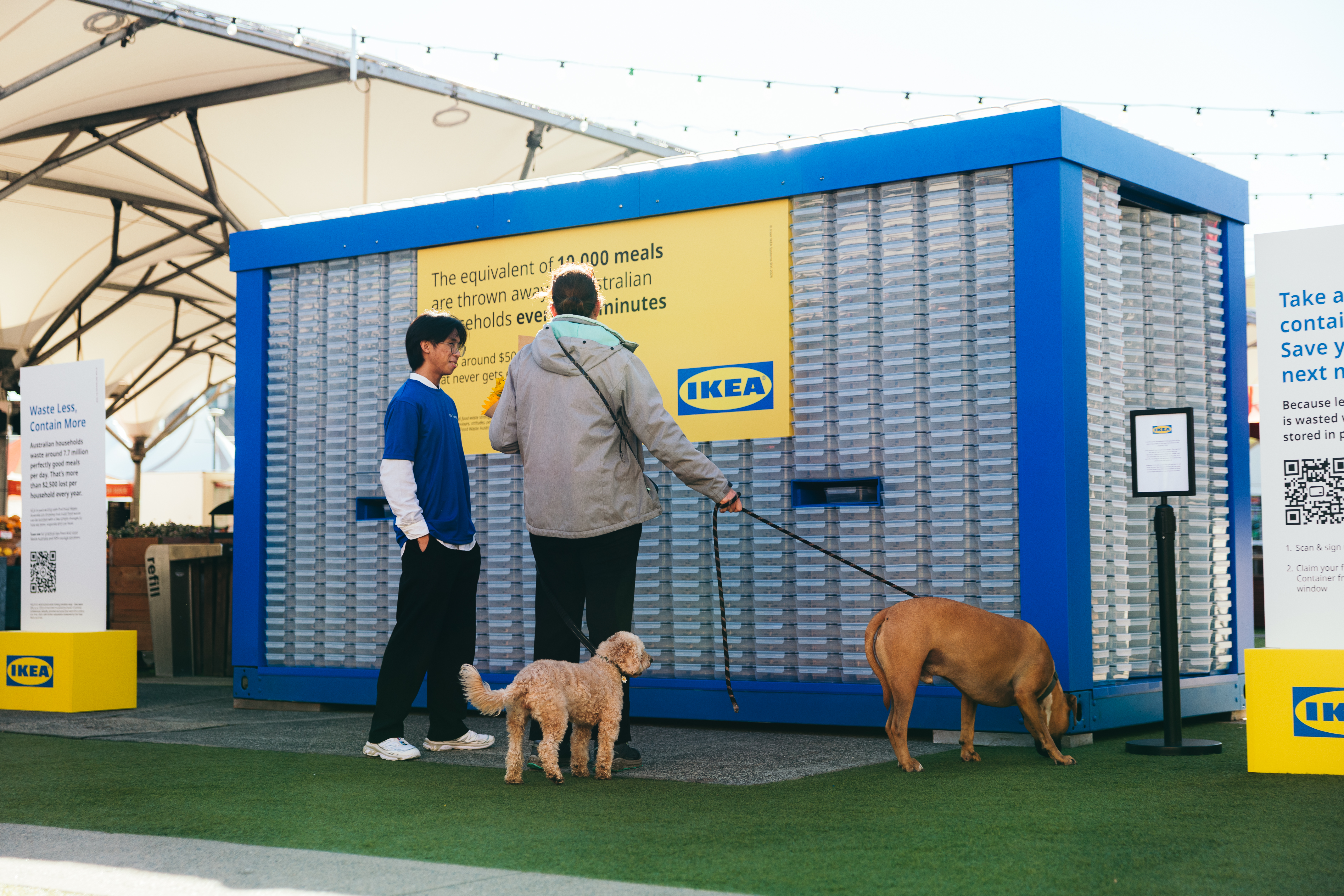
The installation is a striking visual reminder that much of the food we throw away isn't waste at all, and that simple everyday actions can help Australians waste less and get more from the food they bring home. Visitors can take home a free IKEA container from the installation and use it to save their next meal.
By turning a powerful statistic into something practical, the initiative aims to show that much of what we often call “waste” is food that could have been enjoyed with a little more planning, better storage and organisation. As part of the initiative, Simon will share practical food-saving tips, leftover recipe inspiration and advice to help Australians get more from the food they already buy.
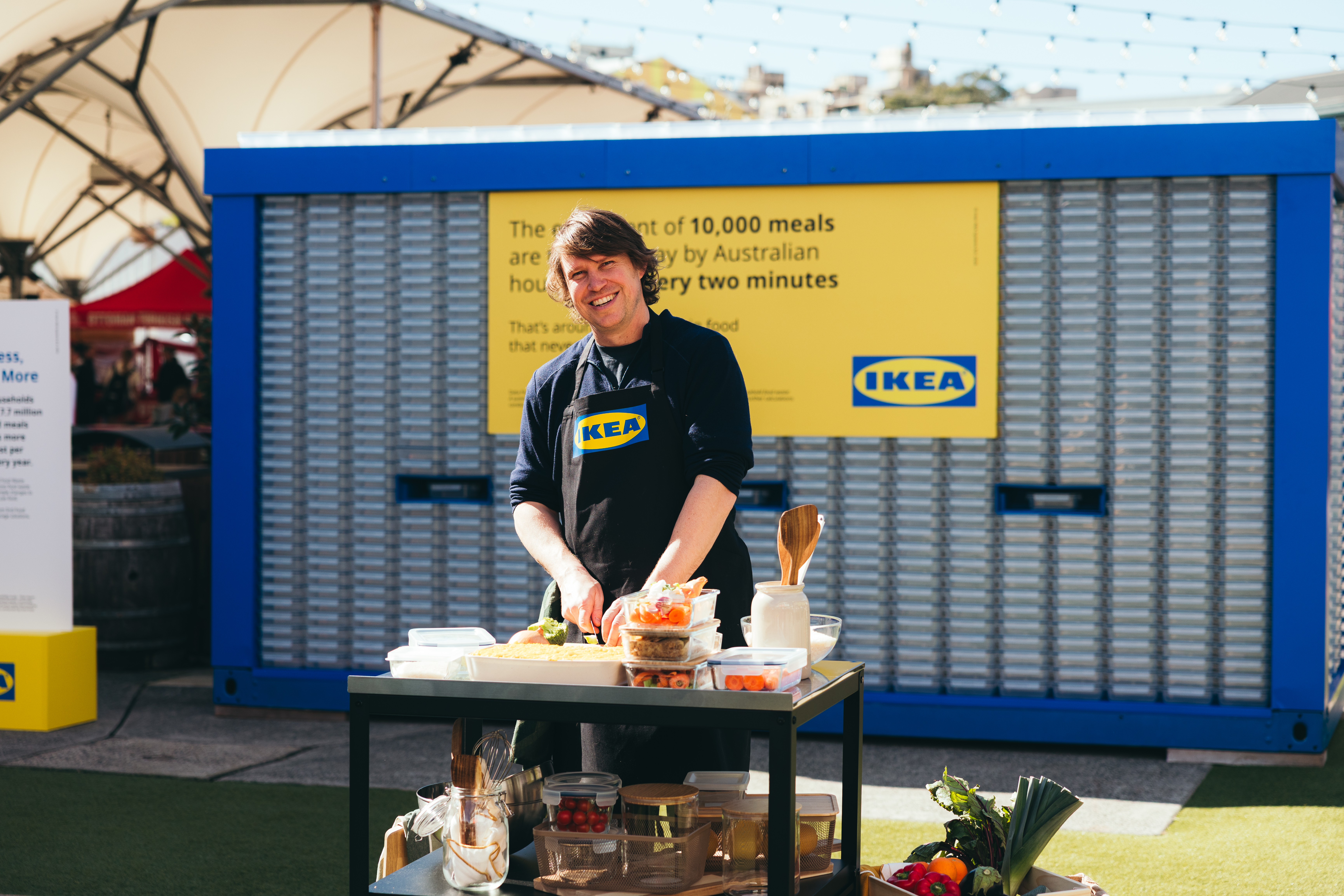
He will also host live demonstrations at selected locations, giving visitors hands-on advice on reducing waste in their kitchens at home.
Research from End Food Waste Australia reveals the five food items costing Australian households the most when they end up in the bin each week: red meat, bread rolls, cheese, salad items and ham. Sliced bread is the most wasted food by weight, with an estimated 220,000 tonnes of bread and bakery items uneaten in households across Australia each year.
Tim Prevade, Food Manager, IKEA Australia and New Zealand, said: “Food is an important part of the IKEA customer experience, with IKEA restaurants serving millions of customers around the world each year. Globally we’ve reduced our production food waste by 60% since 2017, and in Australia, around 20% since 2024.
However, we know that most food waste actually occurs in Aussie homes and that’s something IKEA can help with. “That's why we've partnered with End Food Waste Australia to help households make their food and budgets go further, through practical solutions and simple habits that help keep food fresher for longer, make the most of what's already on hand, and get more value from every grocery shop at a time when it’s most needed.”
Simon Toohey, chef and sustainability advocate, said: "Most people don't realise how much good food they're throwing away. No one sets out to waste food or money, but when ingredients get pushed to the back of the fridge or leftovers are forgotten, the costs can quickly add up. "The good news is that reducing food waste doesn't have to be complicated. Simple habits like planning meals flexibly, getting creative with leftovers and making the most of what's already in the fridge can make a real difference. I'm looking forward to sharing practical tips and recipes that help Australians get more from their food and keep more money in their pocket."
Wendy Hughes, Chief Executive Officer of End Food Waste Australia, said: "With grocery bills still rising, reducing food waste is one of the simplest ways Australians can save money. The average household throws away more than $2,500 worth of food every year, much of it perfectly edible.“Before throwing food away, take a second look. Store it, freeze it or reinvent it as your next meal. Small habits can make a big difference, helping households waste less, save more and get more from every grocery shop. That's exactly what we're showing Australians through The Great Unwaste campaign and this partnership with IKEA – practical tips and tools to help food go further..”
The 10,000-container installation debuted at Sydney's Entertainment Quarter Wednesday 22 July, before travelling to Parramatta Square on Thursday and then selected IKEA stores across Sydney.
For more information and practical food-saving tips, visit HERE.
At each location, IKEA Family members (sign up for free!) can collect a complimentary IKEA 365+ container, learn practical ways to reduce food waste and discover simple habits that can help keep food fresher for longer.
Australians are invited to visit the installation at:
Entertainment Quarter, Moore Park – Wednesday 22 July, 9:00am - 2:00pm
Parramatta Square – Thursday 23 July, 8:00am - 5:30pm
IKEA Marsden Park – Friday 31 July, 11:00am – 5:00pm
IKEA Tempe – Saturday 1 August, 11:00am – 5:00pm
*At Entertainment Quarter, IKEA Marsden Park and IKEA Tempe, Simon Toohey will host live demonstrations from 12:00pm – 2:00pm, sharing food-saving tips, recipe inspiration and simple kitchen habits to help households get more from the food they already buy.
End Food Waste Australia – Household food waste additional insights
Reducing Food Waste in the Home:
PACK IT. STACK IT. CHILL IT
Your fridge and freezer are the real heroes of your kitchen! Level up your storage game to keep food fresher for longer. You'll save time and money by keeping your fresh food well-organised - ready in the fridge for tomorrow or the freezer for later.
FLEXI MEAL PLAN
Meal planning before you write your shopping list is a solid way to cut down on your food waste. But let’s be honest, life rarely sticks to the script. So, plan for the unplanned and leave some gaps in your meal plan for a leftovers night or the last-minute takeaway you know is coming.
JOIN THE LEFTOVERS REVOLUTION
Plan for a leftovers night at least once a week, and with a few leftover hacks, you'll be turning your regular home-cooked meals into brand-new, delicious dishes in no time.
FIRST IN, FIRST OUT
When figuring out what's for dinner, use the older stuff first - the ones most likely to go to waste. Rotating your groceries by packing new items away behind the older ones is the secret to keeping everything fresh.
STICK TO YOUR LIST
Getting organised by writing a list means you'll save time in the shops - only grabbing what you need. Once you've got your list - stick to it! By writing a list and sticking to it, you're well on your way to unwasting.
COOK JUST RIGHT
That feeling when you cook the perfect amount - clean plates, full stomachs, no leftovers - now that's great unwasting!!
SAVE ROOM FOR SECONDS
Serve a little less than you think you’ll eat, and keep the rest in the pan. If you’re still hungry, you can always go back for more. This simple habit helps you enjoy your meal without overloading your plate, giving you a better sense of how much you really need.
Food Waste Facts
1. Red Meat (Cooked): more than 1 in 4 households reported throwing away meat or seafood every week
2. Bread: Desire for freshness, poor storage, shopping too frequently and just-in-case buying make bread a highly wasted food
3. Cheese: 86,000 tonnes of dairy products are wasted by households each year, driven by unfinished meals, bulk-buying specials and fridge storage visibility
4. Salad items: Almost half of Australians (47%) reported throwing away vegetables and herbs in a week and salad ingredients are among the most expensive.
Simple actions like sticking to your list whilst shopping, using a "First In, First Out" system, keeping older ingredients at eye level, planning for leftovers and saving room for seconds with a smaller serving size are everyday actions which can help maximise the food people buy, according to End Food Waste Australia.
References
Ananda, J., Karunasena, G.G., and Pearson, D. (2021). Priority behaviours for interventions to reduce household food waste in Australia. Fight Food Waste Cooperative Research Centre, Adelaide. Australia.
FIAL, 2021. The National Food Waste Strategy Feasibility Study – Final Report.Fight Food Waste CRC (2019) Food Waste Australian Household Attitudes and Behaviours National Benchmarking Study Summary Report, Adelaide.
Australia.Fight Food Waste CRC (2020) Food Waste Australian Household Attitudes and Behaviours National Benchmarking Study Final Report, Adelaide. Australia
Karunasena, G.G, Pearson, D, and Fight Food Waste CRC (2021) Australian household food waste: A summary of behaviours, attitudes, perceived and actual food waste, Fight Food Waste Cooperative Research Centre, Adelaide. Australia.
Download Images
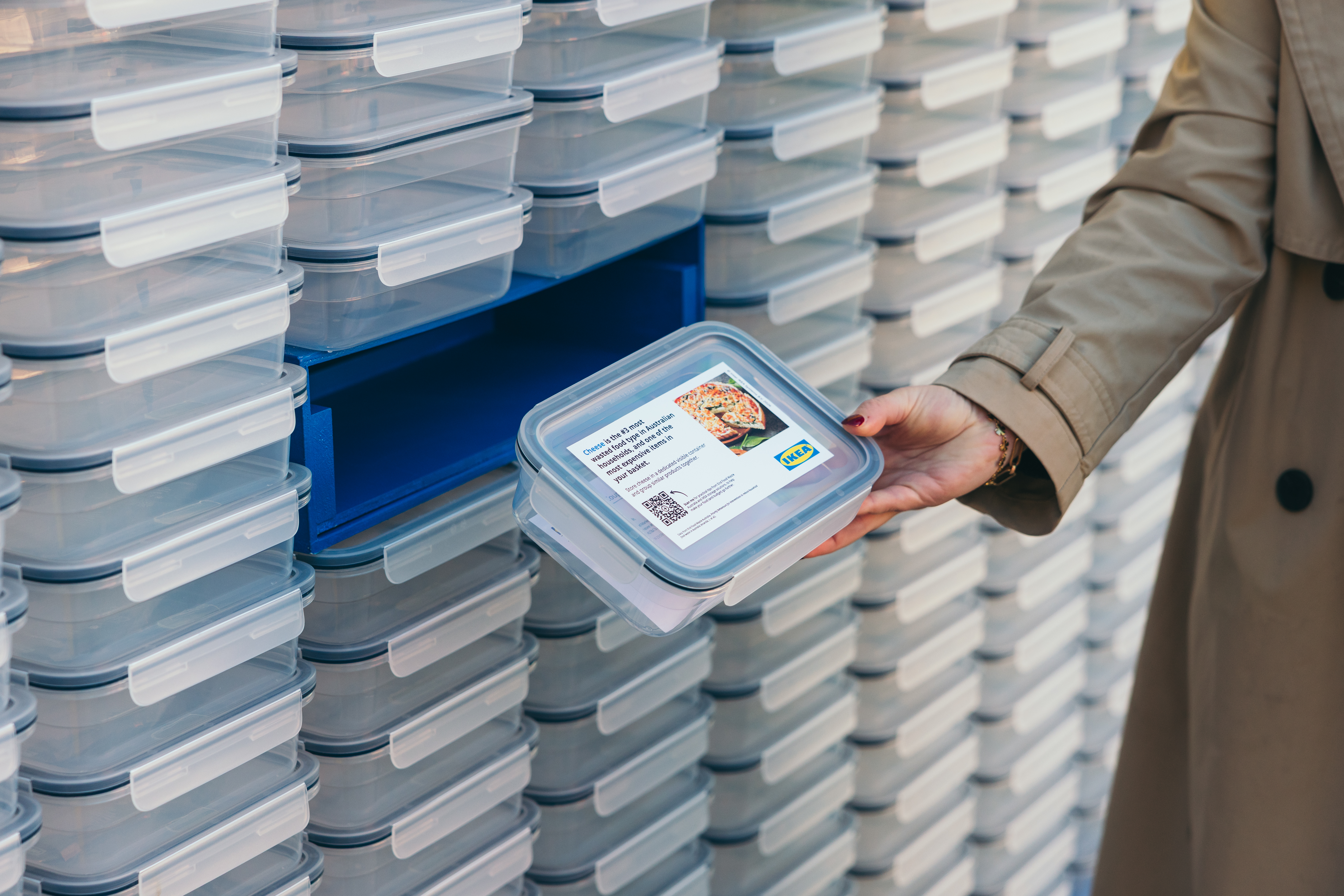
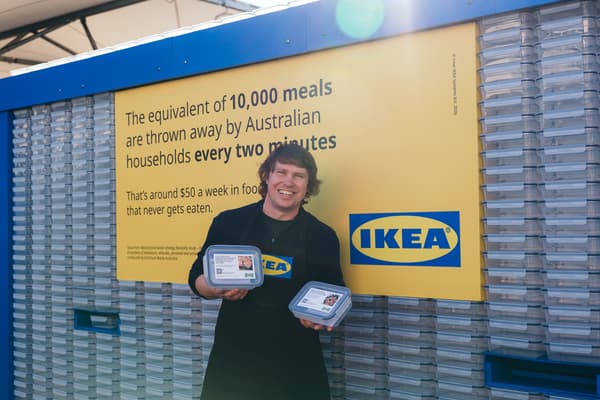
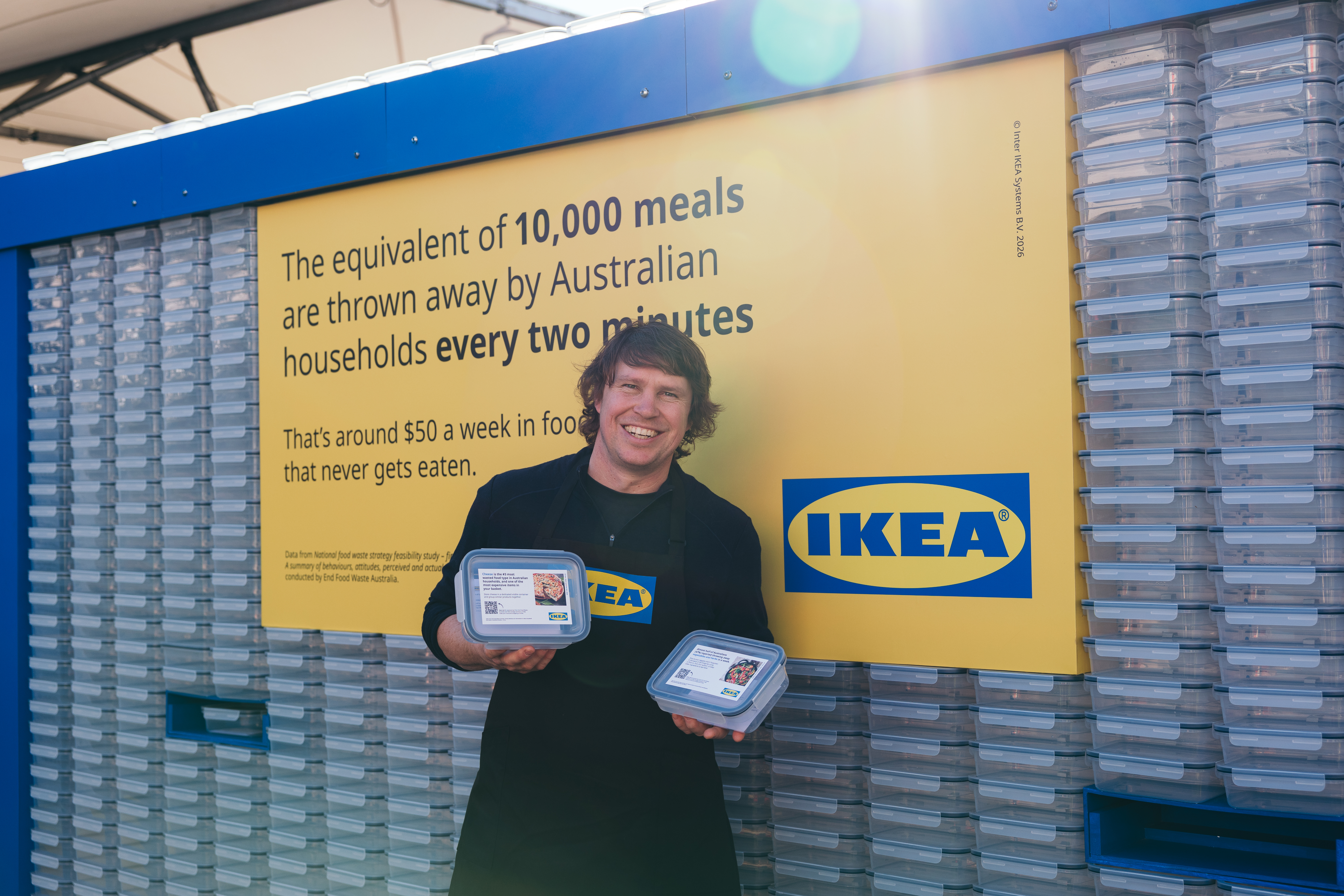

10,000 containers represent the number of meals Australians throw away every two minutes
Chef and Sustainability Advocate Simon Toohey has created a plant based recipe inspired by popular leftovers such as pumpkin and potato.
About IKEA:
IKEA offers well-designed, functional and affordable, high-quality home furnishing products, produced with care for people and the environment. There are several companies with different owners, working under the IKEA Brand, all sharing the same vision: to create a better everyday life for the many people. IKEA was founded in Sweden in 1943.
Ingka Group:
With IKEA retail operations in 31 markets, Ingka Group is the largest IKEA retailer and represents about 90% of IKEA retail sales. It is a strategic partner to develop and innovate the IKEA business and help define common IKEA strategies. Ingka Group owns and operates IKEA sales channels under franchise agreements with Inter IKEA Systems B.V. It has three business areas: IKEA Retail, Ingka Investments and Ingka Centres. Read more on ingka.com.