
How to organize your clothes
Does your clothes storage need an overhaul? Perhaps you went a little overboard on jumpers and jeans last winter or you’ve recently moved to a new place. Whatever the reason, clothes clutter can add stress to your space and slow your daily routine.
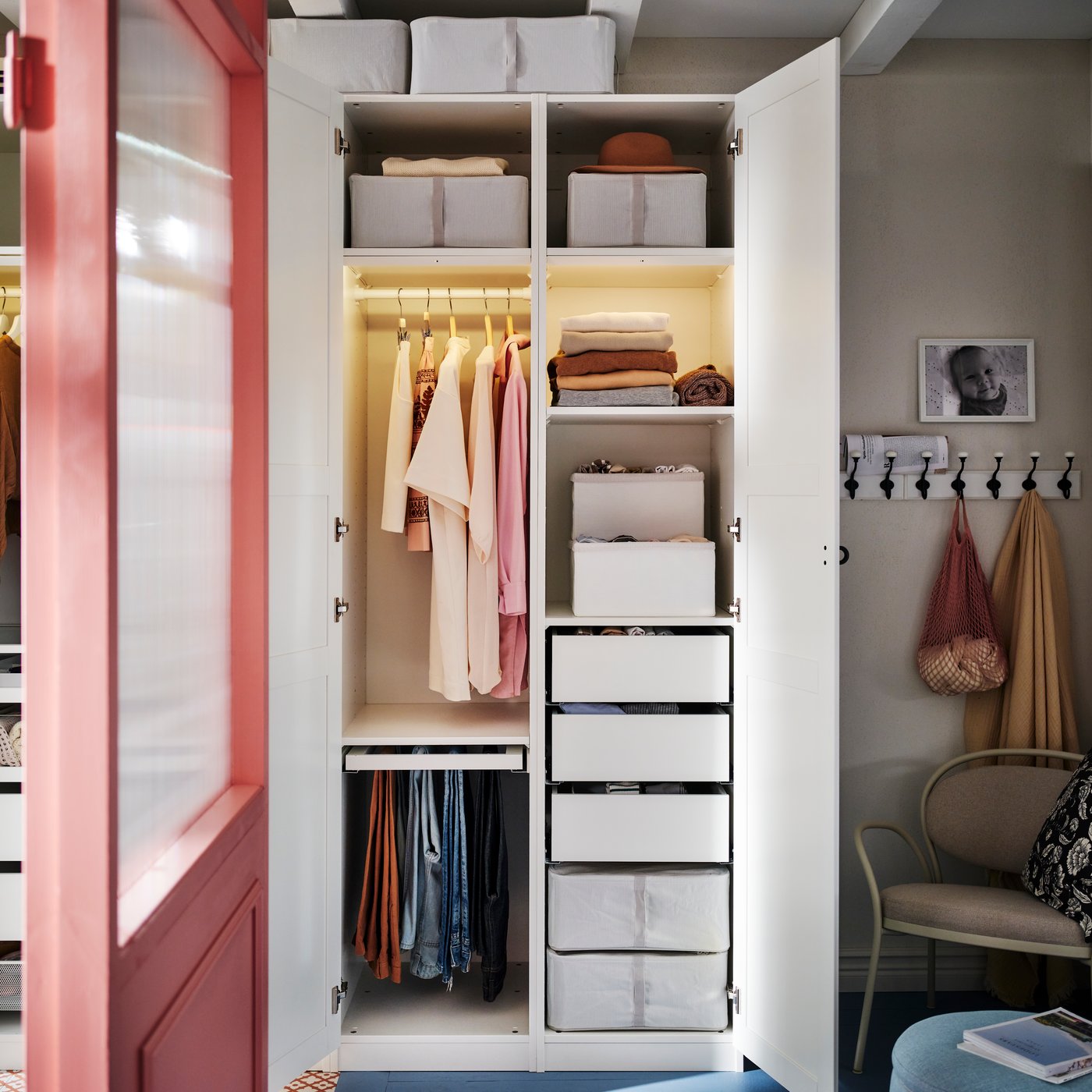
1. Be prepared for a big sort-out!
Start the process by working out what you have and what you actually wear. Begin by dividing your clothes into three groups: items you currently wear, those you don’t, and ones you no longer want. Donate or sell pieces you no longer wear so they can get a new life elsewhere. Then, focus on making the clothes you do wear easy to access every day.
1. Be prepared for a big sort-out!
Start the process by working out what you have and what you actually wear. Begin by dividing your clothes into three groups: items you currently wear, those you don’t, and ones you no longer want. Donate or sell pieces you no longer wear so they can get a new life elsewhere. Then, focus on making the clothes you do wear easy to access every day.
2. Decide what’s going to be folded
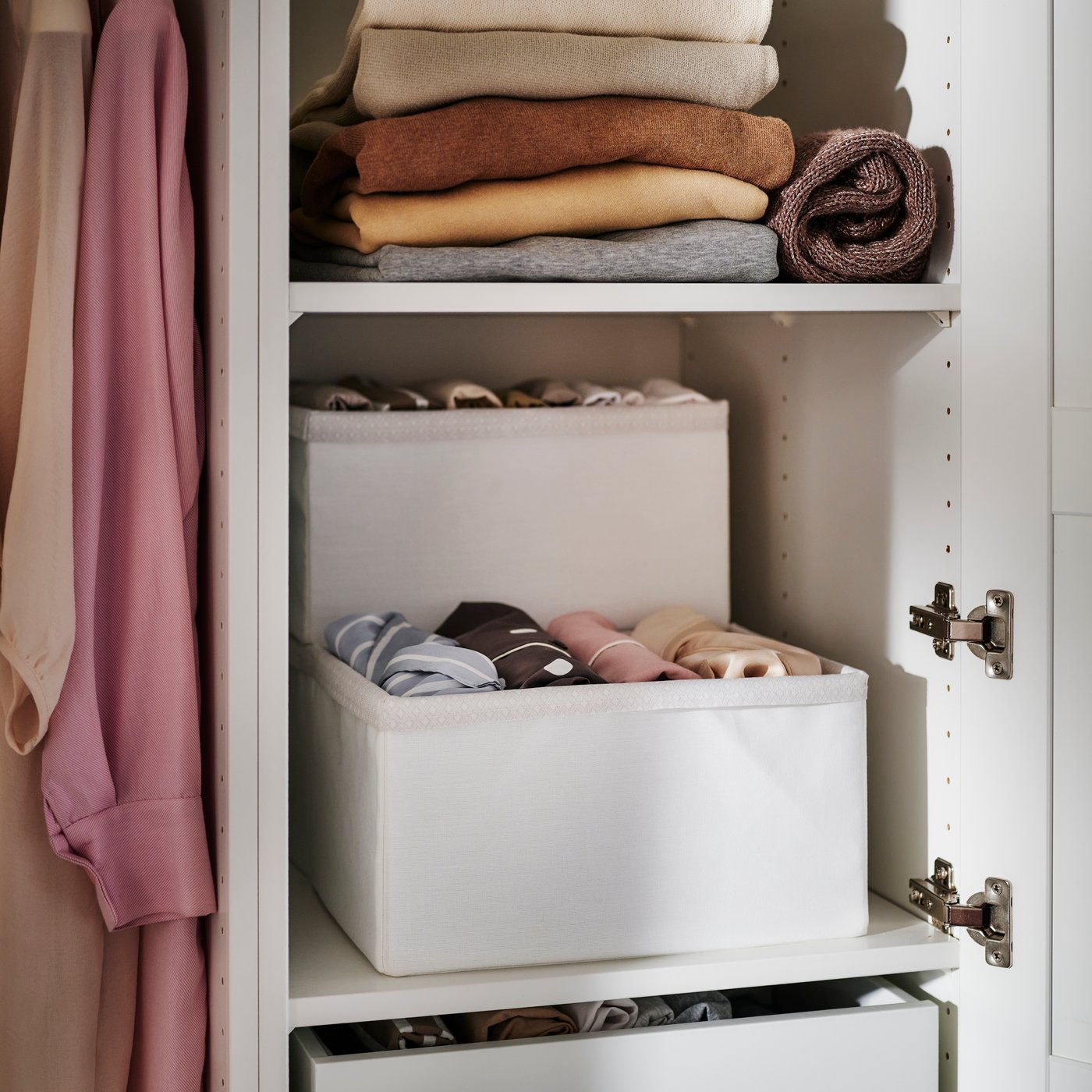
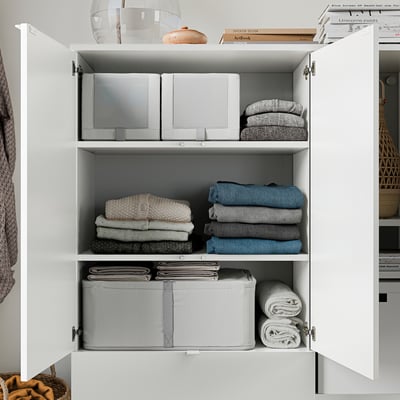
When thinking about which clothes to fold, start with garment type and fabric. A good rule is to fold stretchy items like sweaters and knitted tops – they can lose their shape if hung. Other great candidates for folding include t-shirts, vests, loungewear, jeans, and heavier fabrics. Store folded clothes in piles on shelves and in drawers.
2. Decide what’s going to be folded
When thinking about which clothes to fold, start with garment type and fabric. A good rule is to fold stretchy items like sweaters and knitted tops – they can lose their shape if hung. Other great candidates for folding include t-shirts, vests, loungewear, jeans, and heavier fabrics. Store folded clothes in piles on shelves and in drawers.
3. Get your hangers ready
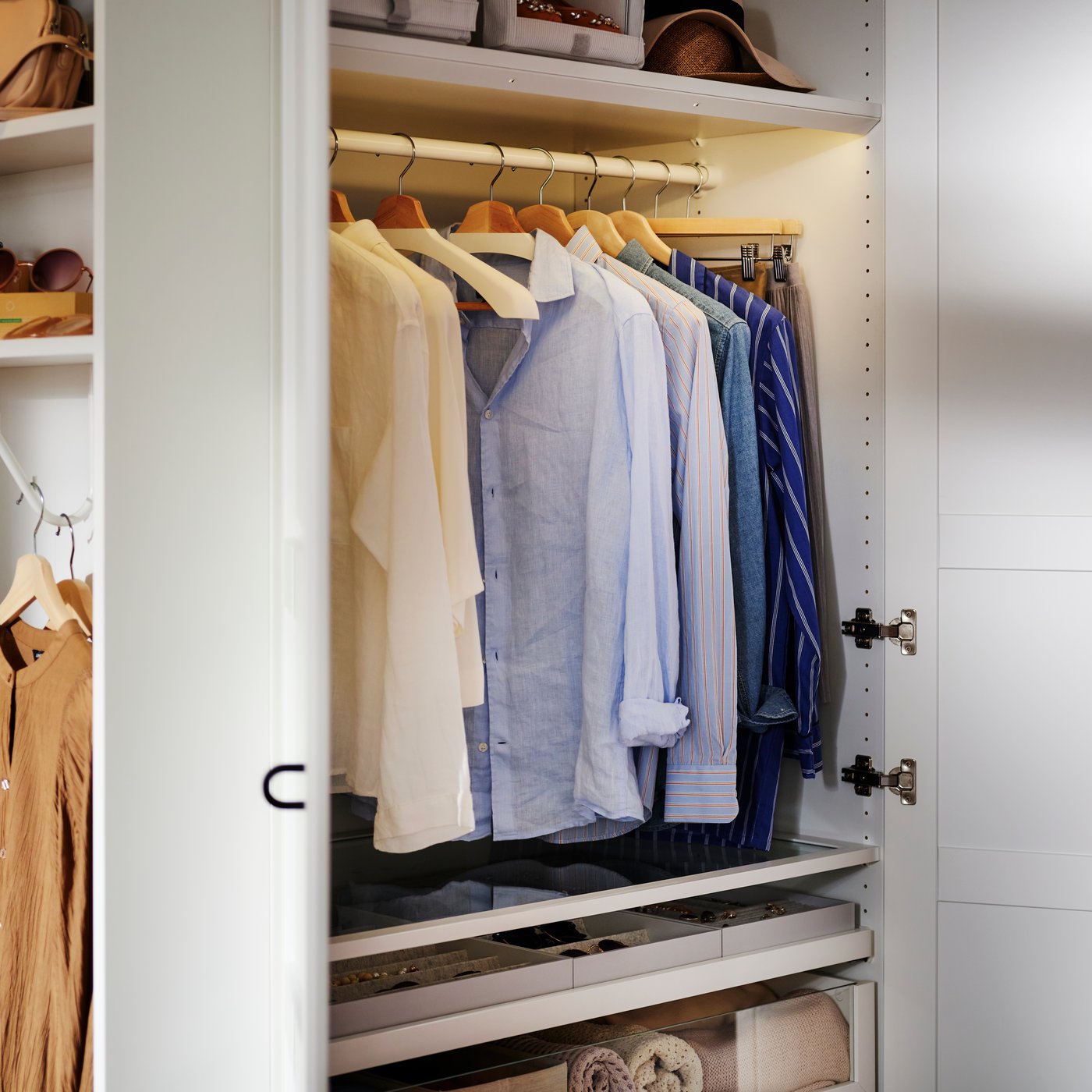
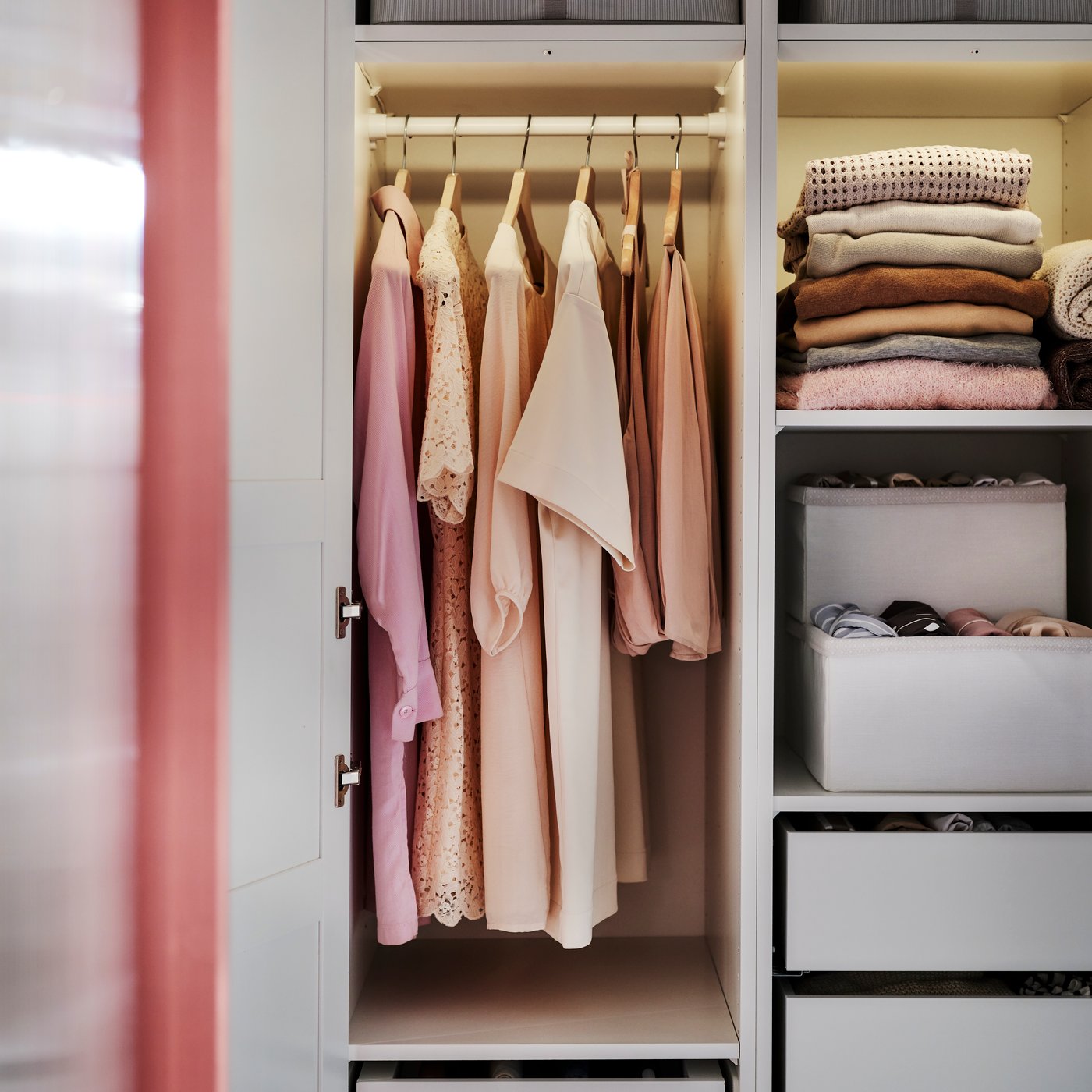
Hang blouses, tops, skirts, and jackets to keep them crease-free and ready to wear – especially if ironing isn’t your thing. Delicate fabrics like silk are best hung to preserve their texture. Choose a hanging rail that suits your space and don’t overload it – clothes can get crushed and be hard to see.
3. Get your hangers ready
Hang blouses, tops, skirts, and jackets to keep them crease-free and ready to wear – especially if ironing isn’t your thing. Delicate fabrics like silk are best hung to preserve their texture. Choose a hanging rail that suits your space and don’t overload it – clothes can get crushed and be hard to see.
4. Maximize dress hanging space
Most dresses should be hung, except stretchy, knitted ones. If you have lots of long dresses and enough room, put a full-height hanging section in your wardrobe. If not, hang clothes at the top part of the wardrobe and add drawers or shelves in the space below.
5. How to hang your pants right
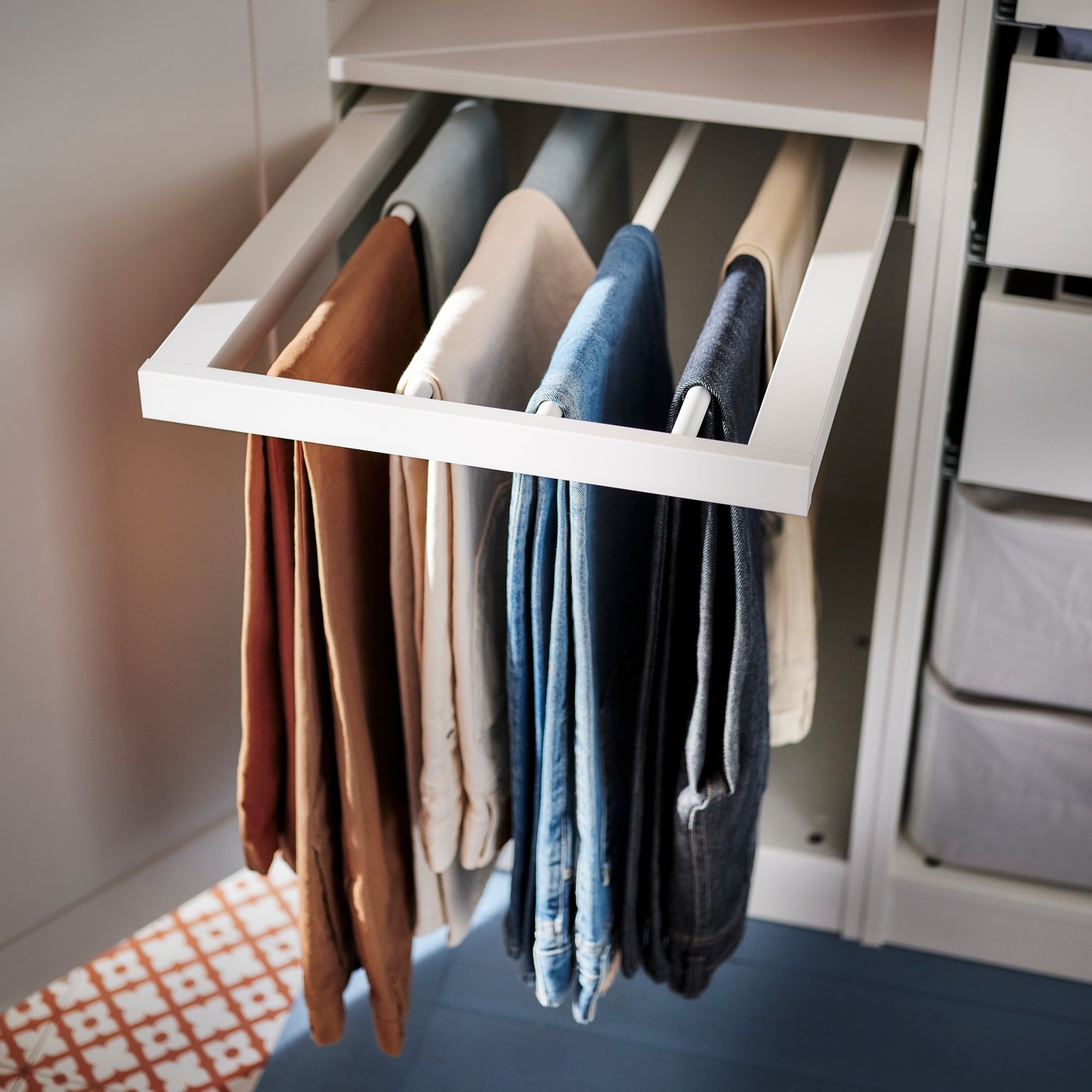
A good rule is to hang pants when they’re tailored or made from delicate fabric like silk or linen, and fold heavier pants like jeans or sweatpants. Hanging tailored pants helps them stay crease-free and reduces ironing time before you wear them.
5. How to hang your pants right
A good rule is to hang pants when they’re tailored or made from delicate fabric like silk or linen, and fold heavier pants like jeans or sweatpants. Hanging tailored pants helps them stay crease-free and reduces ironing time before you wear them.
6. Mix up storage boxes to maximize space
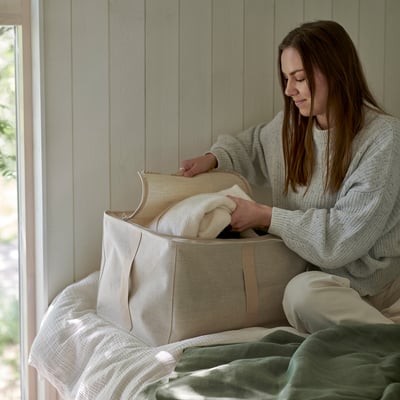
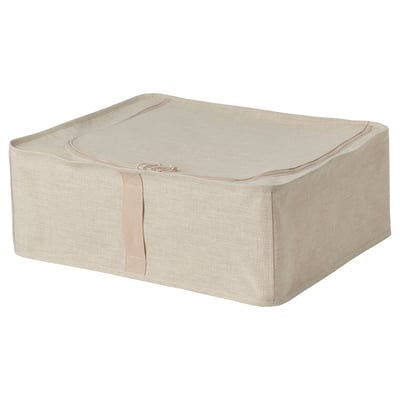
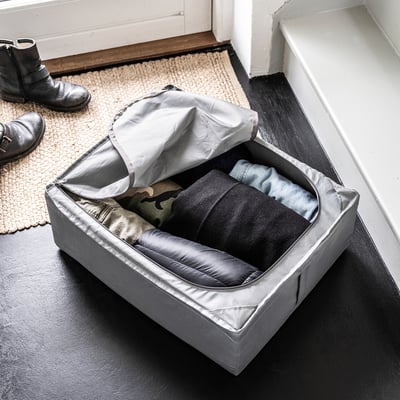
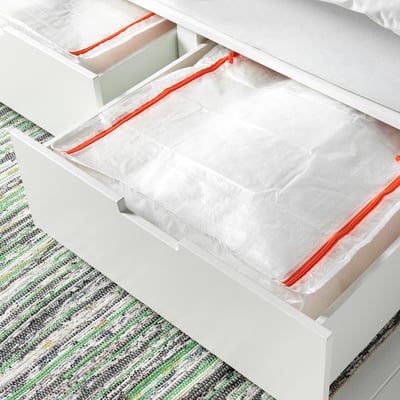
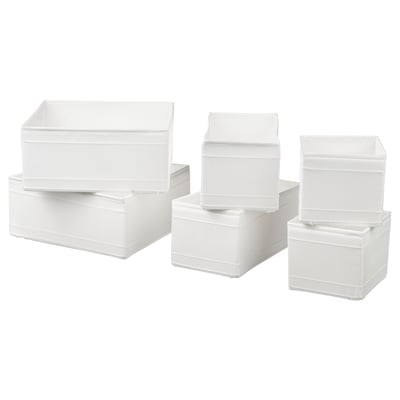
Clothes you’re not currently using can be neatly stored away in boxes. Go for boxes in various sizes to help them fit snugly into the nooks and crannies around the room. Our SKUBB and STUK boxes are conveniently designed to fit with our furniture, including at the tops of wardrobes and under beds.
6. Mix up storage boxes to maximize space
Clothes you’re not currently using can be neatly stored away in boxes. Go for boxes in various sizes to help them fit snugly into the nooks and crannies around the room. Our SKUBB and STUK boxes are conveniently designed to fit with our furniture, including at the tops of wardrobes and under beds.
7. Drawer organization made easy
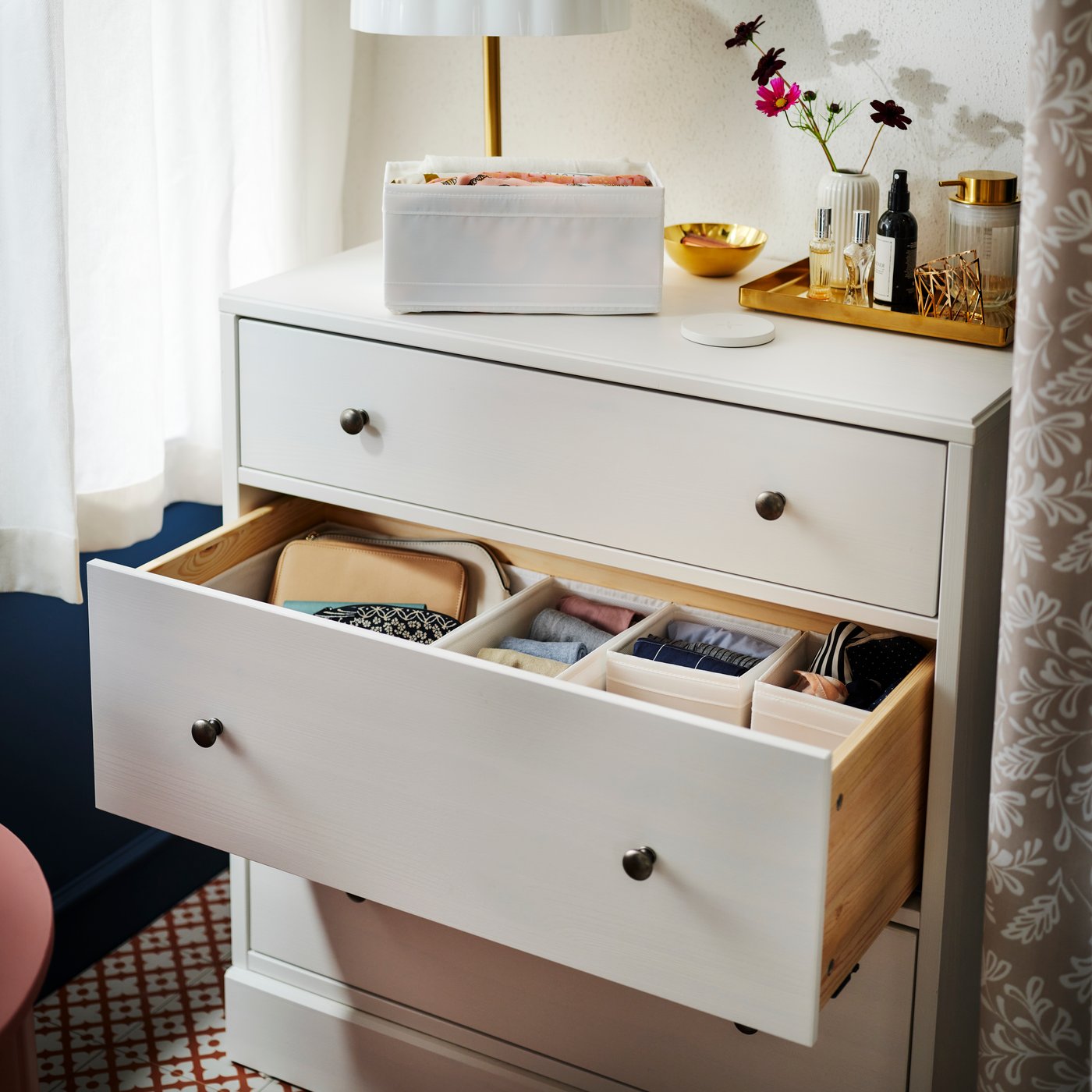
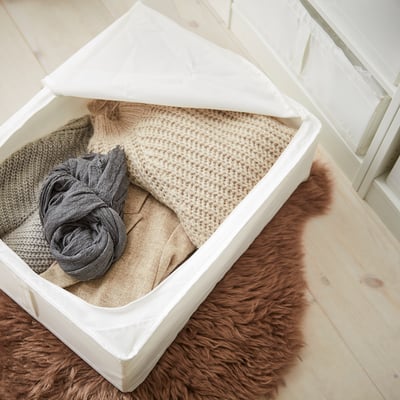
Keep your dressers organized by sorting clothes by type. Store sweaters, seasonal items, or occasional wear in the larger, lower drawers, leaving the top drawers free for essentials you wear every day like underwear, socks, and accessories. Small storage solutions like SKUBB boxes make managing smaller items easier – think underwear, vests, socks, and those odd-shaped accessories you’re not sure where to put.
7. Drawer organization made easy
Keep your dressers organized by sorting clothes by type. Store sweaters, seasonal items, or occasional wear in the larger, lower drawers, leaving the top drawers free for essentials you wear every day like underwear, socks, and accessories. Small storage solutions like SKUBB boxes make managing smaller items easier – think underwear, vests, socks, and those odd-shaped accessories you’re not sure where to put.









8. Put your storage on display
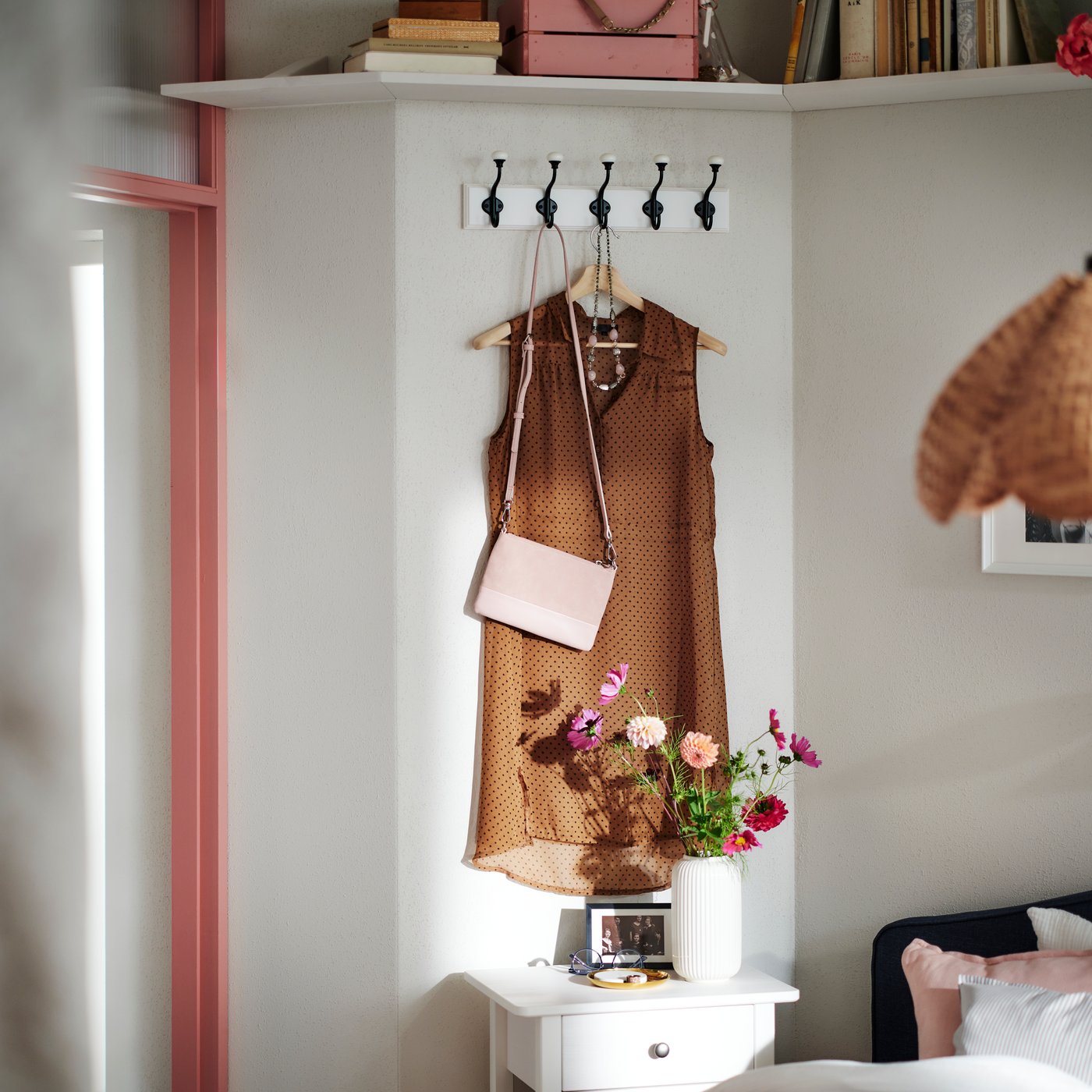
Don’t hide your favorite things away! Hooks on the wall are a great way to put things you love on show – and keep them neatly stored at the same time.
8. Put your storage on display
Don’t hide your favorite things away! Hooks on the wall are a great way to put things you love on show – and keep them neatly stored at the same time.
9. Meet your emergency helper
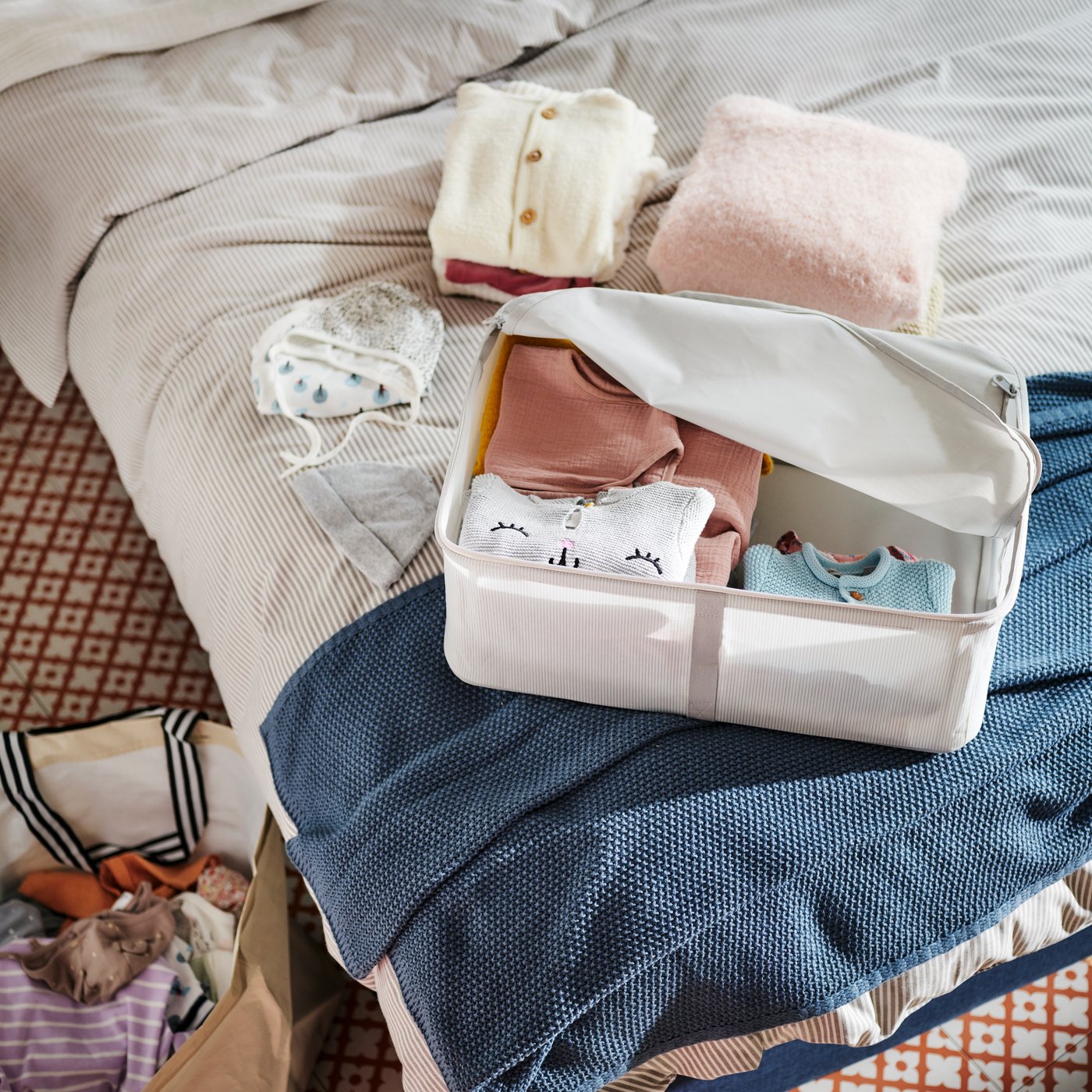
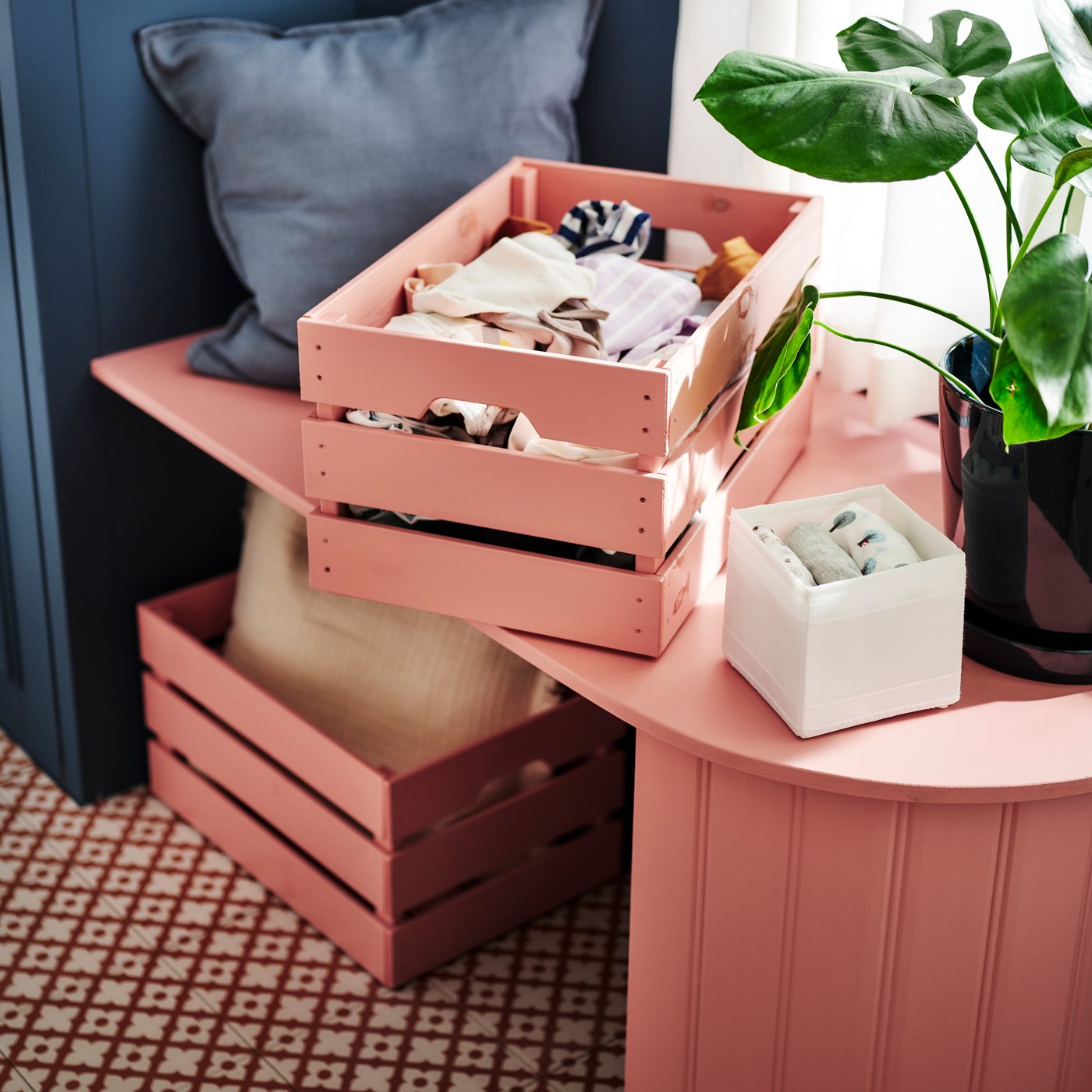
It’s 11pm on a weeknight and you’re ready for bed – except for one little problem: a pile of clean laundry you just don’t have the energy to sort. Time to bring out the emergency box! Keep an empty box or two handy, tucked under a bench or wherever you have the space. Scoop the clothes in and make a mental note to tackle them later.
9. Meet your emergency helper
It’s 11pm on a weeknight and you’re ready for bed – except for one little problem: a pile of clean laundry you just don’t have the energy to sort. Time to bring out the emergency box! Keep an empty box or two handy, tucked under a bench or wherever you have the space. Scoop the clothes in and make a mental note to tackle them later.
10. Give your room a transition zone
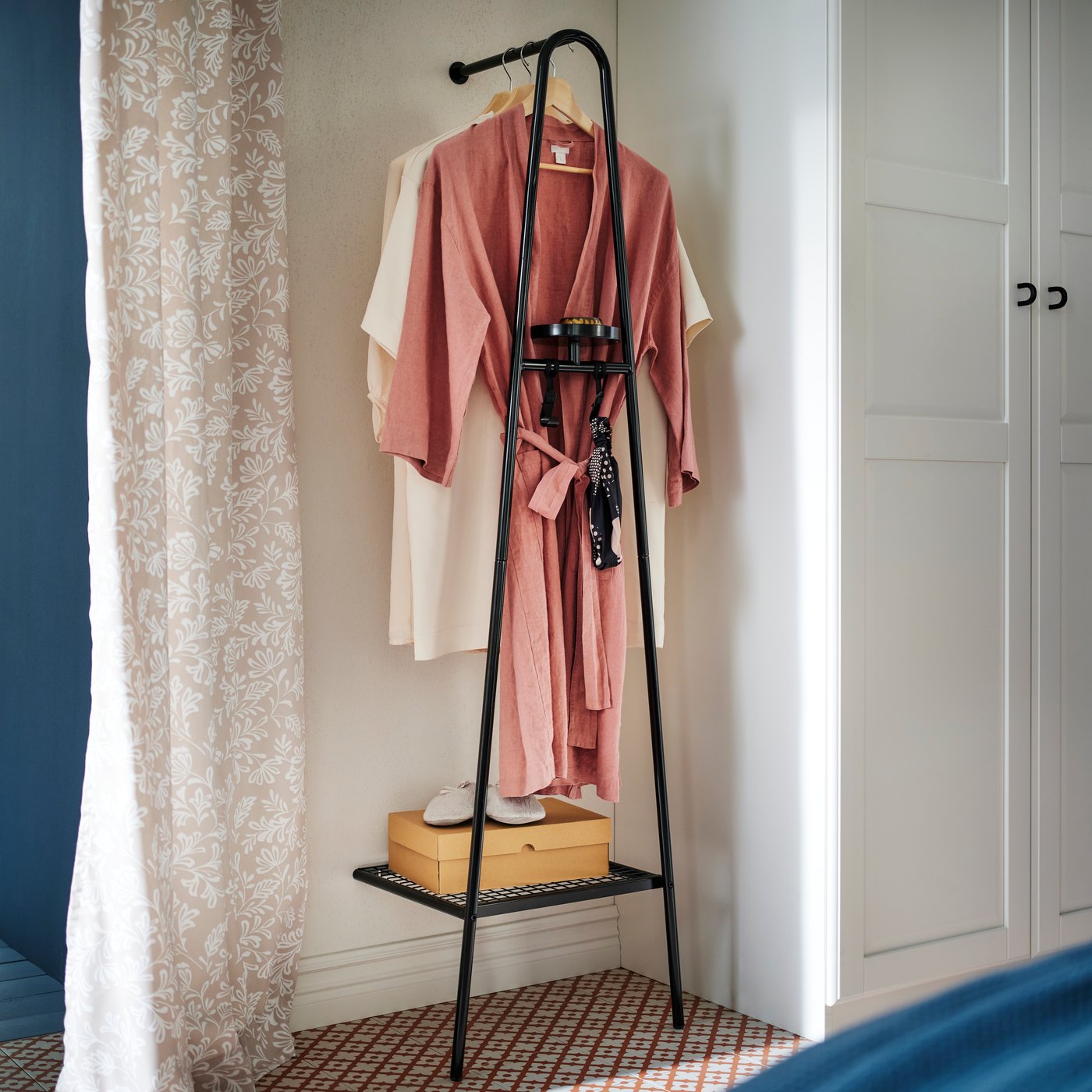
Looking for somewhere to hang clothes you wear only around the house or need to air out after one or two wears? Give them their own hanging space to keep them neat and tidy – rather than draped over chairs or scattered on the floor.
10. Give your room a transition zone
Looking for somewhere to hang clothes you wear only around the house or need to air out after one or two wears? Give them their own hanging space to keep them neat and tidy – rather than draped over chairs or scattered on the floor.