
Wood and forestry
We love working with wood. It's a fantastic material: beautiful, durable and long-lasting. And it can be used in lots of different ways. On top of that, it’s renewable - trees can be replanted to replace those harvested - and recycled wood is already part of a number of our products today.
For the future of our business and the planet, we want to utilise this valuable resource as efficiently as possible. We require that the forests we source virgin wood from, or own, are managed following strict requirements and audited annually by recognised certification bodies.
But what does that mean in reality? Let’s take a walk through our approach on how we source and use wood, answering some important questions along the way.
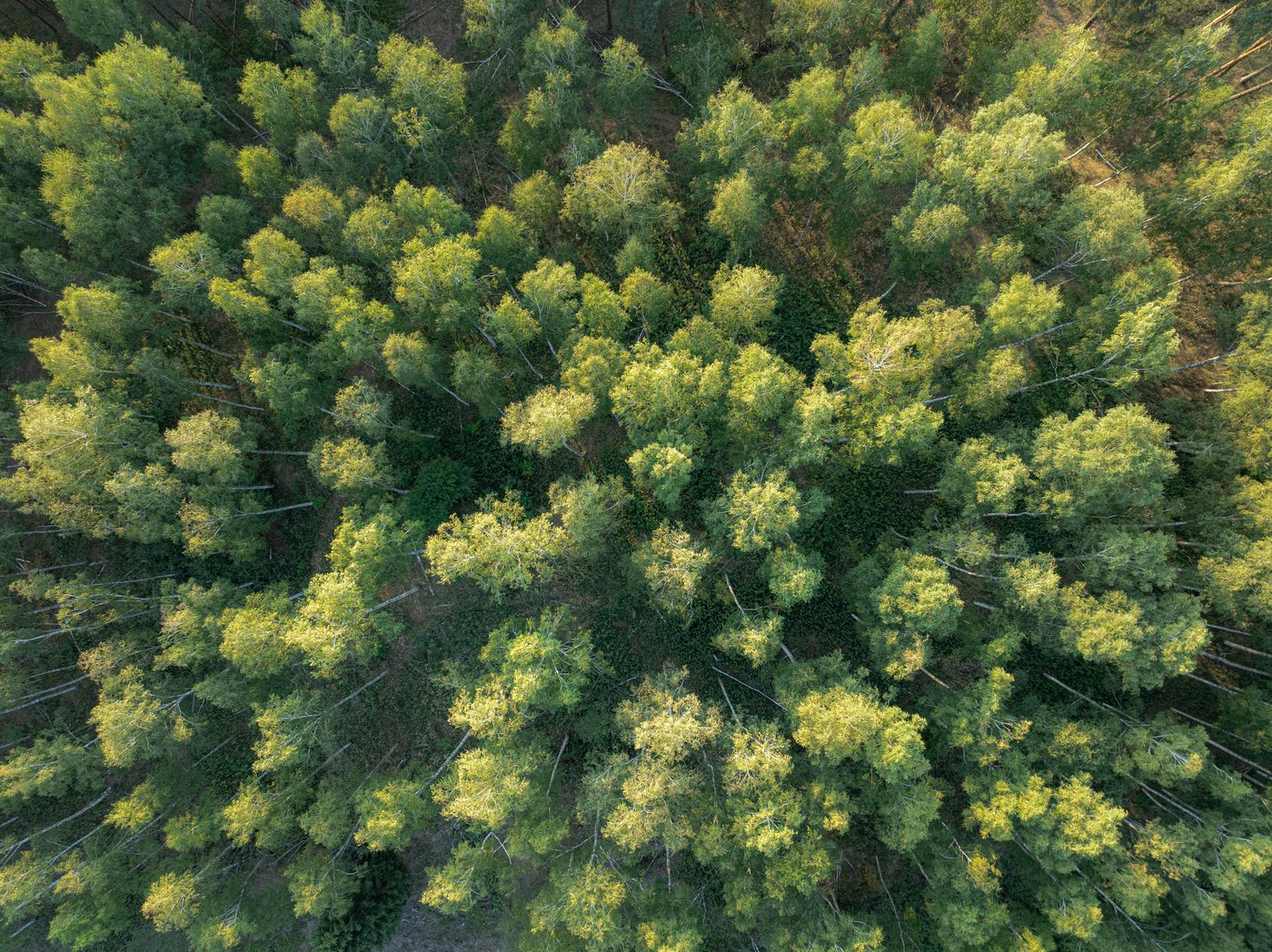
The wood we use
The wood used in IKEA products comes from many locations around the world. Learn where it grows, how much we use and what types of wood we source. We require that suppliers use Forest Stewardship Council® (FSC)-certified or recycled wood in our home furnishing products.
How much of the world's industrial wood do we use at IKEA?

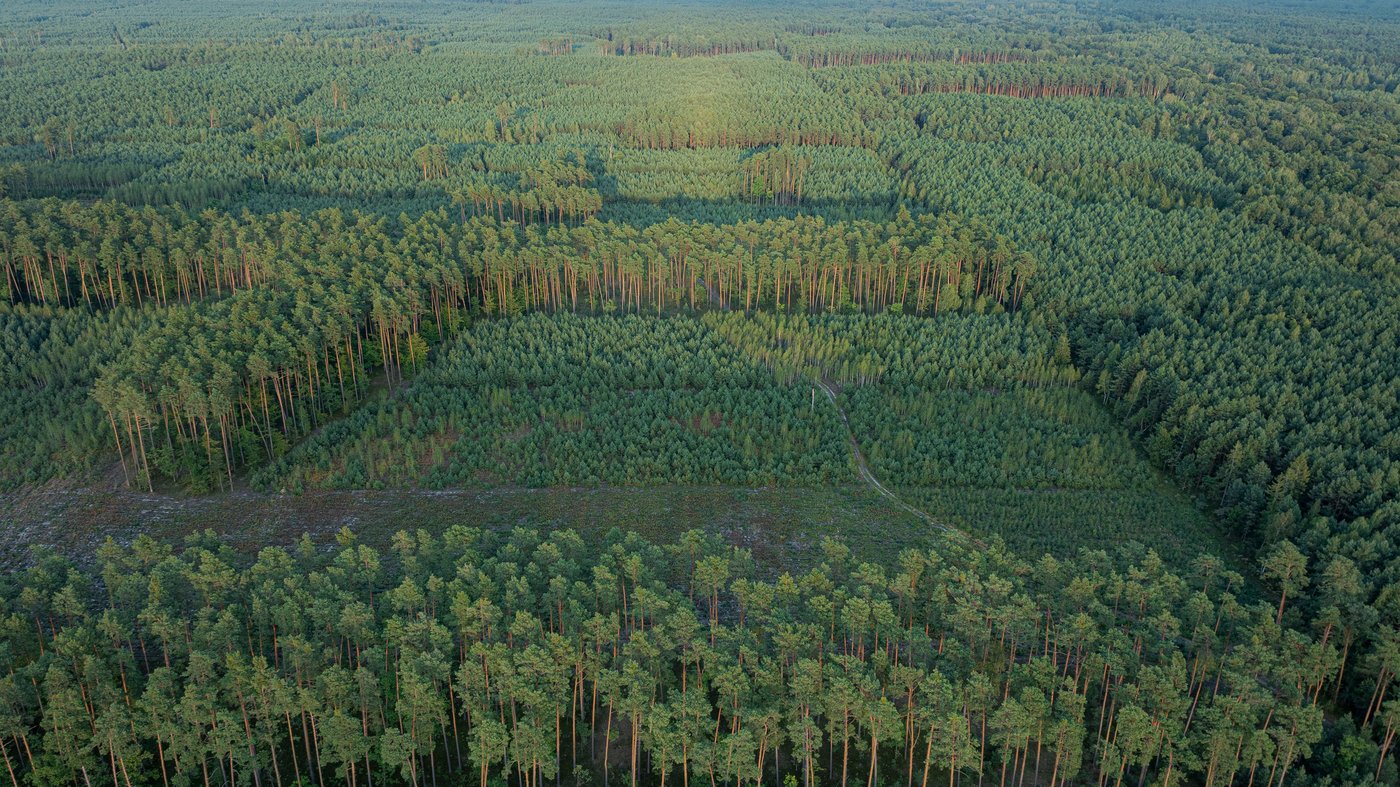
Wood Map
Our global wood map shows where the wood material (excluding paper) used in IKEA products comes from, along with other relevant information such as overall supply percentages from different countries, species of wood and volume per market.
Wood sourcing
IKEA Suppliers must comply with IWAY, our supplier code of conduct, which focuses on improving environmental and social impacts as well as working conditions. The forests they source wood from are managed based on strict requirements and audited annually by recognised certification bodies. At least 95% of the wood used in IKEA products is 3rd party certified by FSC®. We aim to build greater awareness for our customers, increase transparency around wood use, and encourage others to do the same.

Many viewpoints - all important
There are different views on how forests should be managed and protected. Some believe mother nature should be left as is. Others rightly highlight that many people depend on forests for providing food and shelter. At the same time, as a society, we also need to build houses, print books and make furniture out of wood. Is it possible to balance these seemingly opposing interests? The answer we believe is yes, we can. By working with other businesses, our suppliers and partners, local communities, governments, universities, and NGOs, we are turning that belief into action.

How do we decide which harvesting method fits each forest?
If we find something that’s not done right, what do we do to fix it?


Meet Maciej, IKEA raw material developer based in Poland
Maciej has spent years tracing the journey of wood from forest to furniture. Since joining IKEA in 2017, Maciej has been at the forefront of verifying the origin and species of wood used in IKEA products.
Maciej’s work takes him deep into sawmills and forests where he cross-checks supplier records with real-world conditions. At sawmills, he checks legal documentation and ensures that wood has been harvested in line with national regulations and applicable forest management standards. At logging sites, he ensures that operations are independently certified and in line with local regulations and sustainability standards.
“We match supplier information with what we see on the ground. If anything is off, we take immediate action to protect the integrity of our supply chain”, Maciej shared.
Efficiently used
We’re continually improving our processes and investing in innovation so we can use wood more efficiently and do more with less. We’re exploring how to create circular products so they can be reused, refurbished, remanufactured and eventually - after all other possibilities have been explored - recycled. At the same time, we’re doing our best to increase the amount of recycled wood when we manufacture our products to reduce the dependency on virgin wood.
Why can’t we use more recycled wood, instead of felling more trees in the first place?

Shaping change
- Product information page
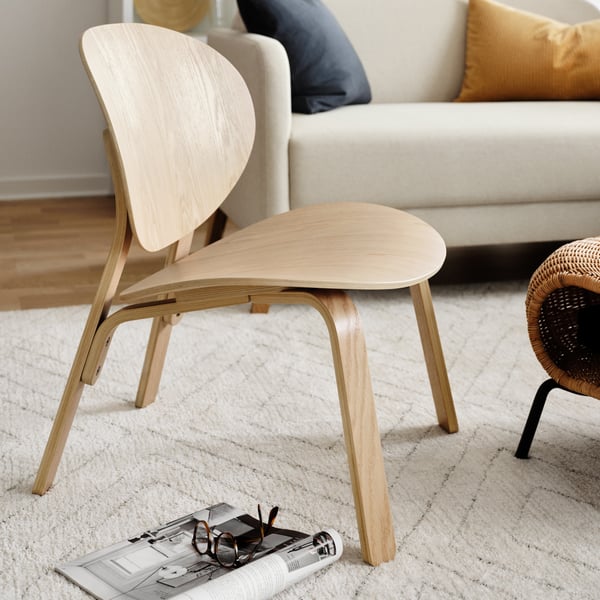
FRÖSET: bent for comfort and strength
Assembling multiple layers of veneer in special moulds and pressing and gluing them together allows us to create curved components. FRÖSET easy chair uses bent wood in different thicknesses. The back rest is thinner, so it flexes, while the seat is thicker to provide support where you need it most.
- Product information page
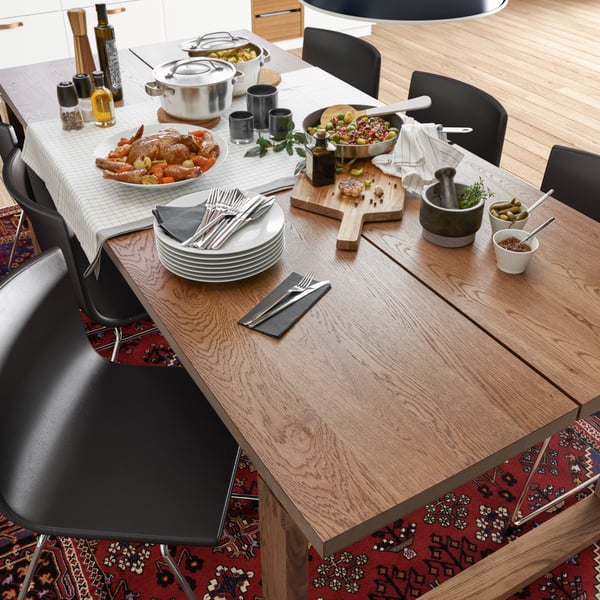
MÖRBYLÅNGA: combining wood types
Oak is a hardwood that darkens beautifully with age. MÖRBYLÅNGA tabletop has a top layer of between 0.6-0.8mm solid oak applied on particleboard, a way of using different wood materials in the same piece of furniture. This high quality finish is durable and makes every table unique.
- Product information page
RÖNNINGE: less wood, more legs
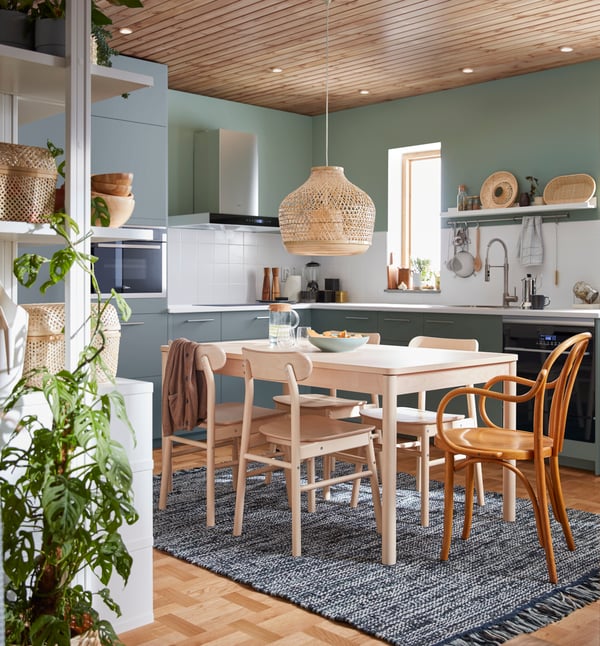
At IKEA, we’re driven to create more from less. When we design our products this way, not only do we use wood more mindfully, but we also make them lighter and easier to transport. For example, using hollow wooden legs on our RÖNNINGE table, we can make eight legs from the same amount of material previously used to make just one solid leg.
Going beyond IKEA
As one of the leading wood users in the retail sector, we believe in using our size and global reach to influence the forestry industry. We do this by working with other businesses, our suppliers and partners, local communities, governments, universities, and NGOs.

WWF and IKEA: 20+ years of a fruitful partnership
Since 2002, IKEA has partnered closely with WWF in numerous countries around the world to safeguard natural resources and transform business practices across forestry, cotton, water and climate. By managing and protecting forests, tackling threats such as forest degradation and supporting laws that combat illegal trade in timber, our aim is to ensure forests, and the people that depend on them, have a healthy future.

Restoring rainforest with Sow a Seed
Deforestation and degradation of rainforests poses a major risk to the world's climate, biodiversity and more. Launched in 1998, our Sow a Seed project in Borneo has led to the protection of a total of 18,500 hectares of heavily degraded rainforest in Malaysia. These actions include the restoration of over 14,000 hectares (equivalent to about 25,900 soccer fields). It's a large-scale and long-term tropical forest ecosystem restoration project with research being conducted to guide others who want to restore rainforests.
What is FSC certification? And why do we influence the standards that hold us accountable?
