Space for your baby (and lots of love)
Congratulations on your new family member! At the start, a baby mostly needs affection and tenderness, and you as a parent are most important.

But there are things to help make your surroundings simpler, more fun – and safer. All our products are developed and produced with a focus on safety and children’s needs. We collaborate with some of the world’s leading child experts, perform careful risk analyses and follow the strictest safety requirements, so you can feel safe and focus on your baby.
Small children and their development
0-3 months
Although it may not always feel like it for you as a parent, your baby sleeps for most of the day during the first few months, often up to 20 hours. Vision and hearing are the senses used to become familiar with the outside world, but the eyes and ears are still sensitive to strong light and loud noise. The ability to focus eyes is not yet fully developed. A baby has significantly thinner skin and a higher respiratory rate than older children and adults, so that’s why it’s important that the baby is not exposed to any harmful chemicals.
3-6 months
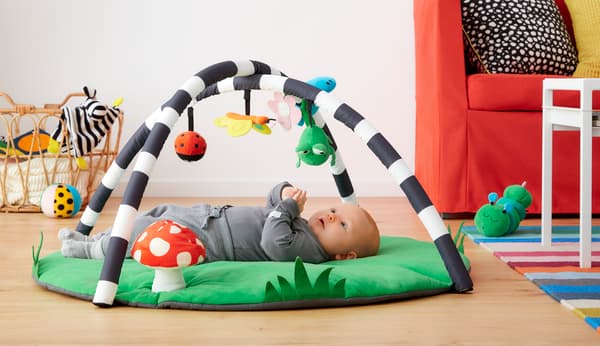
After a couple of months, vision and hearing have developed and the baby is ready to discover more of their surroundings. The motor skills of the fingers are more developed, and the baby likes to reach out for small things that hang from the baby gym and the mobile. Even the mouth is used during this journey of discovery, and everything within a baby’s immediate surroundings will be tasted.
6-12 months
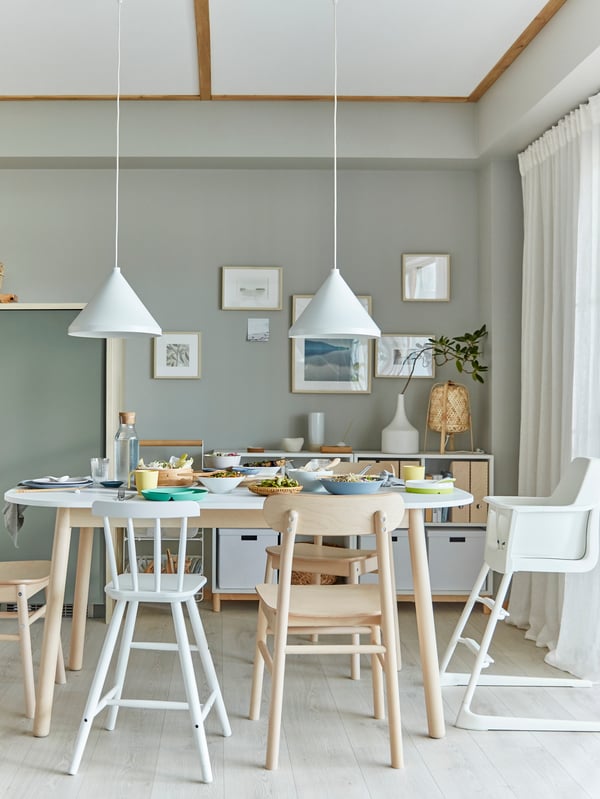
Now your baby has developed their motor skills further and can soon sit without support. A little later in this period, the baby starts crawling, standing and maybe even walking. A toddle truck provides good support when legs are still a bit unstable. Let the family’s youngest member sit with the rest of the family at the dining table in their own secure highchair. But move fragile items out of reach, since a popular activity for babies is to grab things and hit them against each other.
12-18 months
Your child is going to now explore and get around the entire home. Running, climbing, playing hide-and-seek, throwing and rolling things are different ways to develop balance, motor skills, logical thinking and imagination at this age. The need for sleep is less now and it’s enough with about 12 hours of sleep per day.
18-24 months
Your child has enjoyed fantastic development during the first 18 months and continues to develop motor skills, logical thinking and imagination. At this age, the child can use their entire hand to hold a spoon or a mug and eat on their own. Closer to the age of two, your child is in constant motion when awake and likes to pull and push furniture when playing.
Good-to-have list for the baby
Sleeping
- Cot
- Cot mattress
- Mattress protector
- Fitted sheet
- Sleeping bag
- Quilt
Nappy changing and care
- Changing table
- Baby care mat/cover
- Cotton blanket
- Washcloths
- Baby bath
- Bath toy
- Towel with hood
- Dribble bib
- Storage
Eating
- Nursing pillow
- Plate, mug and spoon
- Bib
- Highchair with safety belt
Playing
- Baby gym
- Play mat
- Mobile
- Rattle
- Soft toy
- Toddle truck
Safety
- Drawer catch
- Window catch
- Baby monitor
Important sleep
3 tips for a good sleep
- Unwind well in advance before bedtime.
- Make the room dark.
- Try and have a temperature of max. 18°C.
The cot – where the baby sleeps safest
Safe cot for a growing baby
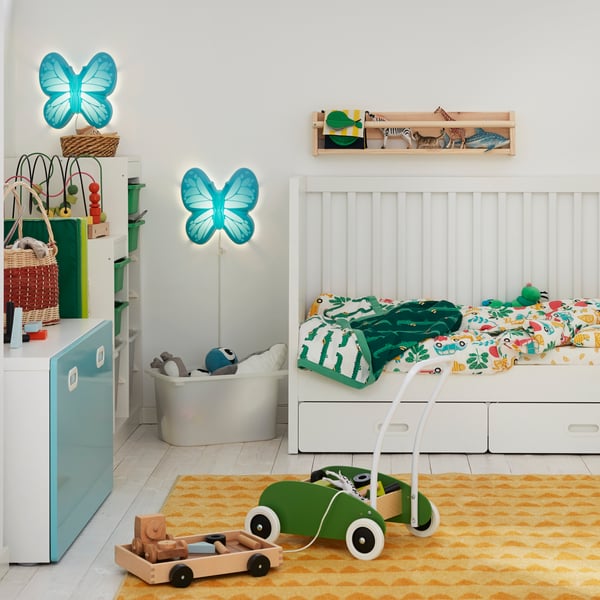
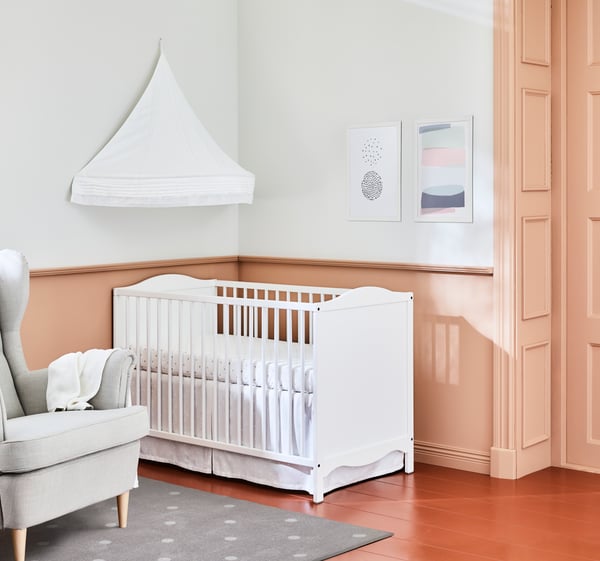
We have very strict safety requirements for our cots, but we cannot affect the immediate surroundings of the cot. That’s why it's important to take note of our recommendations. If you place the cot next to a wall, it should stand right against it to avoid the risk of your baby getting stuck between the cot and the wall. Make sure that there are not any pieces of furniture, blinds, loose cords, curtains, drapes, or openable windows within reach of the cot. A potential hazard with cots is that the child tries to climb out it on their own, so when your baby starts to situp, it’s time to move the base lower down so that they cannot fall over the cot’s edge. When the baby is even bigger, it’s possible for most of our cots to remove one side and replace it with a guard rail. This makes it easier for the child to get in and out of the cot on their own and this reduces the risk of falls.
Dimensioned mattress
That’s why all our dimensioned cot mattresses follow applicable safety standards, and we perform careful tests to ensure that the baby’s head can not sink too deep into the mattress. With a mattress that’s exactly dimensioned to a cot, you avoid gaps where the baby's head, arms, or legs could get stuck.
Soft and comfortable bed linens
Use a fixed fitted sheet and put your baby in a sleeping bag that gives an even temperature and can’t be kicked off. All textiles are tested and free from substances and chemicals which can harm a baby’s skin or health, such as phthalates and flame retardants.

- Product information page
- Product information page
Cosy times full of care
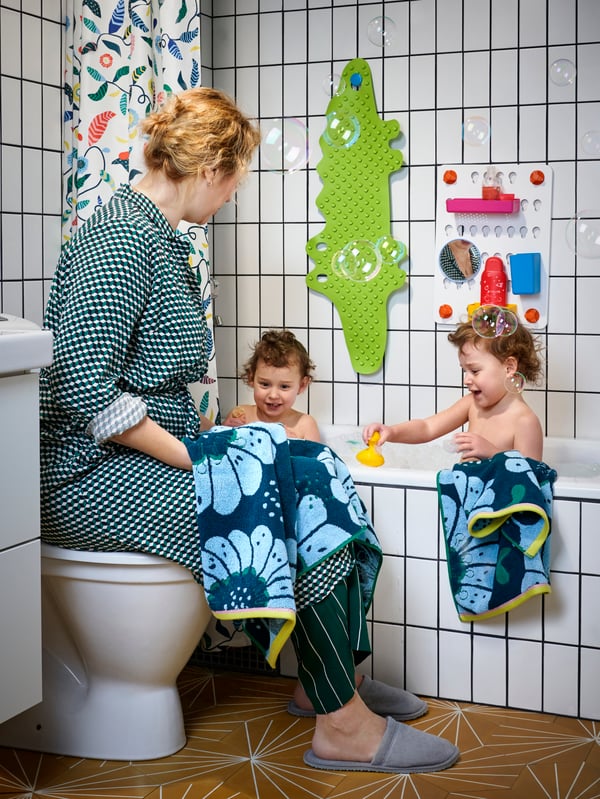
Nappy changing, baths, and dressing are great chances to talk, sing and laugh. Maybe it’s one of these times when you see your baby’s first smile.

- Product information page

Spills, laughter and safe meals
3 tips for handling spills
- Put on a bib and have a washcloth close at hand
- Cut food into pieces that are easy to pick up
- Place a floor protector under the highchair