How to clean and maintain your pots and pans
Do you want to ensure your pots and pans last for a long time? Learn these top tips for cleaning your stock pots and frying pans and find out how to maintain them properly to help them last longer. Long live your cookware!
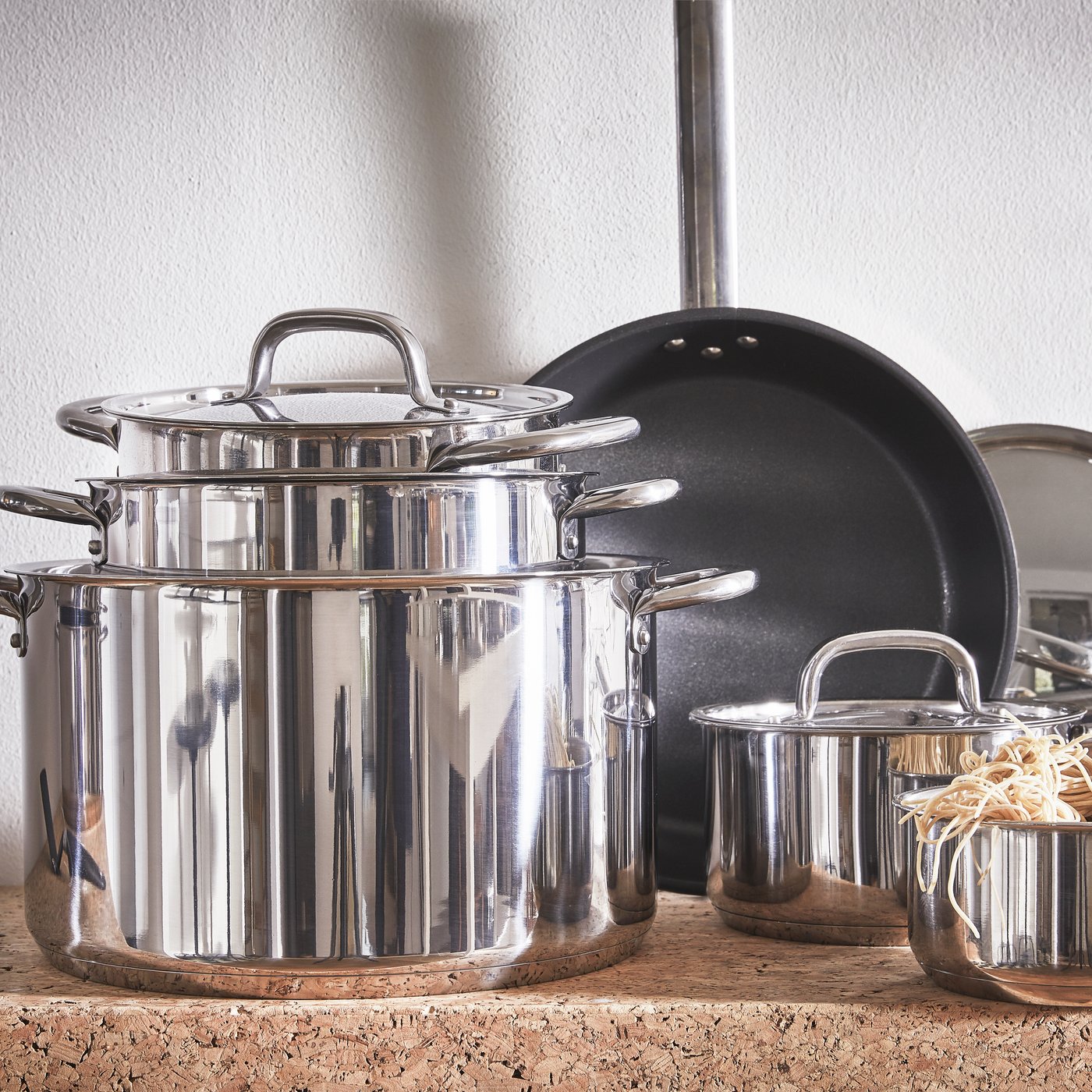
3 simple and fundamental rules for any cookware
Have you ever bought a high-quality pot or pan, only for it to be ruined straight away? In most cases it's because they aren't being used, cleaned or looked after properly. To help, we have drawn up a list of simple, easy-to-follow tips so this doesn't happen to you again. Give these tips a try and help your culinary investments stand the test of time.
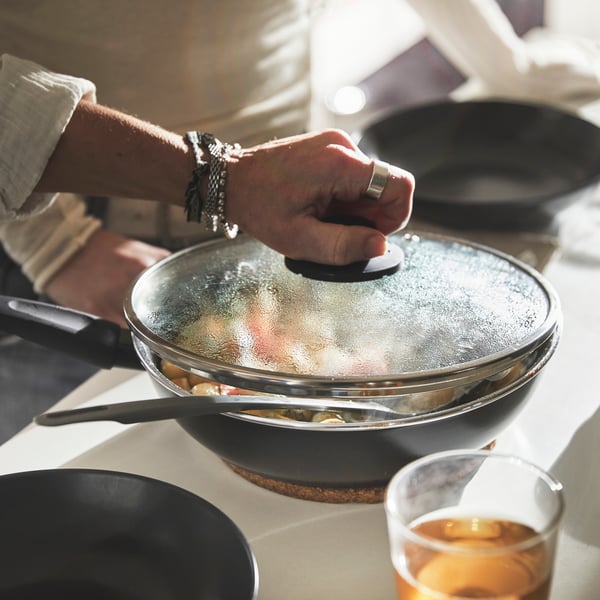
1. Allow them to cool before cleaning
Giving them a moment to cool down first helps them last longer.
When pots and pans heat up, the base expands slightly. If they are rinsed with cold water whilst still hot, they do not get the chance to return to their natural shape. Over time, this can cause the base to become uneven, which affects stability during use.
The solution is straightforward. Allow your cookware to cool for a few minutes before washing. This small pause helps to preserve the shape, keeping your pans flat and stable for years to come. Sometimes, the best care simply requires a little patience.
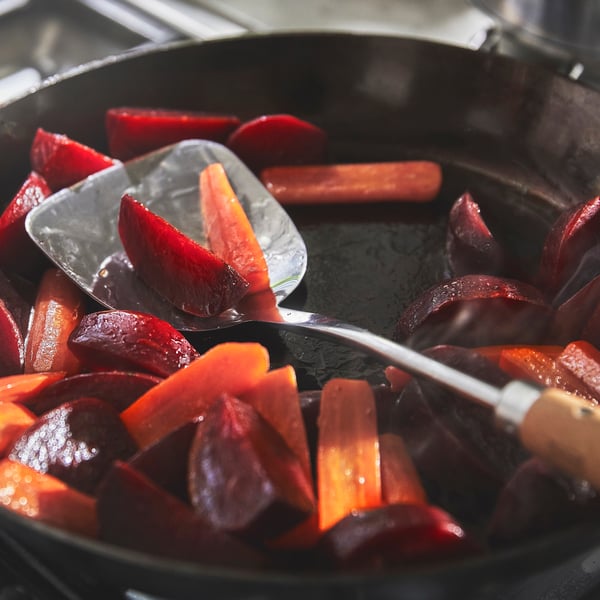
2. Cook with them, but don't use them for food storage
Pots and pans are designed for cooking, not for keeping food in. Many foods can stain or discolour cookware if left inside for an extended period of time.
A simple solution is to transfer leftovers into glass or plastic food containers once cooking is done. They are purpose-built for storage, keeping food fresh and just as tasty as when it was first made.
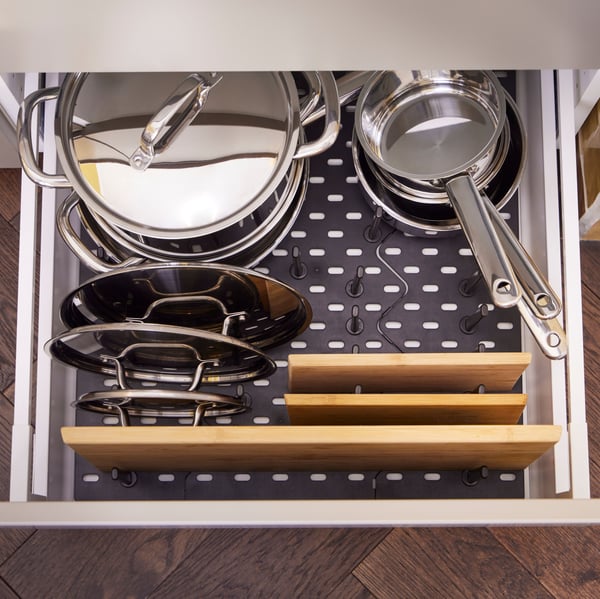
3. Store your cookware with care
How cookware is stored matters just as much as how it is cleaned. Stacking pots and pans directly on top of one another risks scratching the surfaces and damaging the non-stick coating over time.
A better approach is to use drawer organisers. Storing lids and pans vertically not only protects the material from scratches, but also makes it easier to find and retrieve what you need.
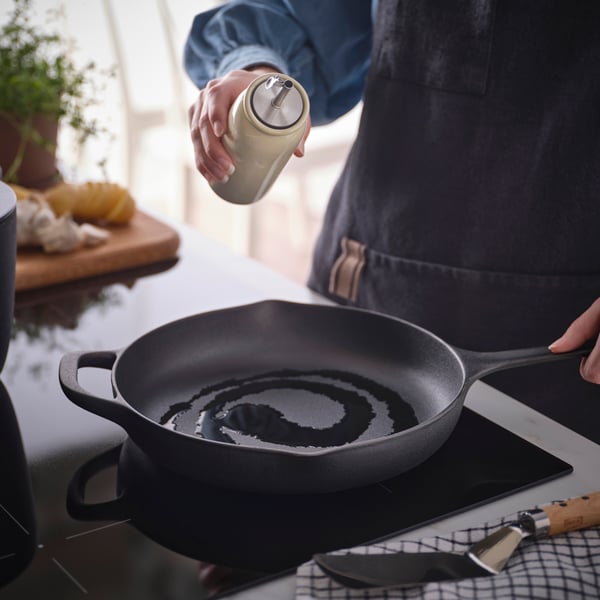
Believe it or not, read the instructions
After you've made the important decision of choosing a pot or pan and feel confident that it's the best cookware to suit your cooking style and routine, it's time to learn how to look after it.
We know, we don't like reading the instructions either…but there are times when it's needed.
Every IKEA pot and pan comes with a small booklet with instructions and basic tips to help you look after your pot or pan.
As a general rule, we always recommend that you thoroughly clean and rinse your new pot or pan before you use them for the first time.
But before do, have a look at what your pot or pan is made of and whether or not it has a non-stick coating. Then check out our tips for caring for your cookware based on material below.
Did you know?
You can find information on how to clean your cookware and which hob type it's compatible with in several places:
- On the IKEA website or IKEA App
- On the price tag in stores
- On the packaging
15 year guarantee
Everyday life at home puts high demands on cookware. We offer a 15 year guarantee on IKEA pots, pans and woks without a non-stick coating.
Learn moreTips for caring for your cookware - by material
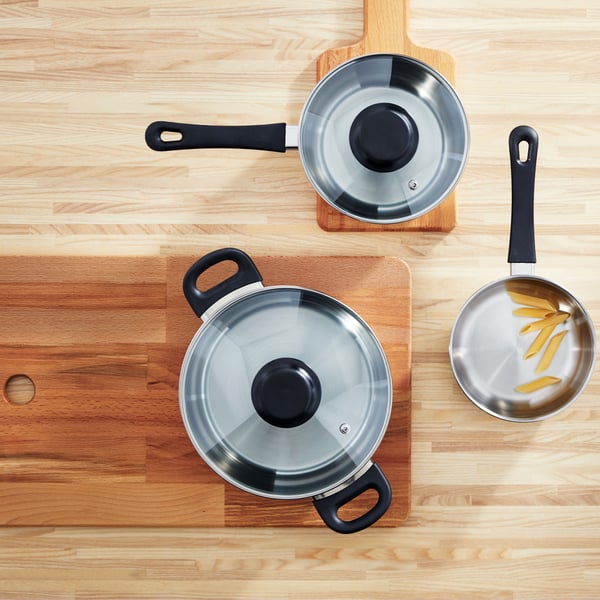
- Product information page
Stainless steel pots and pans
Stainless steel pots and pans are well-known for their impact resistance and durability. Here are some simple steps to take to help them live up to this reputation.
Recommendations:
- Never clean them with steel wool or powders, as they might get scratched.
- Unless they're non-stick, you can put them in the dishwasher.
- If food is stuck to them, try pouring a little detergent on top of it. Add some water and heat it up. Leave it to boil and you'll be able to clean the stuck on food easily.
- Lime, salty water and lemon may stain the metal. To prevent this from happening, dry the product immediately after washing. You can also wait to add the salt and lemon until the water is boiling.
- Top tip: If stains persist, wash them away with vinegar and water. Pour a little vinegar into the pot or pan and bring it to the boil. You will need one teaspoon of vinegar per litre of water. This will keep your pot in tip-top condition.
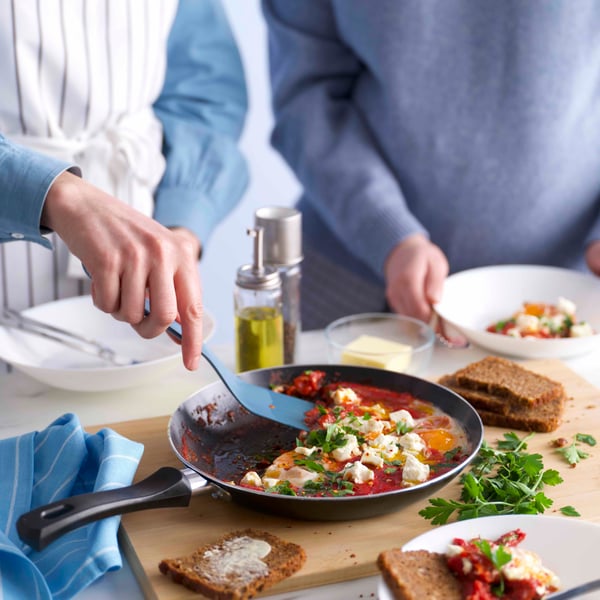
Aluminium pots and pans
As well as being an excellent thermal conductor, aluminium is lightweight and rust-resistant. However, special care should be taken to avoid scratches. Here are our tips on how to look after aluminium pots and pans.
Recommendations:
- Always wash them by hand, as they are not dishwasher-safe.
- Dry after washing to keep their shine.
- If they are not non-stick, avoid using them to cook acidic foods (like tomatoes or lemons), as this could affect the oxide coating covering the pot or pan.
- Don't leave food in them for too long to avoid discolouring the metal.
- Use non-metal utensils made of plastic, silicone or wood to avoid scratching the aluminium.
- Top tip: Use a protector to help stack them more safely.
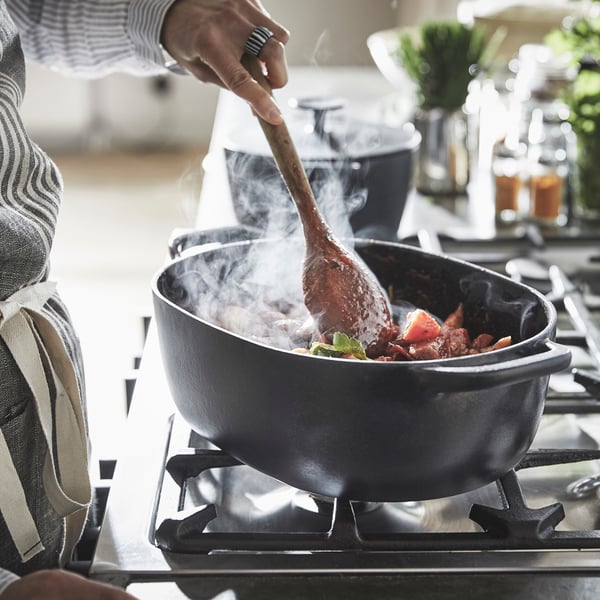
- Product information page
Cast iron pots and pans
Do you know the expression "get better with age"? Well, this can be said of cast iron cookware. Cast iron is one of the most traditional materials used in the manufacture of pots and pans. It's durable and an excellent choice for browning or frying food. It gets better each time you use it, if the metal isn't treated, then it will absorb the fat from the food cooked, leading to even better results next time.
Recommendations:
- Don't put them in the dishwasher.
- You can use hard sponges or steel wool to clean them. But don't use too much detergent, as it can damage the material when drying if it's not removed properly.
- Untreated cast iron pots and pans must always be seasoned. If they have an enamel glaze, this won't be necessary.
- If the enamel on your pot or pan is matt rather than shiny, grease it with a little oil before use. And from time to time, go over them with some oil-soaked paper after use.
- Top tip: Sprinkle some salt into the pot or pan (to absorb any remaining fat) and wipe it down with a piece of kitchen roll or a tea towel. This will make sure it's cleaned thoroughly.
- Product information page
Non-stick pots and pans
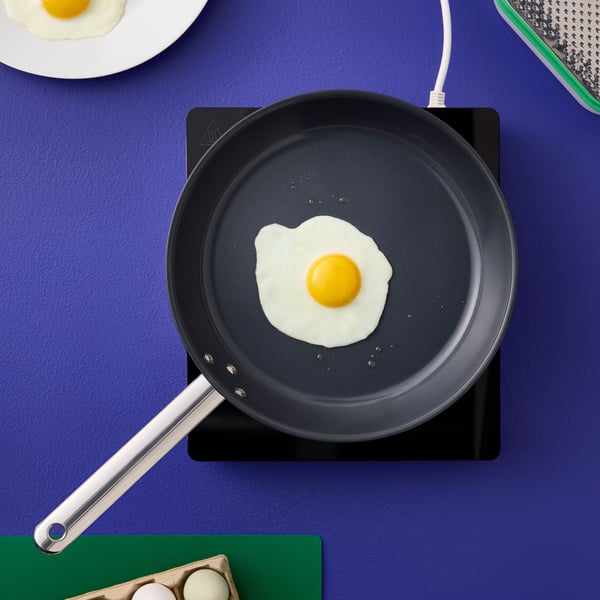
IKEA non-stick cookware has a silica material called Sol-gel ceramic which keeps it's non-stick properties for a long time with proper care and usage. This durable coating has excellent non-stick ability without the use of PTFE or other PFAS.
Recommendations:
- Don’t exceed the recommended temperature of 250°C/482°F
- Avoid metal utensils that could scratch the coating.
- After cooking, let it cool down and handwash it with warm water, soap and a soft sponge to avoid scratching the non-stick coating.
- Top tip: If your pot or pan contains residual burnt food that simply won't come off, remember this top tip for completely removing this sticky mess.
Fill the pot or pan up with water and add four or five tablespoons of dish soap. Put it on the heat and bring the contents to a boil. Stir with a spoon or spatula made of plastic, silicone or wood, then carefully scraping away the food residue. After a few minutes, the fat will dissolve and lift away the grime. Once you've done this, wash your pot or pan as usual. After it has dried, you'll need to grease it again.
- Product information page
Copper pots and pans
Copper pots and pans don’t just look beautiful; they’re also excellent conductors of heat, which makes them great for controlled cooking and sauces.
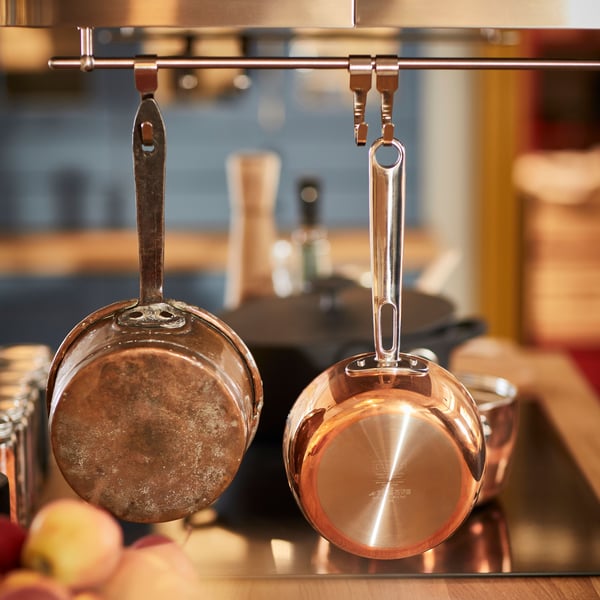
Most modern copper cookware has a durable stainless steel interior, so it’s easy to use and clean, while the copper exterior will gradually darken and develop a natural patina over time. You can either keep this lived‑in look or polish the copper back to a bright shine. With gentle handwashing, moderate heat and a little occasional polishing, your copper cookware will stay both practical and decorative for many years.
Recommendations:
- Don’t put them in the dishwasher – handwash with warm water, mild detergent and a soft sponge.
- Use low to medium heat: copper conducts heat very efficiently, so you don’t need a high setting and should avoid flames or hob zones larger than the base.
- Dry thoroughly with a soft cloth after washing to prevent water stains and mineral marks.
- To restore shine, polish the copper exterior occasionally with a mix of white vinegar and salt (or a gentle copper polish), then rinse and dry well.
- If you stack your pots and pans, place a cloth or pan protector between them, or hang them on hooks, to avoid scratching the copper surface.
We love it when customers use our products in a creative way. Why not try being creative too? But do remember, any modifications or changes you make to IKEA products prevent them from being resold or used for their original use, and so voiding IKEA product warranties and your right of return.