
Published 18 December 2023 • Inter IKEA newsroom
Our reflections from COP28
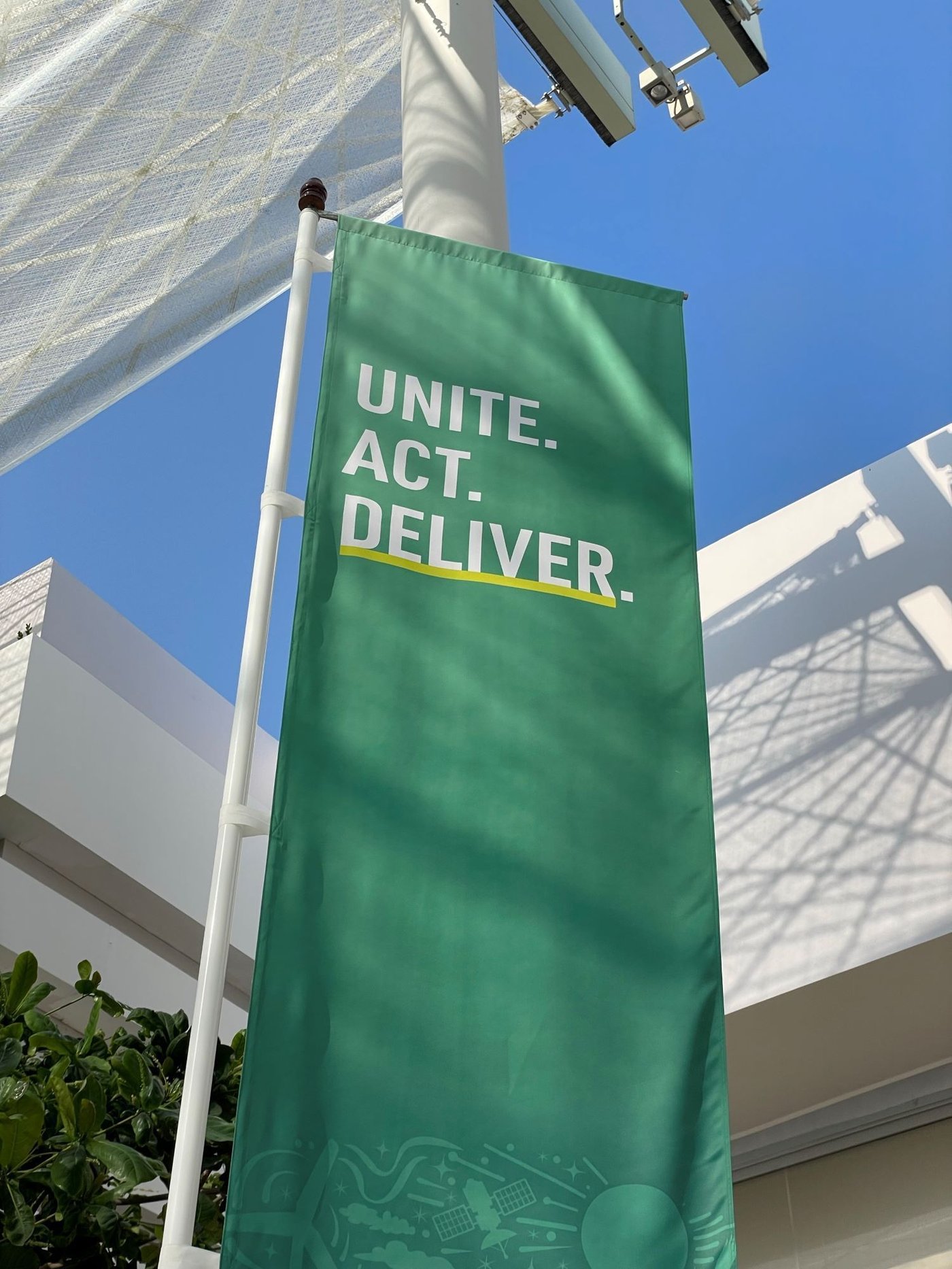
In the first two weeks of December, we attended COP28, the global climate conference held in Dubai this year. While crossing the doorsteps of the venue, we could already feel the energy. Thousands of global leaders, government officials, business heads and citizens came together to address the climate emergency.
Like many others, we came with the expectation of seeing concrete results from the negotiations, including a clear and decisive mandate for the world to move towards a complete phaseout of fossil fuels and scaling up of renewable energy options.
While the final document unfortunately refrains from supporting the total phase-out of fossil fuels, it does highlight the necessity to transition away from fossil fuels. We need to continue building on the COP28 agreement and take climate actions with the science of 1.5C.
The COP28 agreement also calls on countries to take action to triple renewable energy capacity and to double the annual rate of energy efficiency improvements by 2030. Businesses played a big role here, driven by the We Mean Business Coalition's Fossil to Clean campaign. IKEA was proud to support this effort.
At COP, we, along with our partner Exponential Roadmap, launched “Map & Eliminate”, an initiative to develop a methodology supporting businesses to phase out fossil fuels across their value chains. We shared how we approached the topic and offered concrete suggestions for businesses that are about to take their first decarbonisation work steps. In line with that, we see it as very positive for businesses that the COP28 agreement calls all countries to review and develop enabling policy frameworks for businesses to contribute fully.
Our climate and circular agendas are critical parts of our transformation and our overall approach to sustainability. We welcome that, for the first time, the circular economy is explicitly mentioned in the outcomes as crucial for transitioning to sustainable production and consumption.
It was also encouraging to see the increased focus on agriculture at COP28. Funding surpassing $7 billion was pledged for the global food system, mainly to support farmers curb their climate footprint and adapt to climate change through innovation and regenerative agriculture, amongst others. To support strong action, IKEA signed the open letter on Transforming Food Systems for People Nature and Climate”, coordinated by the UN Climate Champions together with WBCSD.
Nature has been an overarching topic of focus at COP28, emphasising the importance of tackling climate and natural crises in an integrated way. IKEA is assessing its impact and dependency on biodiversity and water and is a strong supporter for business taking a holistic approach and more action to protect and restore nature. For instance, we are urging more countries in risk areas to join the Freshwater Challenge in solving the challenges of restoring and protecting water ecosystems.
The operationalisation of the Loss and Damage Fund at COP28 is another positive step, though more actions are needed. The current contributions to the fund amount to less than 0.5% of the annual adaptation budget that the world needs. There is an urgent need for a well-defined framework and mechanism to secure the $6 trillion of climate financing that developing countries would need till 2030 to support their transition. Such measures are crucial in determining how we, as a global community, can ensure a fair and equitable transition for the world.
Our climate commitment and actions
It's critical to switch to 100% renewable energy and phase out fossil fuels - the root cause of climate change. We're working across the IKEA value chain to move towards renewable energy and are committed to a phase-out of fossil fuels.
We are fully committed to playing our role to limit global warming to 1.5°C in alignment with the Paris Agreement. IKEA commits to becoming Net Zero latest by FY50. We will reduce absolute greenhouse gas (GHG) emissions from the entire value chain by at least 50% by FY30 and 90% by FY50, using FY16 as the baseline year. We will achieve this without using carbon offsets. We will focus on the transition to use 100% renewable energy, electrification and improving energy efficiency across the value chain, reducing the footprint of the IKEA range through low footprint materials, shifting toward plant-based food and increased energy efficiency in product use at home, and transforming into a circular business.
We will neutralise the remaining greenhouse emissions through removing and storing carbon within the IKEA value chain – within forestry, agriculture and products.
We believe in taking social and environmental responsibility throughout our supply chain. In June 2021, for instance, we introduced a programme to achieve 100% renewable electricity for suppliers in three important purchasing countries - Poland, China, and India. During FY22, the share of renewable electricity in production increased to 64% compared to 52% in FY21. A total of 111 additional factories or suppliers achieved 100% renewable electricity. During 2023, the programme was rolled out to 10 additional markets, including Germany, Türkiye, and Sweden.
The crisis that affects us all
We all influence climate change - and are all influenced by it. As a global brand with operations in 63 markets, IKEA is no exception. Climate change, nature loss and rising inequality are impacting our business - from the availability of resources to the direct impact on people and infrastructure in our value chain.
At the same time, we recognise our own impact on these challenges and the very real connections between them. That’s why we are taking specific actions to address these challenges within our business from a holistic approach, collaborating with other stakeholders to drive positive change and push for policies that enable action.
We can have a huge positive impact on people and the planet, using our size and full value chain approach to make sustainable living affordable, accessible, and attractive.
Best regards,
Pär Stenmark, Chief Sustainability Officer, Inter IKEA
Christina Niemelä Ström, Sustainability manager, Supply, Inter IKEA
Elisabeth Munck af Rosenschöld, Sustainability manager, Supply Chain Operations, Inter IKEA
Ana Flavia Velloso Porrenga, Sustainability leader, External engagement & partnership, Inter IKEA
Facts, data points and commitments contained within newsroom articles are historical and based on information at the time of issue. This information may have changed over time.