Home is family, family is home
In this Portuguese home, three generations live under the same roof – brought closer by life events and everyday interactions.
A new beginning
Losing her husband had a huge impact on Júlia. But when enough time had passed after his death, her daughter Ana and son-in-law Gonçalo made her an offer that would change her life: come to live with them and their two teenage children. She accepted – and the rest is history.
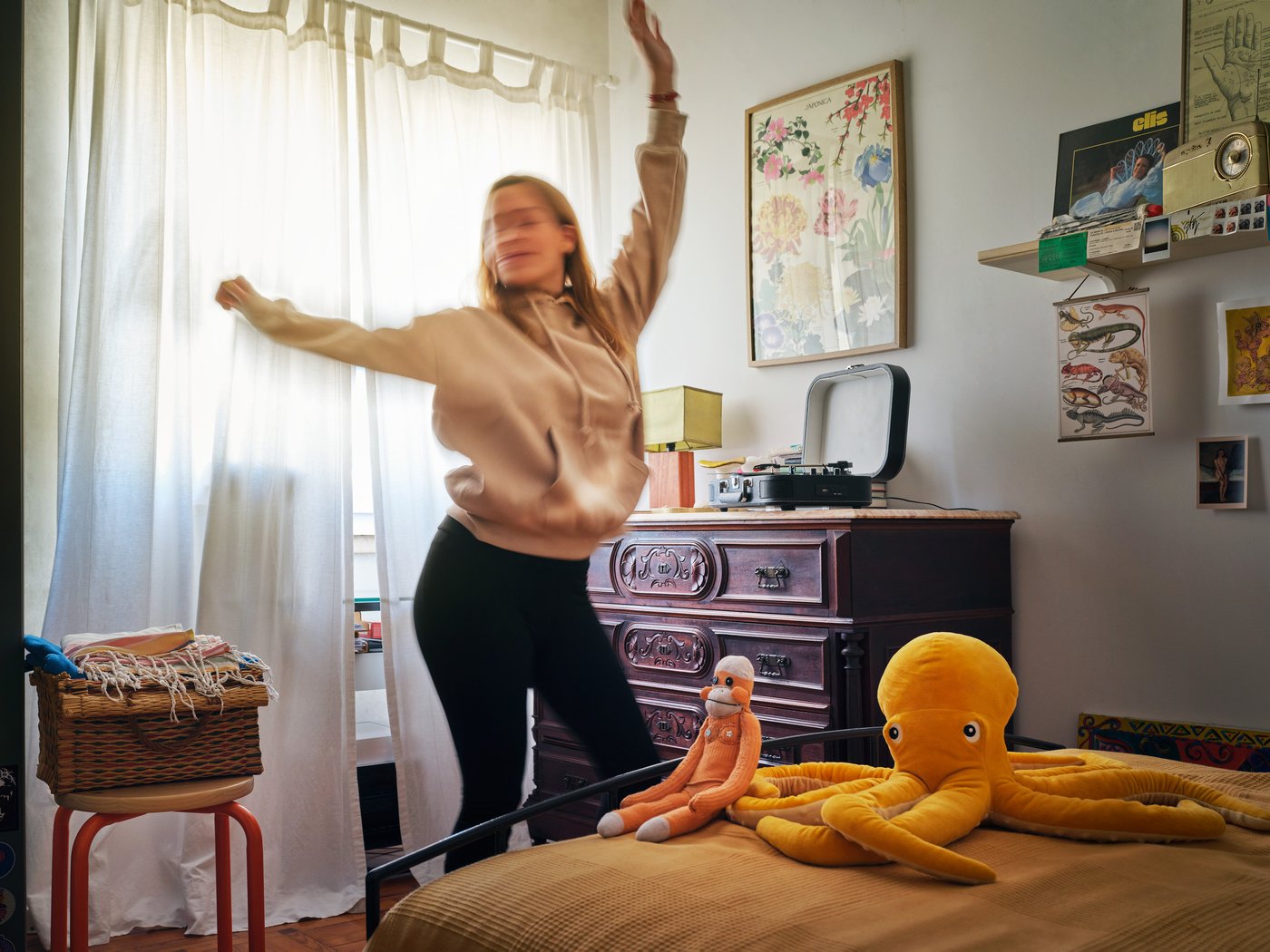
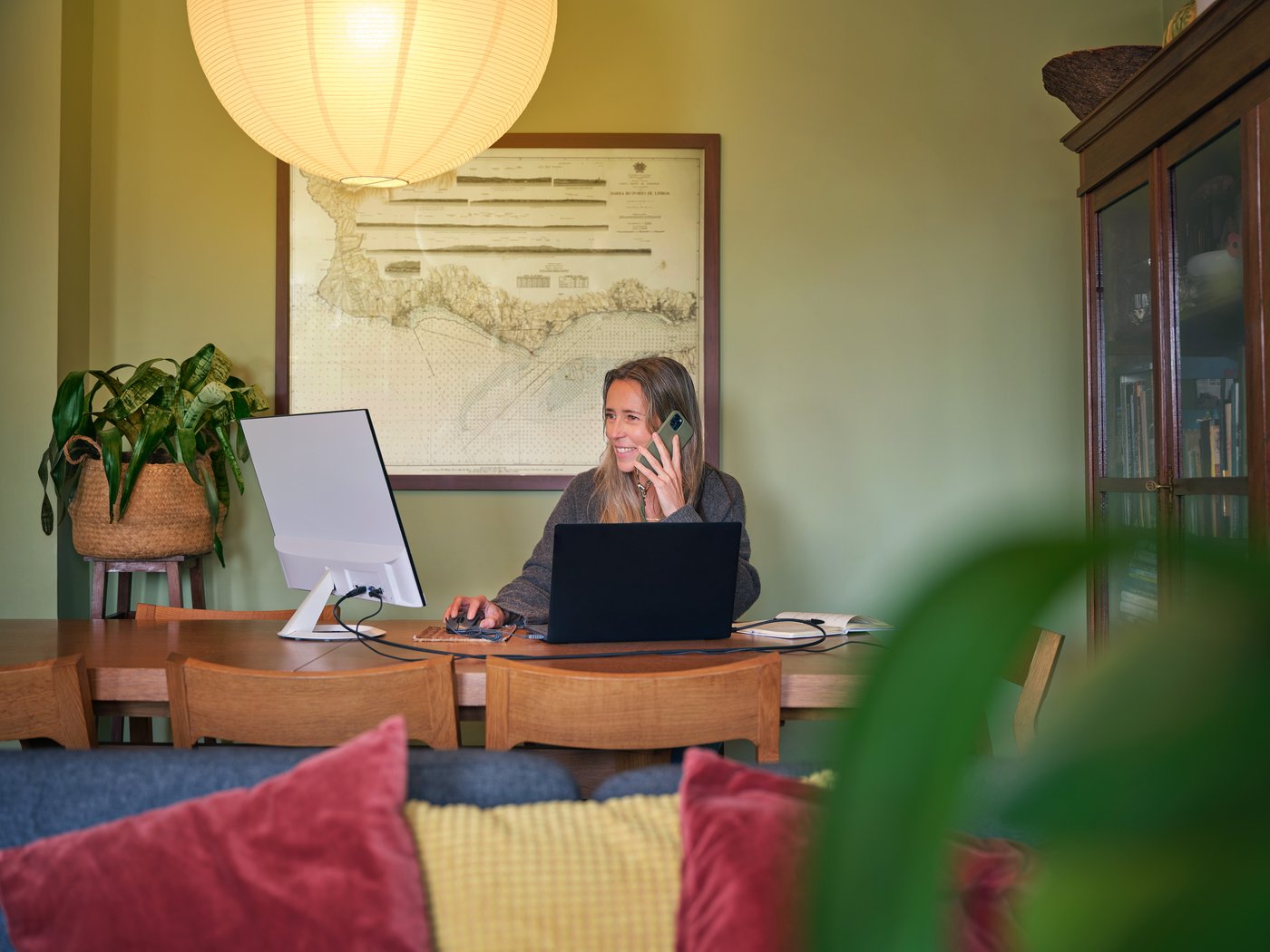
Their practical approach to rearranging their Lisbon home to embrace a new chapter was entirely typical of this positive-thinking Portuguese family. The office became a bedroom. Ana’s children Constança and Tomás took turns sharing with their grandmother for years without complaint. Ana’s workspace migrated to the dining table, where it lives to this day, laptop and second screen side by side. “It’s the ‘puts it on, takes it off’ stuff,” she says. “But it works.” A system designed out of necessity that everyone respects. Control, the family way.
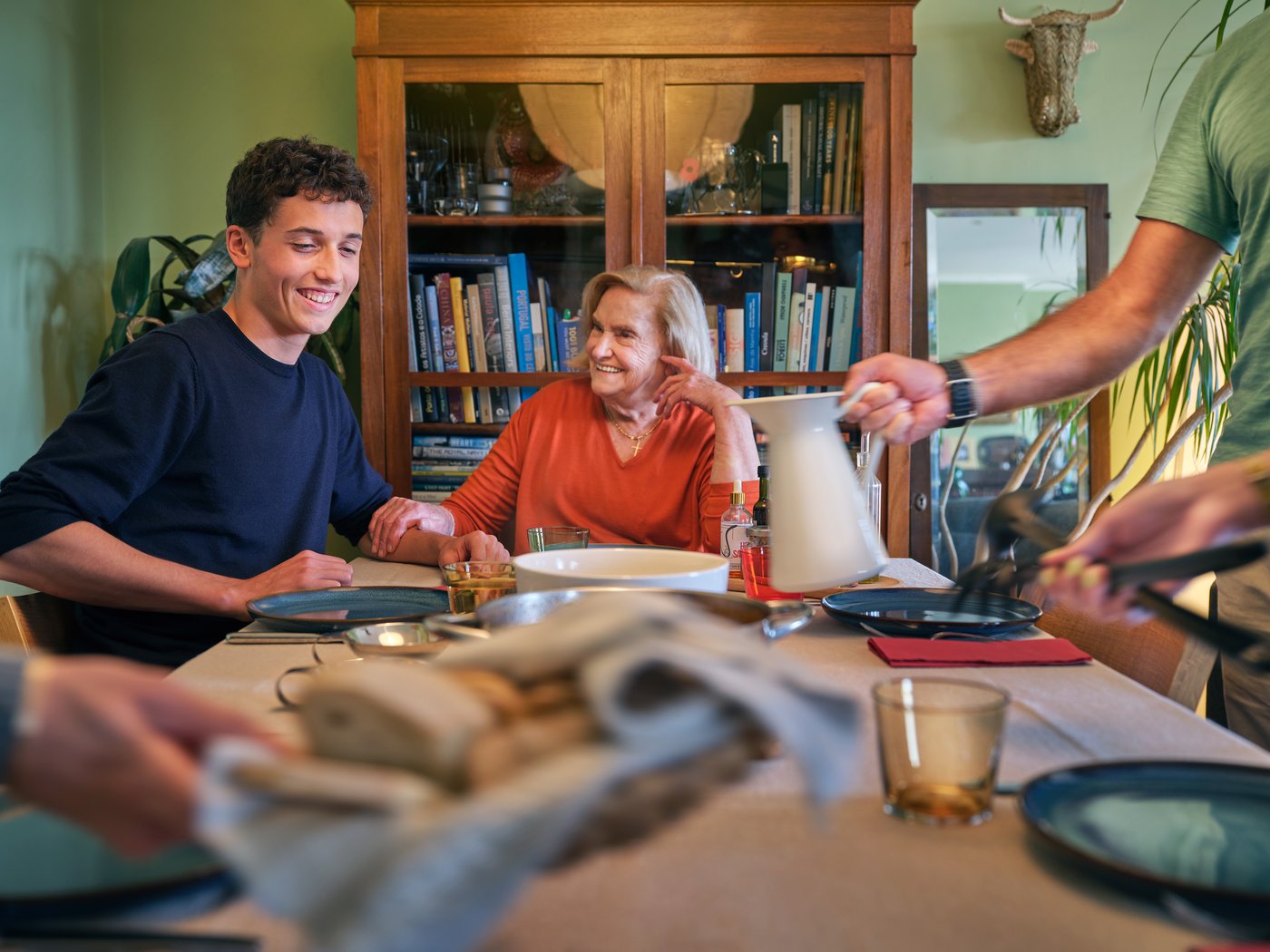
Not that it’s always neat and tidy – with five people, one kitchen and strongly held views on how to cook pasta. “Sometimes we disagree a little on the way of cooking,” Constança says, in the quietly understated way of someone who’s used to losing this argument, even now she’s a young adult. But the table holds everything together – the same table where Ana now works, where Júlia’s three-day feijoada lands on feast days, where sixteen people sat for lunch just yesterday. “The table is more than just a place for meals,” says Gonçalo. “It’s a place where people talk… the unifying focus of thousands of things.”
Beyond the walls
The world outside has been making itself felt at home, too. Last January, mid-renovation and with a slab exposed, the storms came. Buckets. Towels. Ceilings turned black. “There was so much water,” recalls Constança, “that we couldn’t have carried the biggest bucket alone.” When it was over, the family settled back into their routines: the lunches, the evenings, the tending of the plants. The comfort of ordinary life was the thing they’d missed most. For Ana, climate change isn’t an abstract worry – it’s the rain that now has a name, a deluge of water that suddenly felt closer than the sea three minutes away.
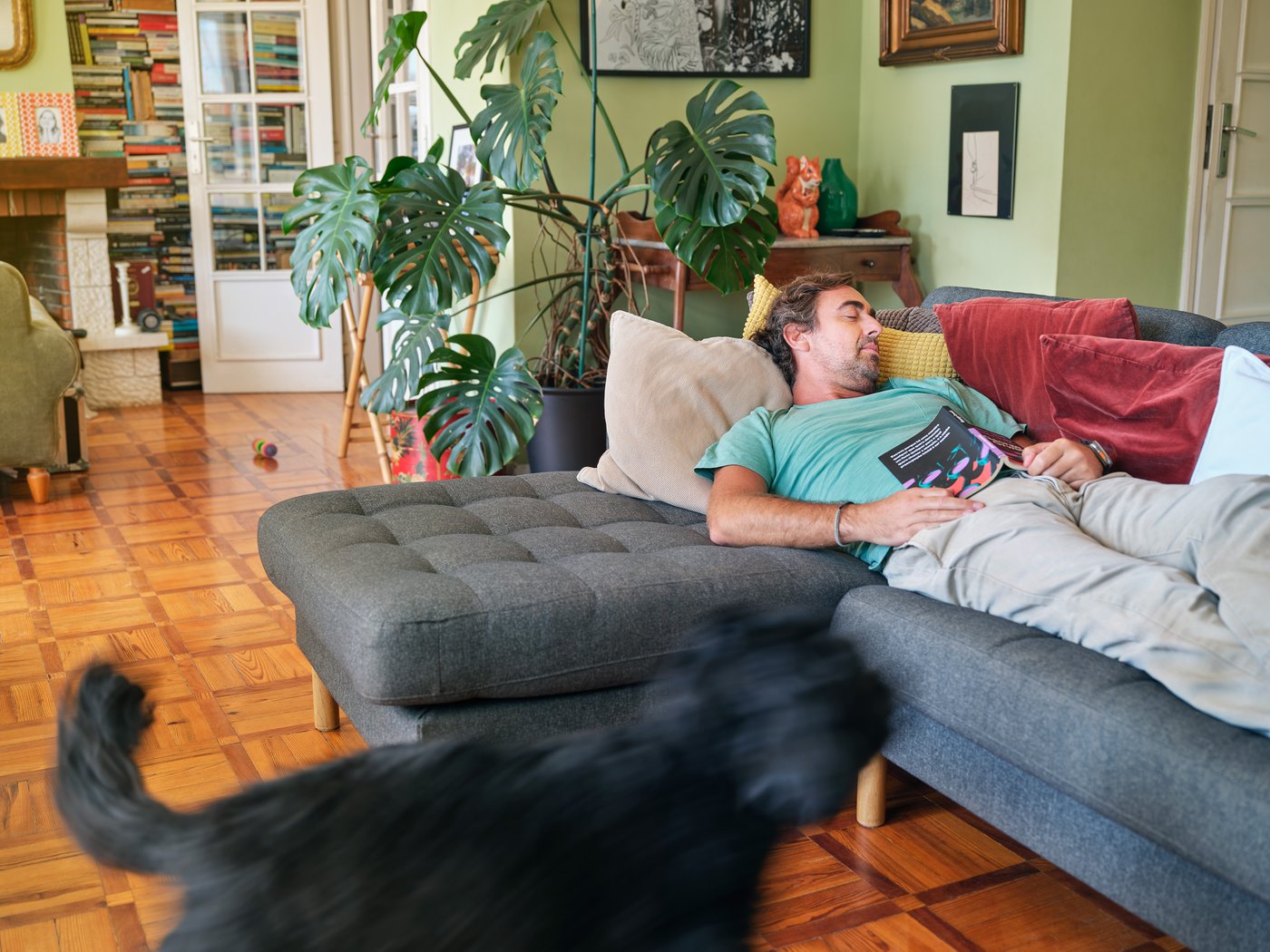
But they have so many other things of value close at hand, too. The beach. The neighbours. The light in the south-facing living room, where Ana’s plants grow and the family assembles in the evenings.
Júlia has pilates on Tuesdays and Thursdays, dinner with friends on Wednesdays, and Maré the dog never far away. At 84, she isn’t a dependent but the one who holds the daily rhythm together: cooking lunches, keeping schedules, making sure no one feels alone. “I like being part of this family,” she says simply. “I wouldn’t choose any other.”
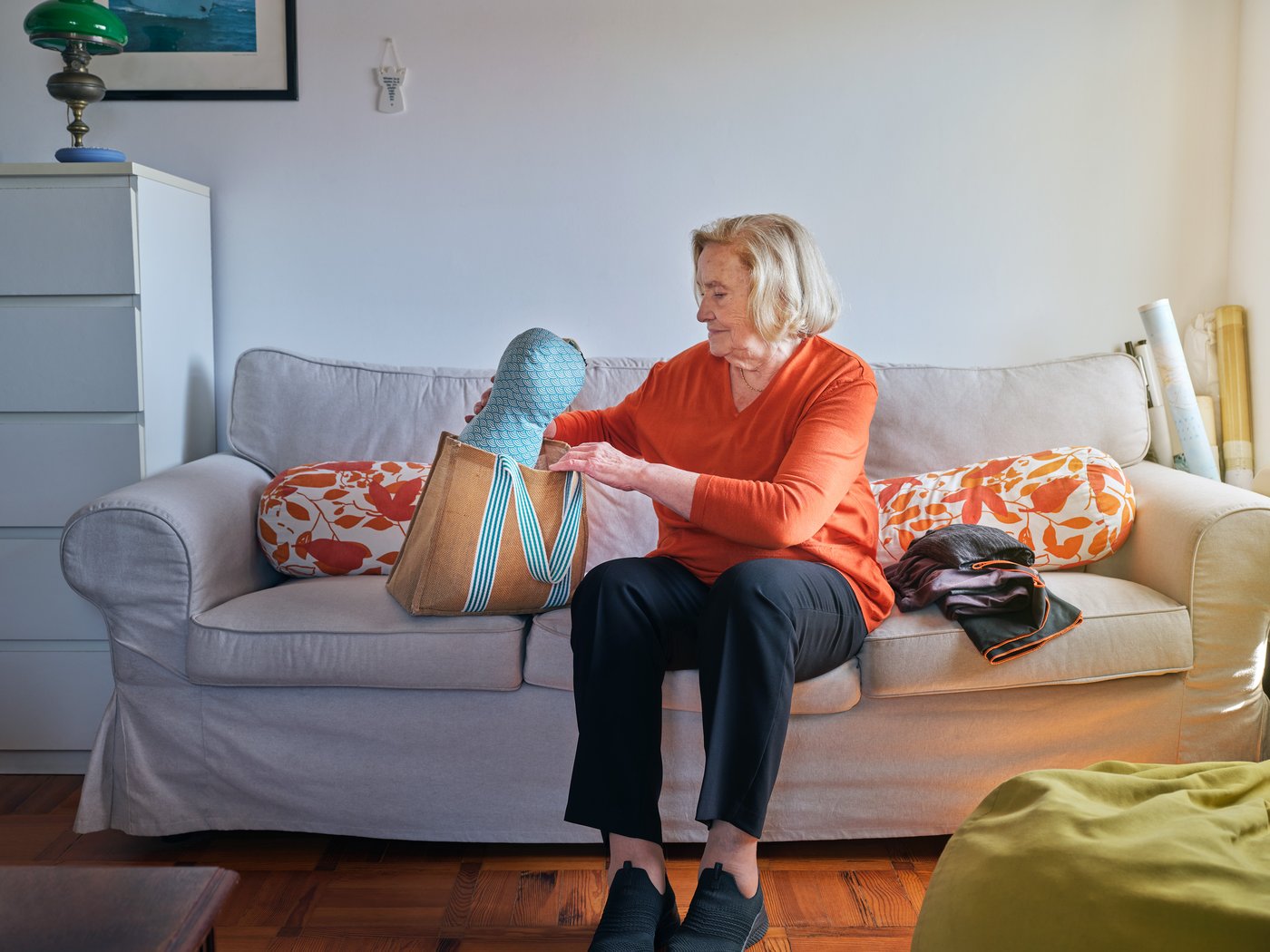
“I like being part of this family. I wouldn’t choose any other.“
Júlia
The beauty of unfinished
Like most homes, this one is far from finished. Ana would love a garden – something she admits is “impossible“, with the good grace of someone who’s made peace with it. What she has instead is a home with 100-year-old furniture sharing space with things bought three years ago, second-hand clothes filling wardrobes, LED bulbs, and a serious effort to save water and electricity. Not sacrifice – just sensible. “I’m giving more and more importance to these small but important details,” she says.
Gonçalo has another perspective. As someone who spends stretches of time working abroad, the slow pace of change is part of the appeal – home is the thing that stays put while life moves around it. That kind of security is hard to put a price on. “Home is family,” he says. “And family is home.”