We’ve prepared for it
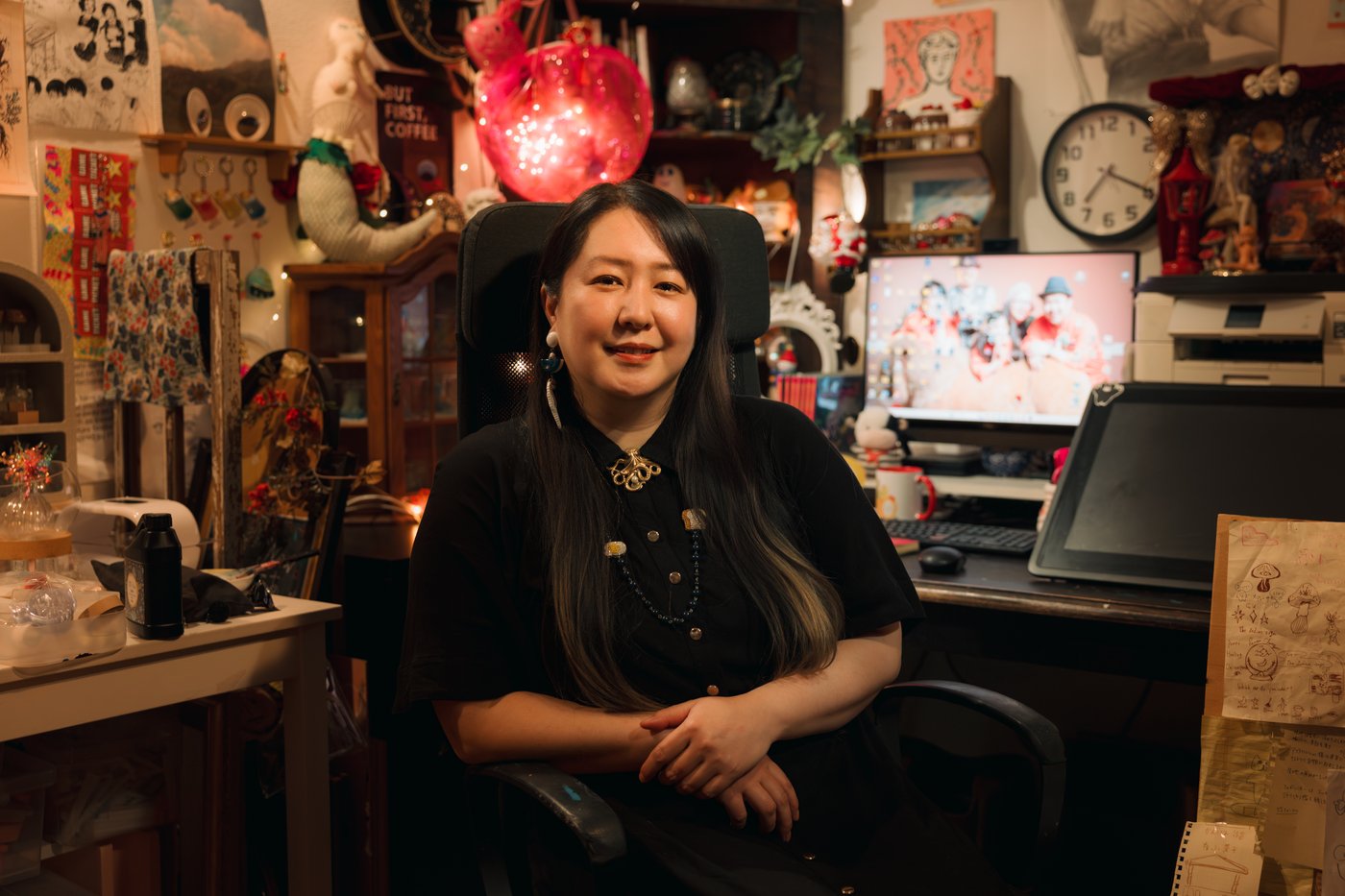
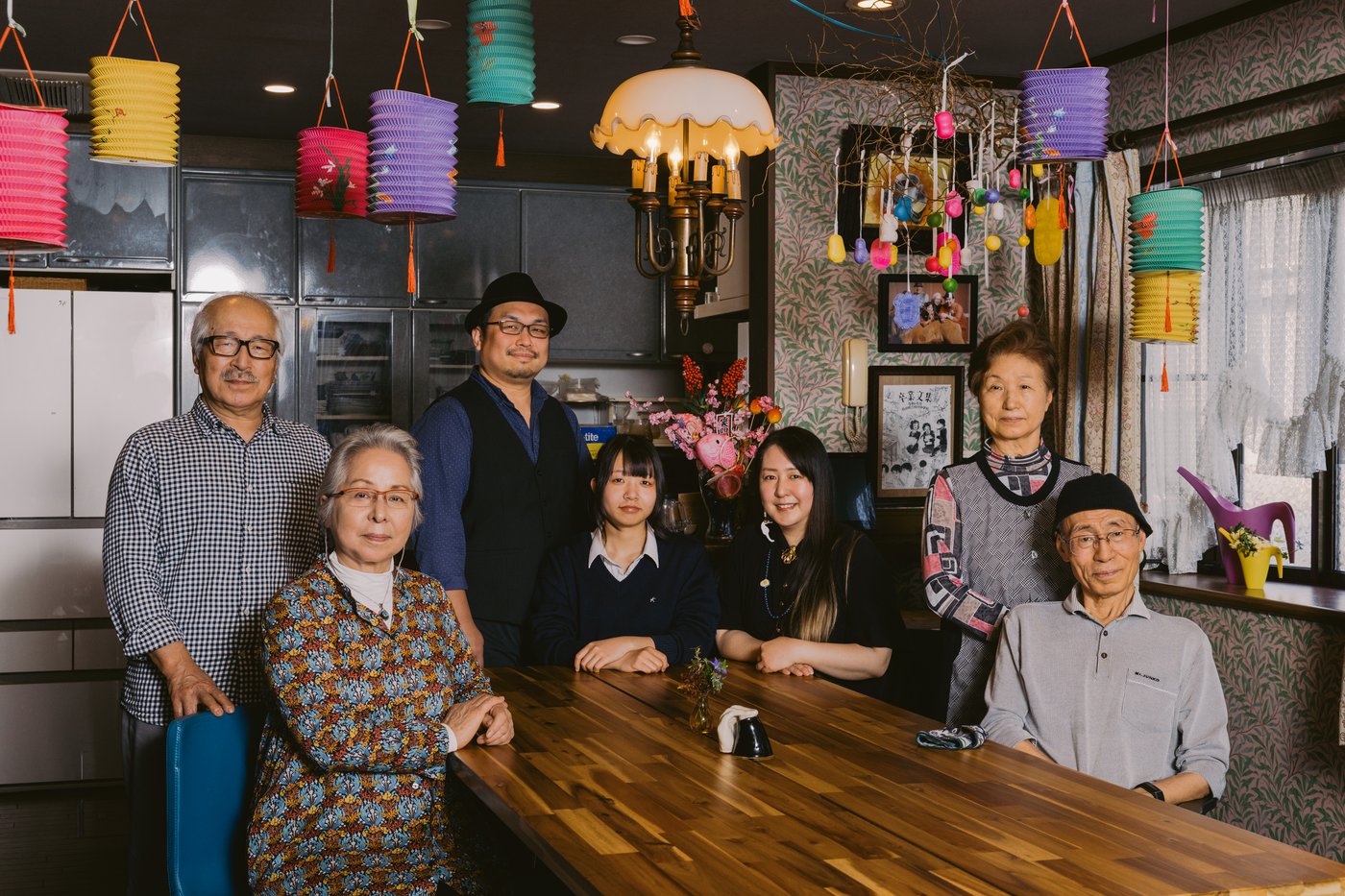
Located in a quiet area of Saitama Prefecture and surrounded by fields, Saori and Kenta’s home is thoroughly, unmistakably theirs. But this isn’t a story about a couple finding their dream home. It’s about seven people deciding to build a life together. Alongside Saori, Kenta, their teenage daughter Sono and their two cats, live Saori’s parents – as well as her father’s older brother and his wife, in a connected adjoining space. And next door: the confectionery shop that brought them here.
The long way round
For years, Saori and Kenta ran five rented confectionery shops across Saitama City. Then came COVID-19, exposing the risks of rented premises and long staff commutes. Realising they needed to make a change for their finances and health, they spent two years looking for a property where they could bring the family together across generations and integrate a shop, while gradually winding down the other businesses. "From the start, the plan to live as a multigenerational household was the
one fixed point." Saori says. What changed was everything around it. Saori describes that period as "a daily battle with anxiety". Kenta's repeated reassurance back then: take it one step at a time.
The house they eventually found – a large second-hand property along the Edogawa River – became the vehicle for everything they'd been working towards. They renovated, rebuilt, and connected a neighbouring space. "Since we moved into this house, home has really become number one," Saori says. Kenta goes into more detail: "The further you are from home, the more stress you're under. I want to minimise that as much as possible. Which is why we've chosen this lifestyle."
“From the start, the plan to live as a multigenerational household was the one fixed point.”
Saori
Adapting to life
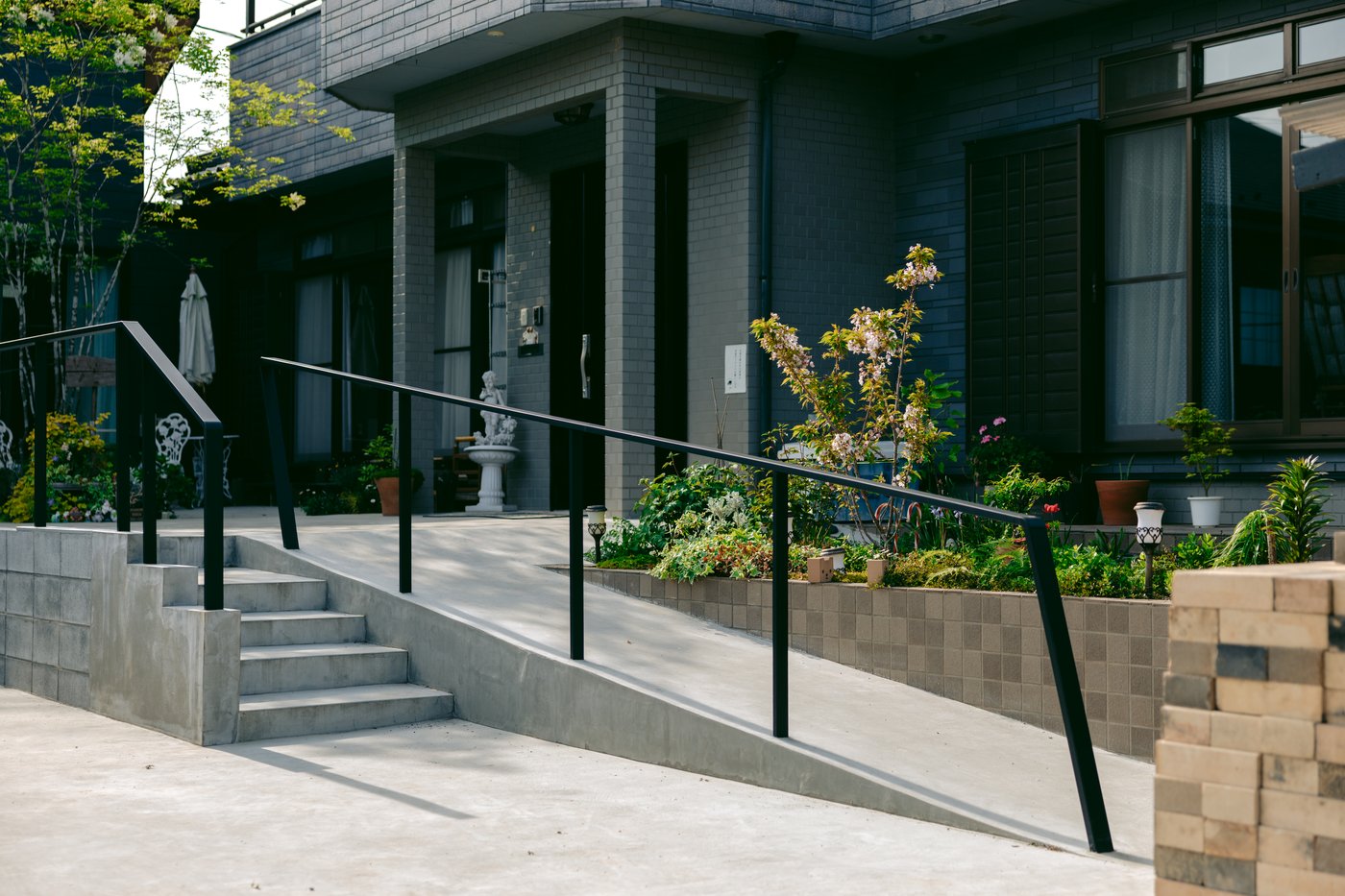
Bringing multiple generations under one roof takes more than goodwill. It takes serious planning. Wide custom doorways, flat exits, a shared rehabilitation room: these weren’t features the family needed on move-in day. But they built them anyway, to lessen the load of ageing and ill health. “We haven’t said it outright,” Saori says, “but we’ve prepared for it on our end.“
As well as a shop and a place to live, the home is also a workspace, an event space and a community hub – with no hard line between any of them. The living room gets rearranged seasonally: a kotatsu (low table with a heat source) in winter, a lighter set-up in summer, extra chairs pulled from the crawlspace when events bring people in.
Ever practical, Kenta prefers furniture without too many distinctive details, so pieces move easily between the shop and home without looking out of place. Saori values both light and sturdy pieces, but above all versatile ones. The sofa that switches left to right depending on the season, for example, or the dining table that became an event table, then a work surface after she cut the legs down herself.
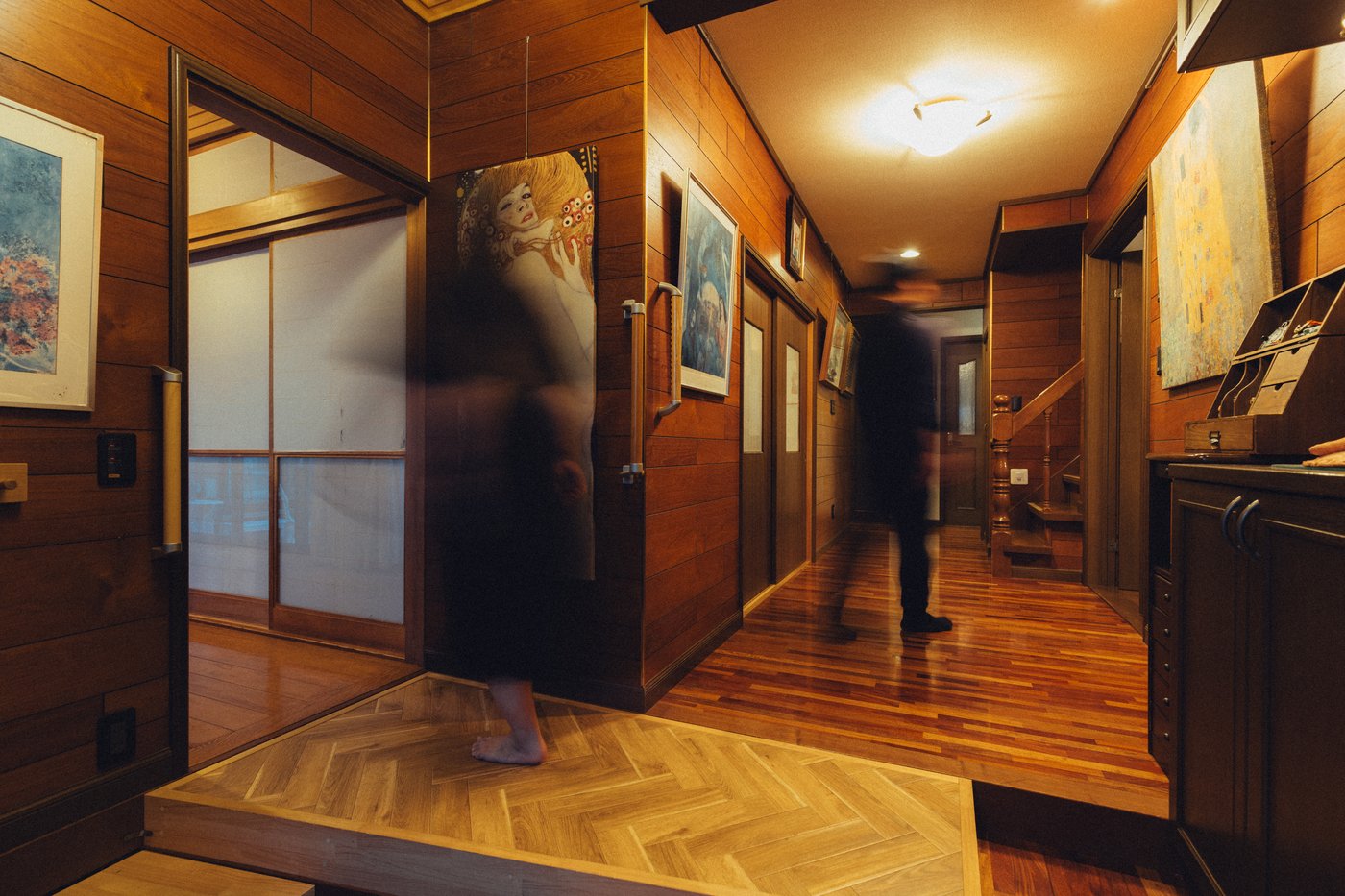
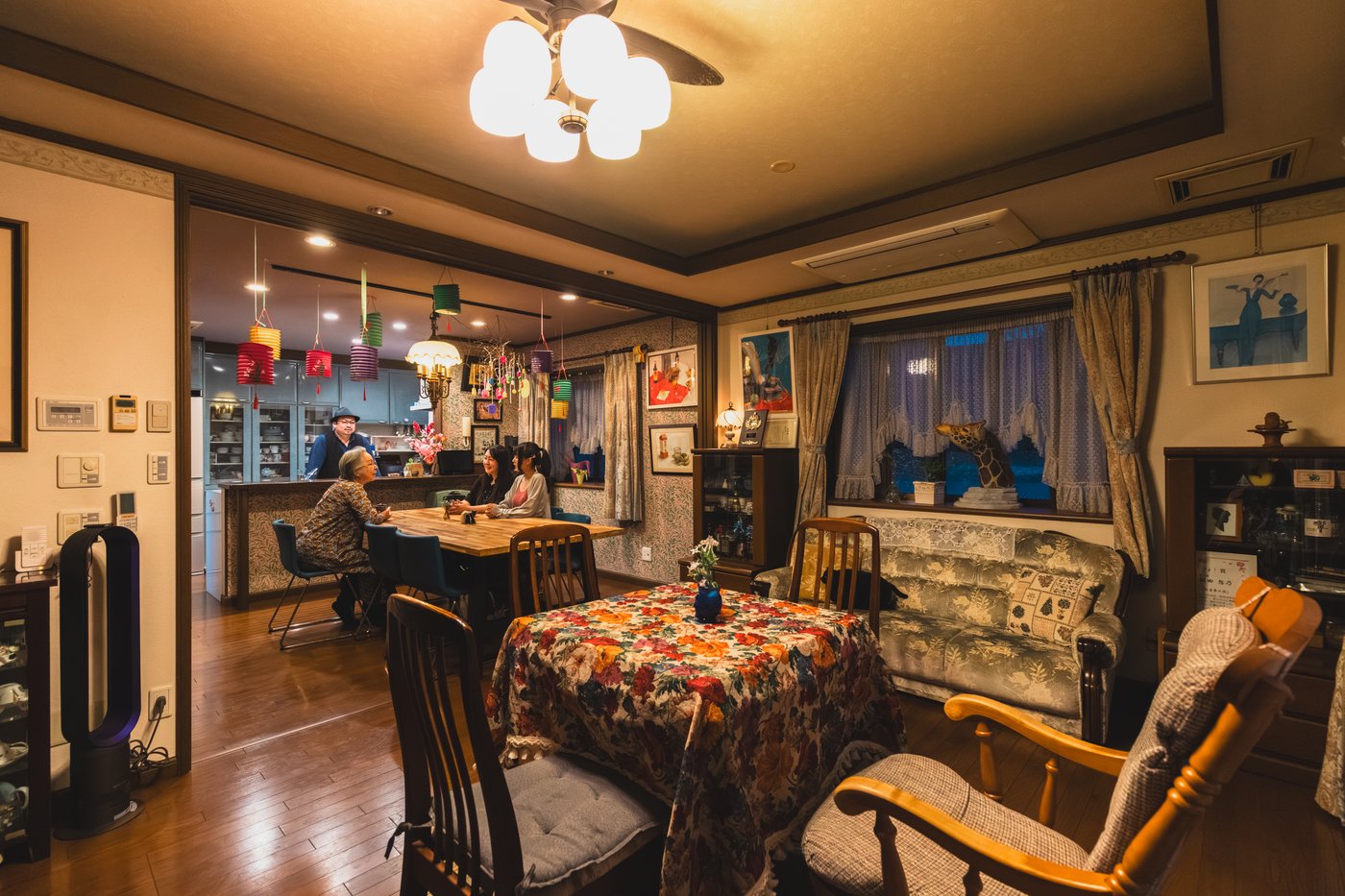
As well as a shop and a place to live, the home is also a workspace, an event space and a community hub – with no hard line between any of them.
Waste and friction
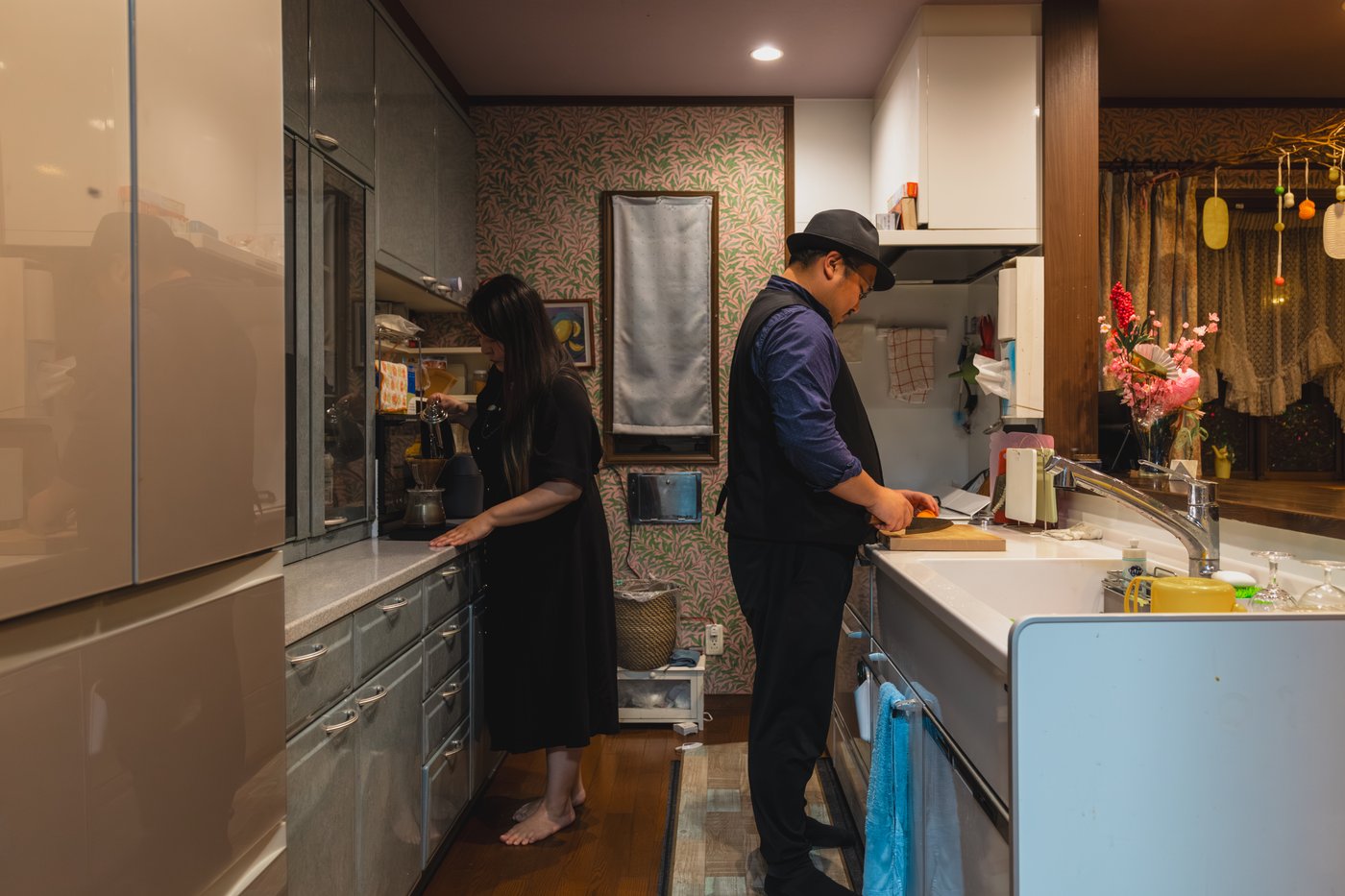
What’s striking about how Saori and Kenta live is how practical and unsentimental it all is – in the best way. As one of the main cooks, Kenta follows a simple guiding principle: use what’s about to go off, always. Between the house and the shop, almost nothing is wasted on either side. Saori carries the same instinct into the home set-up – rooms that flex for different seasons, different occasions, different needs. “A home that can’t do that,” Kenta says, “is not an ideal home.”
Working in change management, Saori worries that AI and the need to do things quickly and easily is making us miss important details. That’s why she looks for discomfort as a trigger to change things at home. If someone’s holding their arm to support their head while watching TV, is it because of the chair, the angle or the distance? “There are incredibly important things to be found in inconvenience,” she says. The friction tells her what needs to happen next.
In the years to come, Saori and Kenta will turn many more pages and start countless new chapters – all with their own kind of friction. The community cats will come and go. Sono will leave eventually. The family members’ needs will shift – in some ways that are impossible to predict, in others that are just as planned. Whatever comes next, they’ve built their home to meet it.