
Our view on safe and healthy work across the IKEA value chain
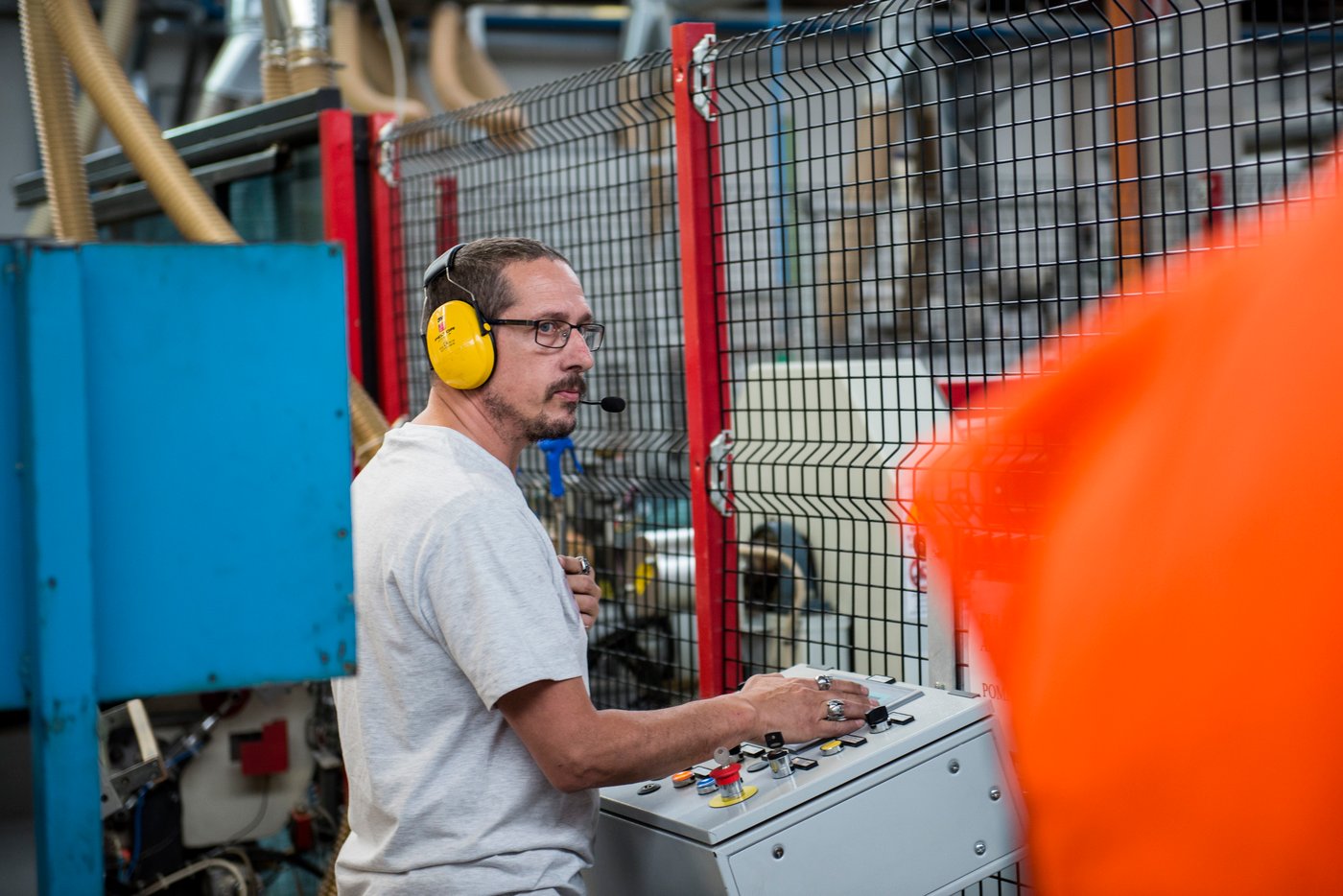
As a global brand, IKEA touches millions of people across its value chain, and we are accountable to secure decent and meaningful work and ensure that the health and safety of workers are protected.
At IKEA, we set our agenda to contribute to a fair and equal society by respecting and promoting human rights across the value chain, improving decent and meaningful work, and striving towards diversity and inclusion across the IKEA value chain.
A common set of clearly defined requirements
IKEA works with more than 1,500 direct suppliers and service providers for home furnishing, transport, logistics and distribution services, components, and food across more than 50 markets to bring IKEA products to our customers. This journey starts with designing our range according to the IKEA democratic design principles and continues on a global scale; from the sourcing of raw materials, to manufacturing and distribution of products to IKEA customer meeting points and providing services to our customers.
We set clear standards for environmental, social and working conditions, because we believe that a safe and healthy work environment is a big part for living up to the IKEA vision to create a better everyday life, for the many people. Hence, we have clearly defined requirements that are applicable across the IKEA value chain, both at IKEA operations and our suppliers and service providers. Requirements that our suppliers are expected to comply with are described in IWAY, the IKEA way of procuring products, services, materials and components.
All IKEA business partners are expected to follow and comply with relevant national and international laws, policies and standards. In addition, compliance with IWAY requirements is mandatory for all IKEA suppliers and service providers and is an integral part of our contracts.
IWAY principles are based on internationally recognised standards and principles, such as the UN Guiding Principles on Business and Human Rights (UNGPs), the 10 Principles of the UN Global Compact, the UN Sustainable Development Goals (SDGs) and the ILO Centenary Declaration for the Future of Work, among others.
IWAY reflects the IKEA points of view and sets requirements, expectations and ways of working across the IKEA value chain on different environmental and social topics, including protecting children’s rights, health and safety at work, social insurance for all workers, good working conditions, business ethics, prevention of environmental pollution, the welfare of animals, energy and resource management and optimisation, and more.
Protecting health and safety of workers in IKEA value chain
IWAY requirements on protecting workers’ health and safety cover a number of topics:
- IKEA suppliers secure occupational health and safety by ensuring that workers are not exposed to severe occupational health and safety hazards, providing accident insurance to workers, as well as assessing and acting on occupational health and safety risks, implementing safe working routines, securing the safe use of equipment, personal protective equipment for workers, reporting, analysing, following up and acting upon accidents and near misses and safety hazards.
- IWAY requirements to IKEA suppliers on emergency management cover assessing risks of emergency situations, having written emergency routines, describing expectations on independent evacuation alarm, emergency evacuation routes and exits, as well as having first aid and firefighting equipment and doing regular evacuation drills.
- IWAY requirements on chemical management include securing that purchasing, storing, transportation, handling and usage of chemicals is done in a way that protects health and safety of workers and the environment.
- IKEA suppliers are expected to ensure building and electrical safety by following requirements on structural integrity and installation and maintenance of electrical wiring, lighting and gas fixtures.
- A set of IWAY requirements on occupational health checks and healthcare support describes the IKEA position on non-work-related health testing, as well as expectations on frequency and ways of performing occupational health checks and their findings.
These requirements are mandatory for all direct IKEA suppliers and service providers, no matter where they are located or their business operations – from large factories in the textile industry to small companies providing assembly or delivery services to IKEA customers. Besides these general requirements, IWAY contains additional requirements for specific supplier operations. For example, requirements to suppliers providing housing arrangements for their workers or requirements to suppliers transporting IKEA products, services, components or materials in the IKEA value chains.
A system with clear processes and common ways of working
To implement the IKEA social and environmental requirements, it is important to have a system in place that sets a common base for ways of working across the IKEA value chain. Over 25 years of working with IWAY enabled us to build a system with clear processes in place that make it an integral part of business operations at IKEA and our suppliers and service providers.
Developing together with IKEA suppliers is at the heart of the IWAY approach. As with any relationship, the success of IWAY depends on cooperation, mutual trust and respect with suppliers. While our suppliers take ownership for implementing IWAY in their value chain, based on their individual business setup, IKEA teams are there to support suppliers in IWAY implementation, when needed. An important part of our work is continuous monitoring of emerging issues in the markets where we operate, providing training and facilitating learning for IKEA co-workers and our suppliers.
Besides focusing on implementation, we have clear processes in place to verify and follow up on compliance of the IWAY requirements at our suppliers and service providers on a regular basis. IWAY verification activities are performed by both approved IKEA auditors and independent third-party auditors and can be announced or unannounced. In case of non-compliance our business partners are given a time frame to correct any deviation. If a supplier fails to do so, they can be phased out.
Collaborating with others
IWAY contributes to building a strong foundation for the IKEA value chain and continual development for ourselves and our suppliers. We continually work to improve our requirements and system based on the changes in the world we live in, and welcome insights and input from our customers, suppliers, partners and other stakeholders.