
Our view on working conditions in transport and logistics
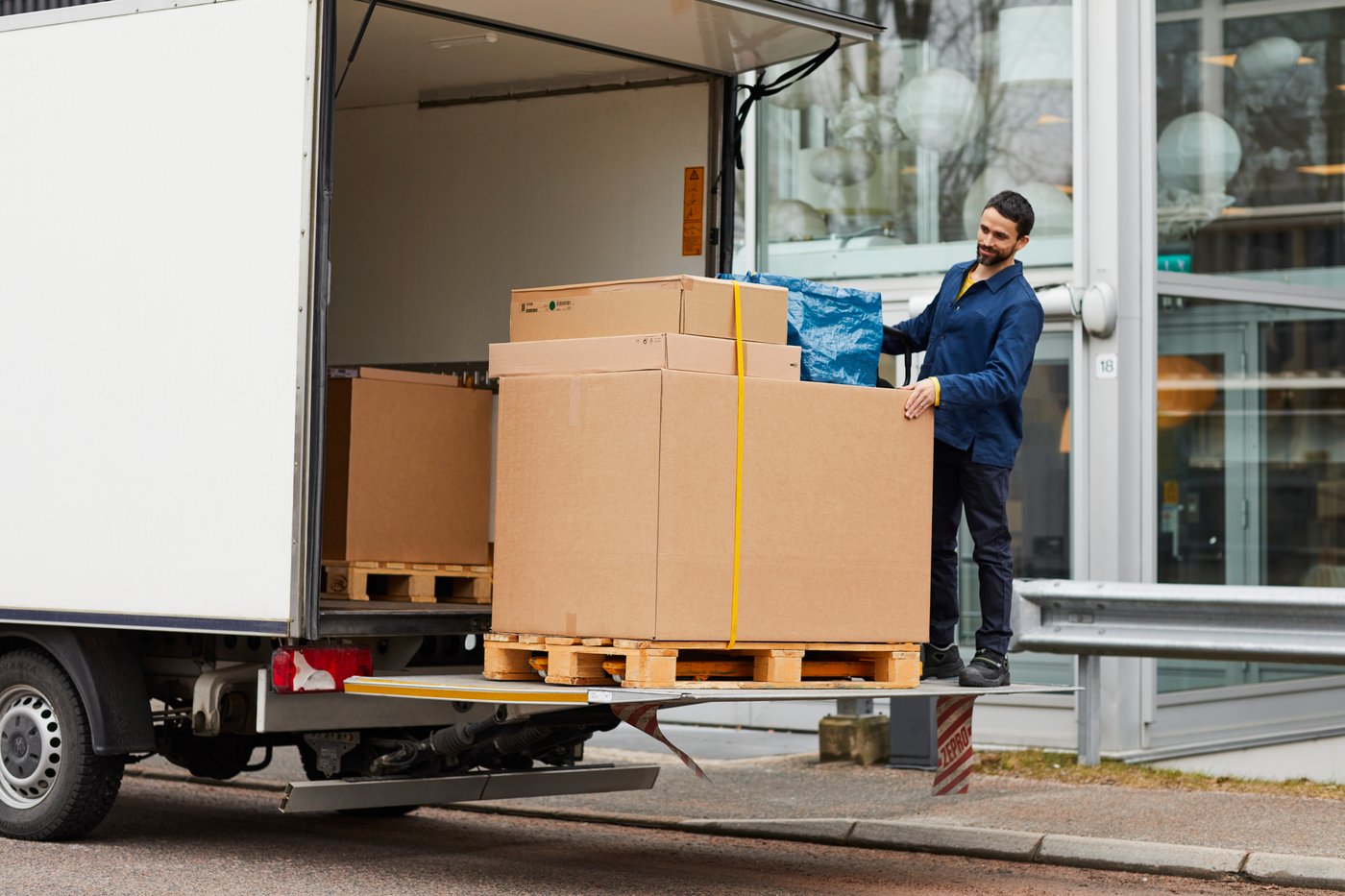
IKEA products are moved, handled and stored by many people across our supply chain before they reach our stores. This includes drivers, warehouse co-workers, seafarers and many others working in our transport and logistics network*. While many of these people are employed by our service providers rather than IKEA, their working conditions are important to us.
We expect the companies we work with to provide working conditions that meet our requirements and applicable legislation throughout the supply chain. Together with our service providers and industry partners, we continuously improve the way we work to support good, fair and safe working conditions. Whether products travel by road, rail or sea, the people moving and handling them play an important role in making IKEA products available and affordable to our customers.
Clear requirements and regular follow-up
In our cooperation with service providers, we set clear requirements and carry out regular followup to support working conditions that meet our requirements and applicable legislation throughout our supply chain.
Through IWAY, the IKEA supplier code of conduct, we set requirements for the companies we work with. IWAY covers topics such as working conditions, health and safety, workers' rights, ethical business practices and compliance with applicable legislation.
We continuously develop IWAY to reflect changing needs and expectations across our supply chain. For example, in FY24 we strengthened our requirements for ocean transport, including expectations related to vessel staffing levels, rest hours and conditions that support safe working environments for women seafarers.
We regularly review compliance through announced and unannounced audits, following a risk-based approach. Non-compliance can lead to corrective actions and, in serious cases, termination of the business relationship.
In addition to IWAY requirements, we allow only one layer of sub-contracting. Doing this increases transparency throughout our transport operations and helps us understand who is working in our supply chain and under what conditions. Visibility is important for everyone working across transport and logistics. Better visibility helps us follow up on requirements, identify potential risks and work together with service providers on improvements where needed.
Designing transport with people in mind
We continuously develop solutions that support both operational needs and the people working across our supply chain. The way transport is organised can influence everyday working conditions, One example is expanding the use of intermodal solutions. By increasing the use of rail, short sea and barge transport for longer journeys, the remaining road segments can be shortened. This can reduce driving time and contribute to more predictable working hours for drivers, as fewer journeys require overnight stays. Shorter routes can also create favorable conditions for introducing EV trucks, which are often well suited to this type of operation. Drivers using these vehicles have told us they appreciate features such as lower noise levels and reduced vibrations compared to conventional trucks.
Safety
Safe transportation starts long before a product reaches its destination. Together with our service providers and partners, we work to promote safe behaviour and reduce risks across our transport and logistics network, from transport planning and road safety to goods handling and warehouse activities. This includes route design, vehicle standards, driver training, safe loading requirements in our facilities, and continuous follow-up of safety performance. By working together with our service providers, we aim to support safer operations for drivers, warehouse workers and others who may be affected by our transport and logistics activities.
In February 2025, IKEA Supply Chain Operations received the highest, three-star rating in the FIA Road Safety Index. The recognition reflects our work to better understand, manage and continuously improve road safety across our operations. The FIA Road Safety Index provides a structured and fact-based approach to assessing road safety performance and identifying opportunities for improvement.

Everyday conditions that matter
Working conditions are also shaped by the everyday environment in our logistics facilities. Together with our partners, we work to support health and safety, provide training opportunities, and continuously improve day-to-day operations in our warehouses.
Everyday conditions also matter for truck drivers visiting our facilities, such as Distribution Centres, Consolidation Points and IKEA stores. At IKEA locations where such facilities are available, drivers have access to seating areas where they can relax between trips and have coffee or tea. They can also use shower and restroom facilities.
Collaboration is key
Working conditions in transport and logistics are not something that one company can improve on its own. Progress requires collaboration across the industry and throughout the value chain.
That's why we work together with service providers, policymakers, experts, trade unions and other stakeholders to better understand challenges, share knowledge and drive improvements where we can.
One example is the Responsible Trucking Initiative, of which IKEA is a founding member. The initiative brings together companies working towards a fairer transport and logistics sector through a shared set of expectations and common Social Guidelines for suppliers and subcontractors. The Guidelines were further developed and updated in 2024 to reflect current industry developments.
To better understand everyday experiences on the road, Responsible Trucking introduced a Spot Check Tool for truck drivers. The tool captures drivers’ feedback directly and helps identify areas for improvement. Due to its success, we continue to use the tool and integrate the learnings into our business processes.
We also collaborate beyond road transport. In 2024, we started a three-year partnership with the Mission to Seafarers, an international seafarer welfare organisation. Through training and knowledge-sharing, the partnership helps us better understand the challenges seafarers face and strengthen our work on working conditions, safety and labour standards throughout ocean transportation.
*The information presented relates exclusively to goods flows managed by IKEA Supply Chain Operations, covering transport and logistics operations from IKEA suppliers to warehouses and stores.