
Carrying FRAKTA into the future
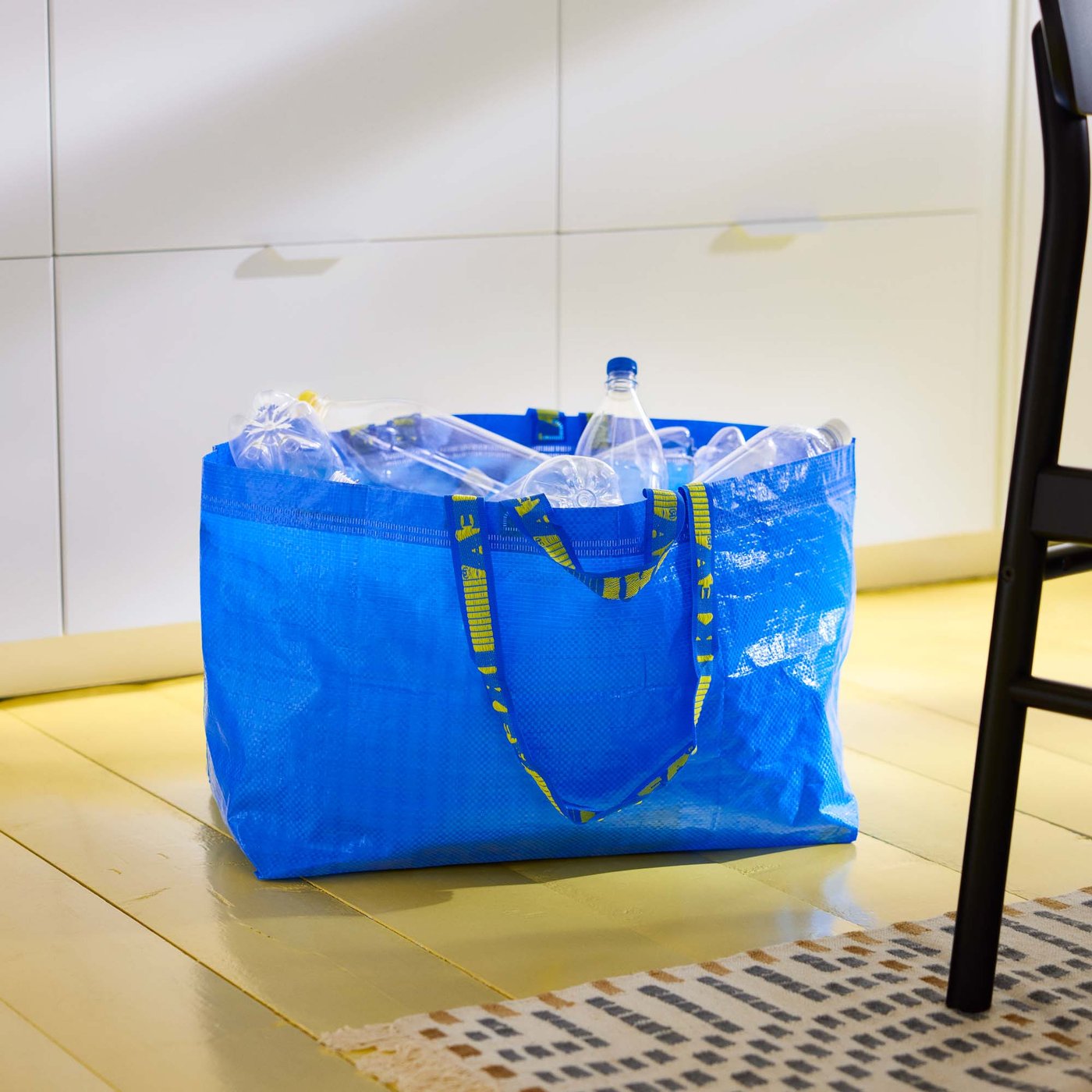
The FRAKTA carrier bag is so much more than a carryall. For 30 years, our beloved blue bag has been moving, sorting and supporting in homes around the globe. Today it's made from a minimum of 90% recycled material, of which at least 70% comes from packaging waste from food and plastic industries[1]go to footnote 1, making it even easier to love. Let's take a look!
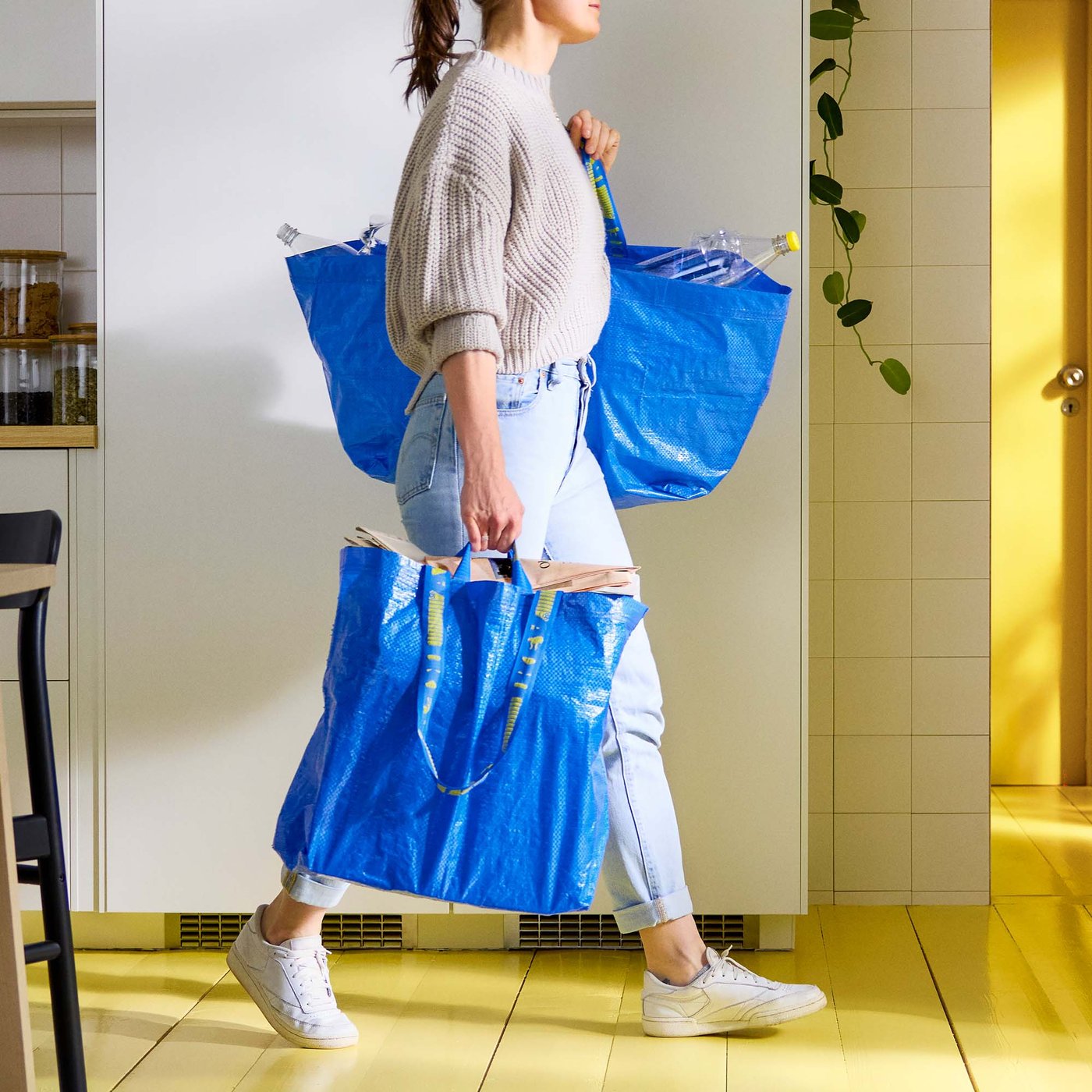
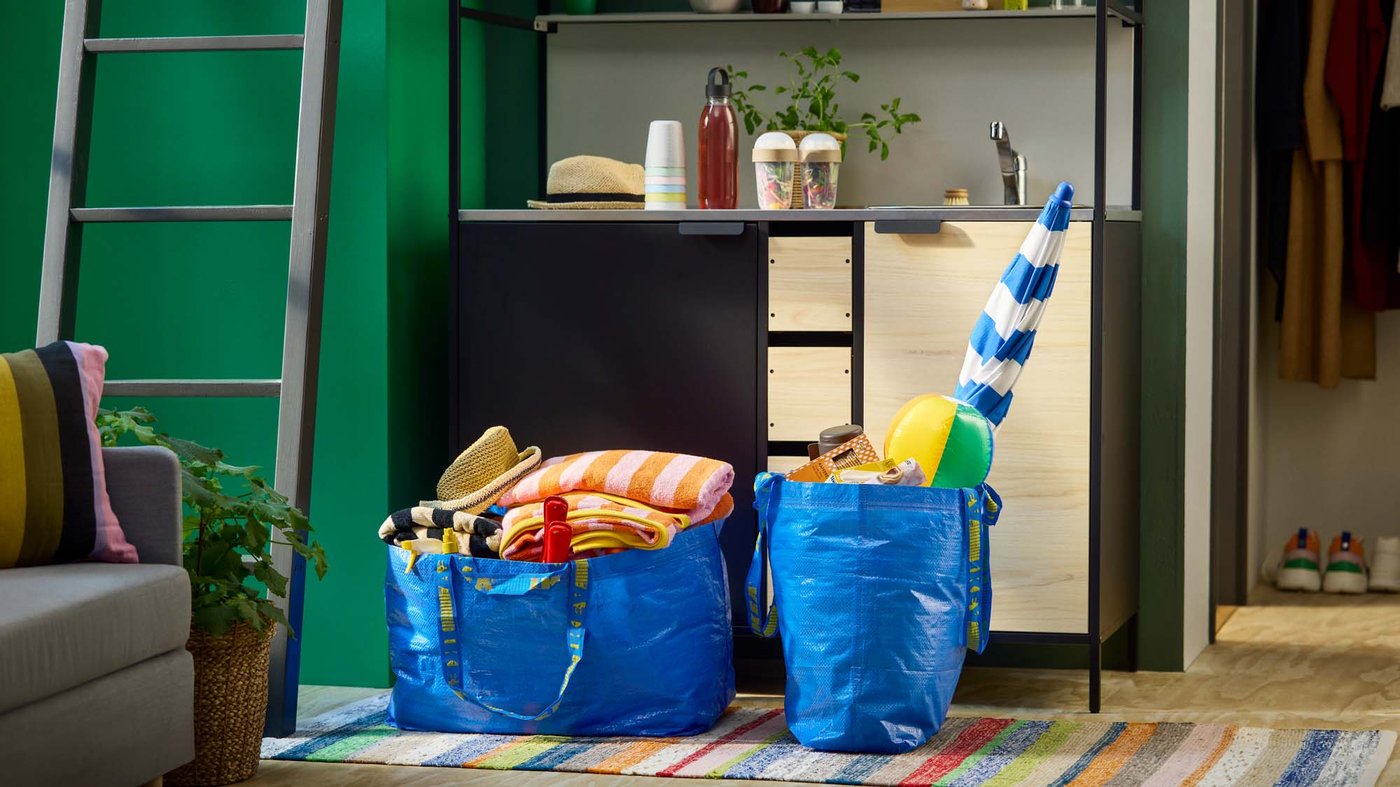
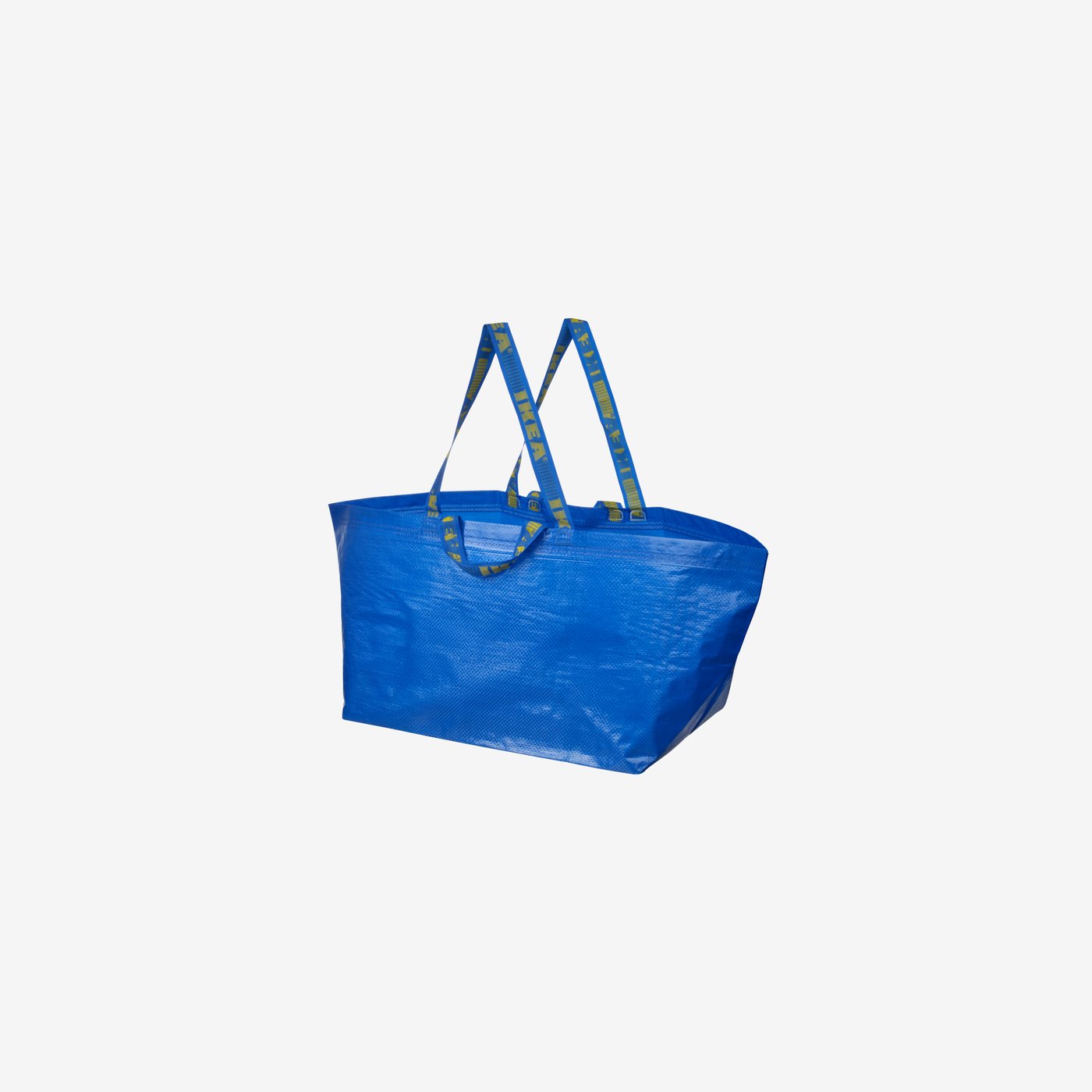
Cast your eyes around your home. Chances are there’s a FRAKTA bag or two sitting in your laundry cupboard, garage, or under your bed. Since its official launch in 1996, FRAKTA has become a true design icon. Available in the original large 71 litre size and its smaller 36 litre counterpart, which arrived a few years later, more than 44 million FRAKTA carrier bags are welcomed into homes around the world each year. Over the decades, it has inspired reiterations, seasonal celebrations and even played muse to some of the leading names in fashion! So why change a proven formula?
At IKEA, we believe that whatever we are doing today, we can do better tomorrow, so when it came to updating FRAKTA carrier bags, we saw an opportunity to make better choices in terms of both the material composition and the production process. Buy a FRAKTA bag today, and you'll find it’s now made from a minimum of 90% recycled material, giving new life to old plastic packaging waste from things like food containers and jumbo milk powder bags. Let's dive in and take a look at how these updates came to be, and what goes into producing each new FRAKTA bag.[2] go to footnote 2
Time for a makeover
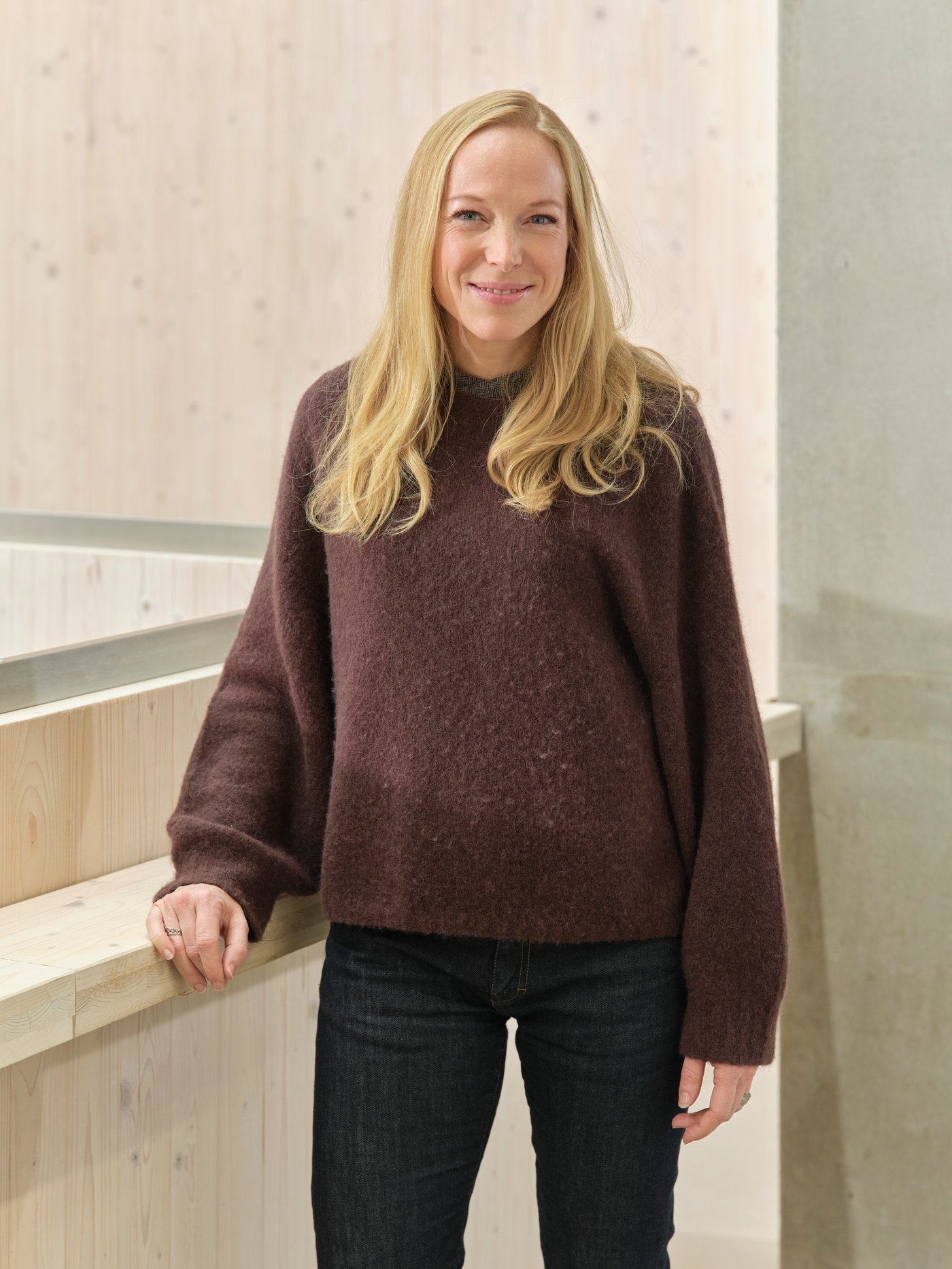
Practical, reusable and unmistakably IKEA, FRAKTA embodies our Democratic Design principles of form, function, sustainability and quality – all at a low price. So why the change? “Our motto all the way through the project has been ‘securing FRAKTA for the future,” says IKEA Product Developer, Julia Rosenberg. While FRAKTA has undergone an overhaul in terms of materials, the updates have had a very small impact on the outward appearance of the product, retaining its iconic look.
“FRAKTA is an iconic bag, embodying the IKEA values. I believe that the shift to an even higher level of recycled materials says a lot about what we stand for as a company.”
Julia Rosenberg
Product Developer, IKEA of Sweden
What's new?
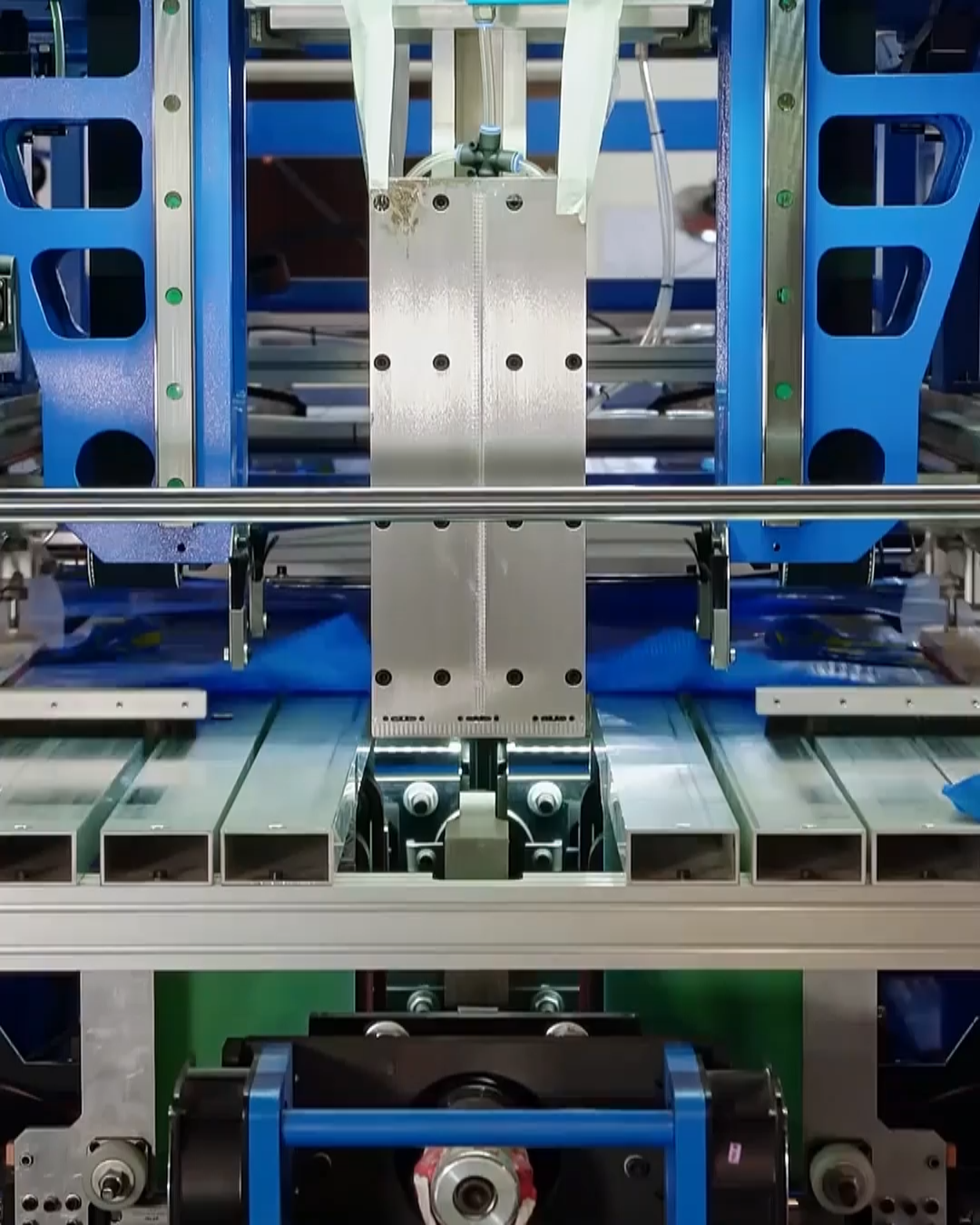
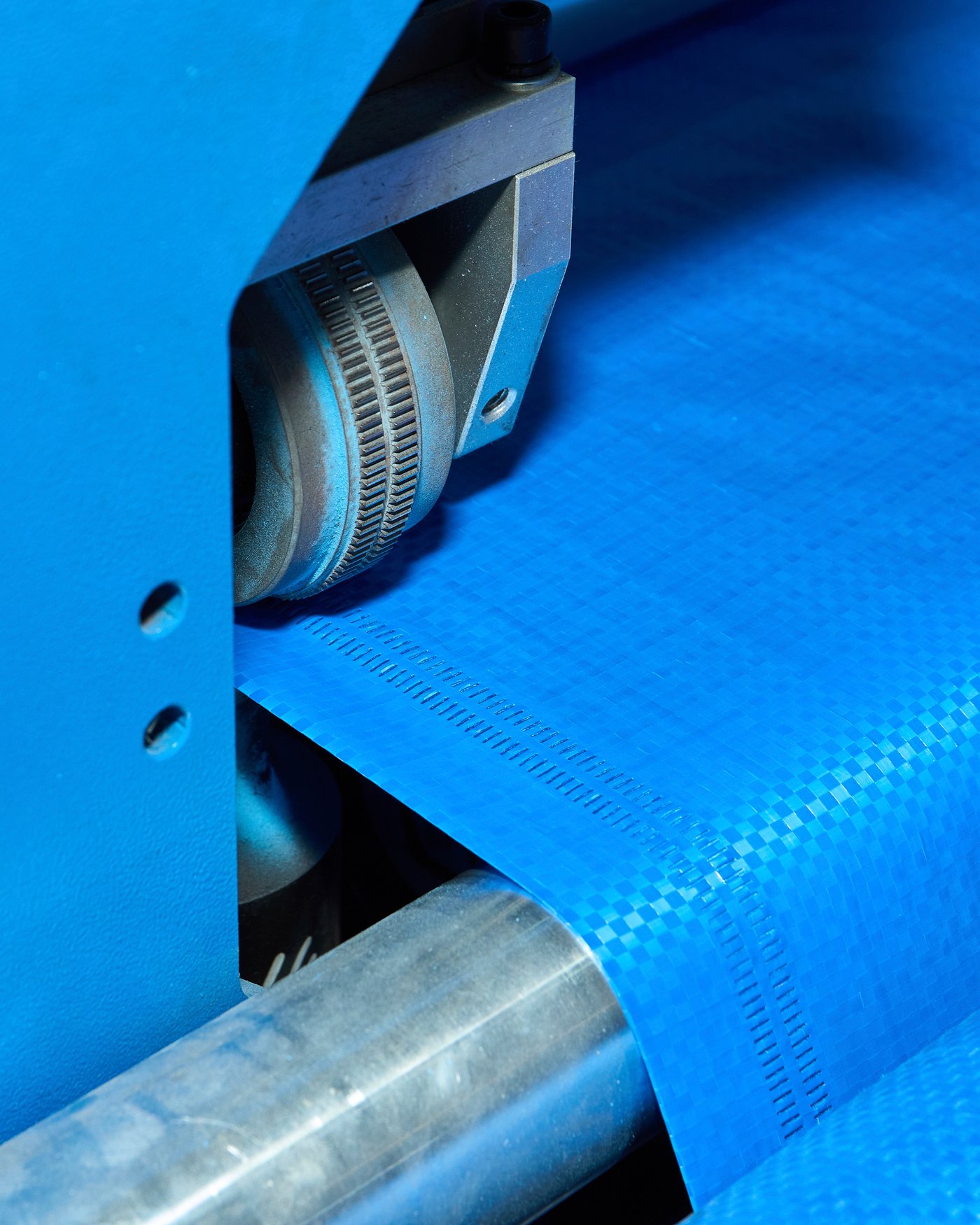
Although we've made updates to FRAKTA, the good news is that you probably won't even notice the changes. It's just as big, blue and unmistakably IKEA as always. So, what has changed? Well, originally produced by hand, thanks to a new production process, FRAKTA bags are now made by fully automated machines that can produce more than one bag per second! Automation ensures consistent quality and durability, without affecting the low price.
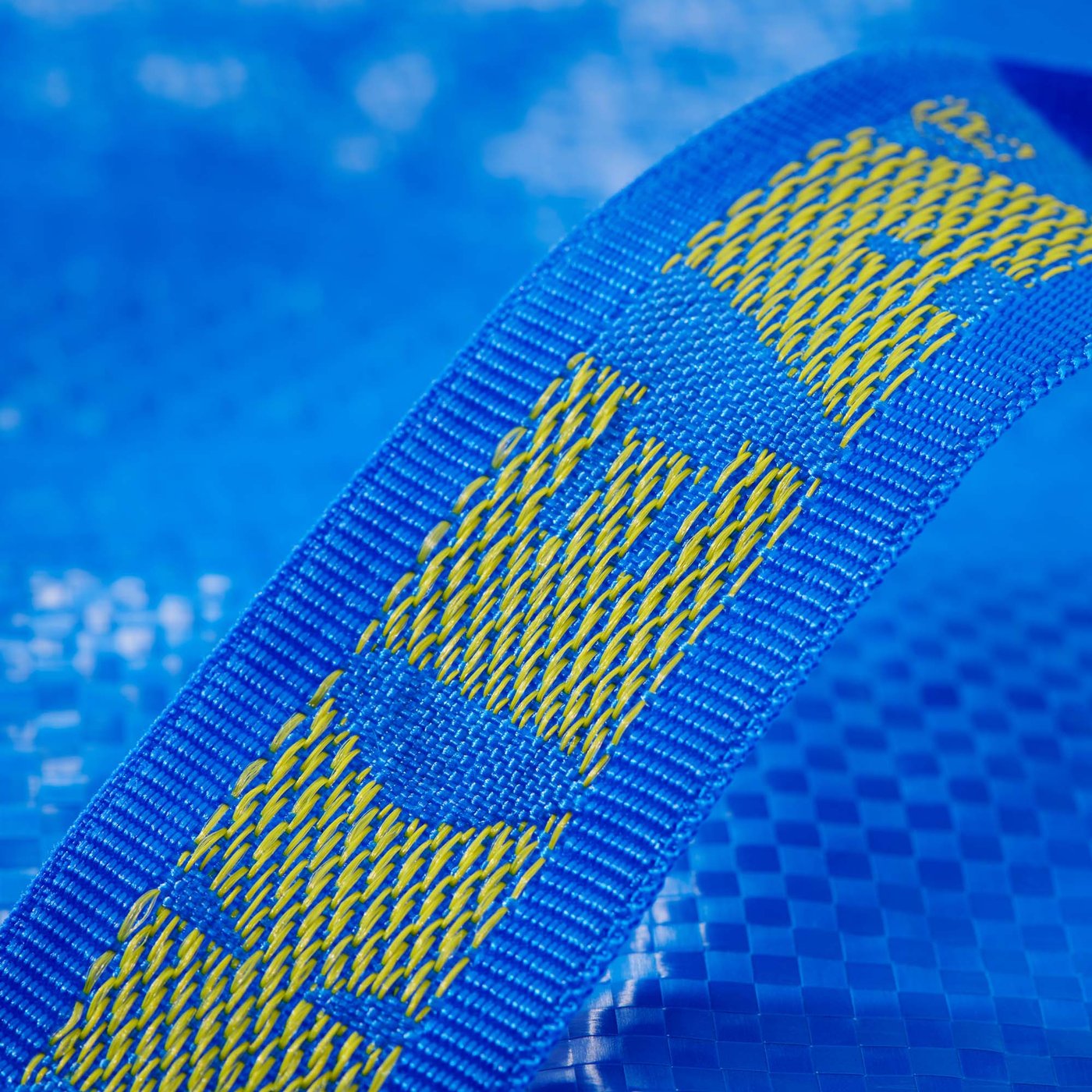
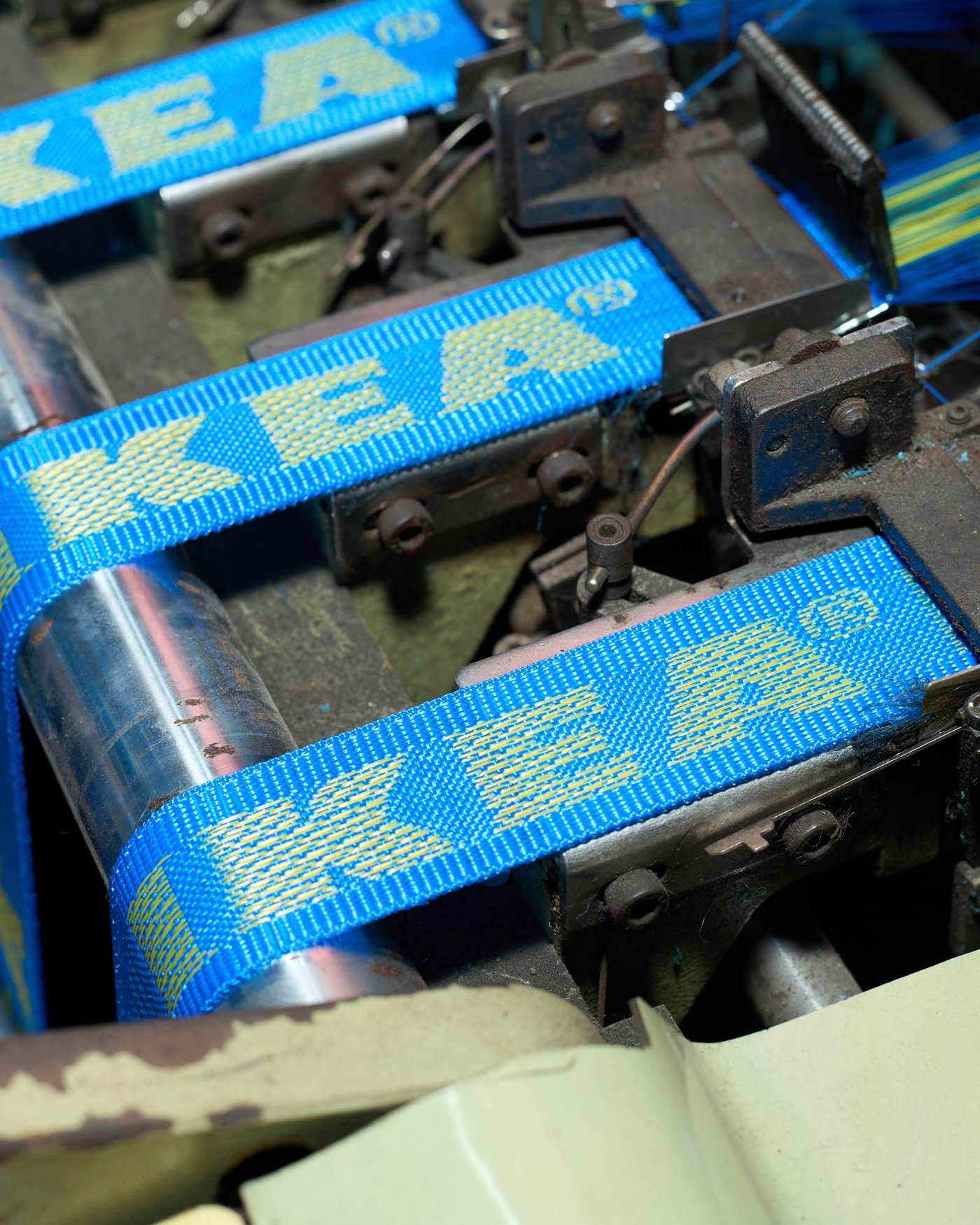
And then there's the new welded handles; "You may not think that something as simple as welding a handle and top edge of the bag instead of sewing is a big thing, but this alone saves almost 89,000 kilometres of sewing thread!" explains Product Development Engineer Anna Dal Santo.
“Since we launched the FRAKTA carrier bag in 1996, we have continuously advanced our material agenda, finding new ways to decrease overall resource use while still growing our business. The updated bag is a great example of product design and how we have accelerated innovation and development solutions, moving away from virgin materials towards more recycled and renewable content in our products.”
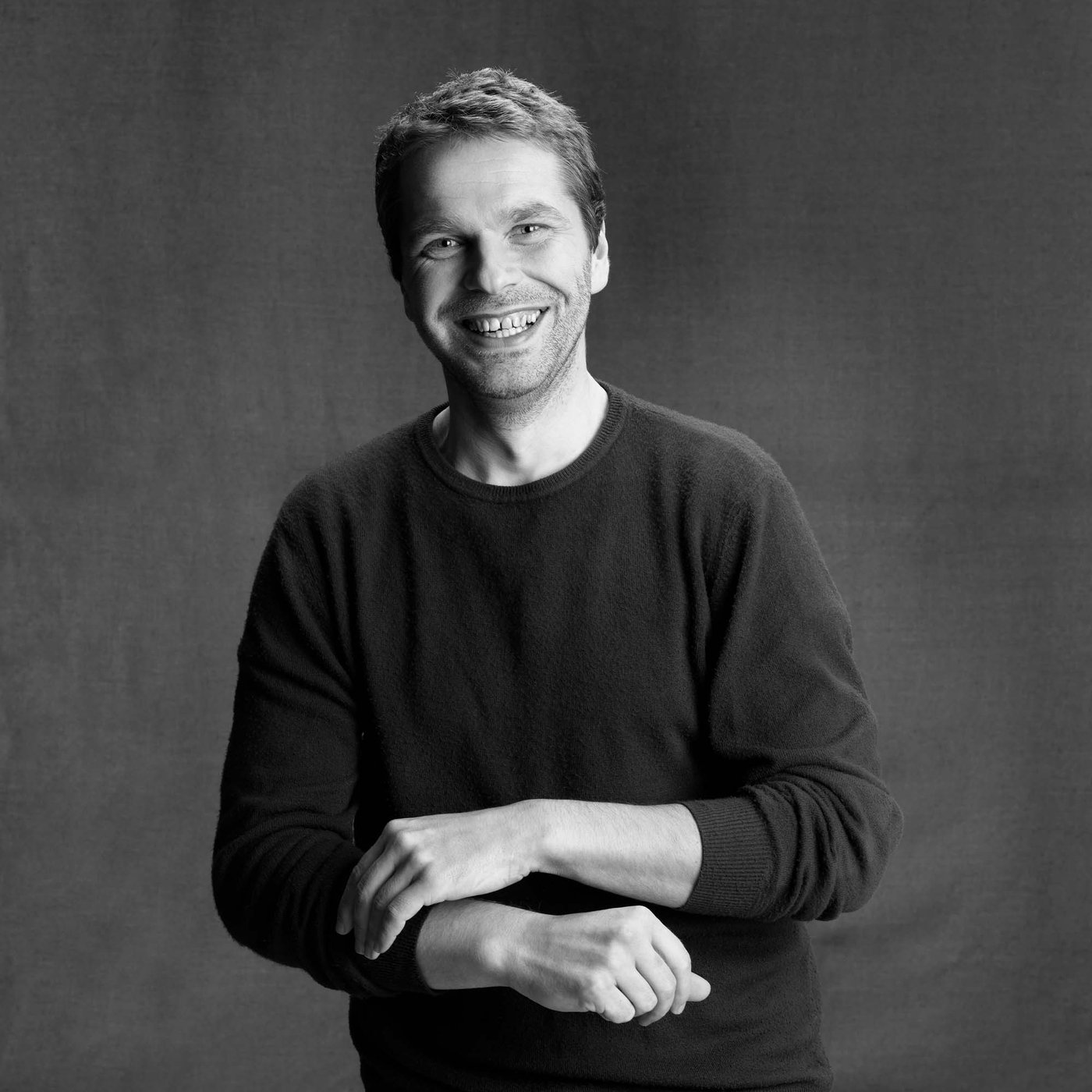
Jakub Brat
Engineering Manager, IKEA of Sweden
Going full circle
Since 2017, our team of developers, engineers and suppliers have been working to increase the use of recycled materials, without affecting the qualities of FRAKTA that make it such an icon.
“Achieving a high share of recycled material content in the FRAKTA bag meant overcoming significant technical challenges. Recycled polypropylene requires additional processing and quality control, while redesigning the FRAKTA bag to use a single material involved rethinking key elements of the bag without compromising strength or affordability. Through years of testing and close collaboration with suppliers, the team was able to transform how the FRAKTA bag is made while keeping it recognisably FRAKTA,” explains Jakub Brat, Engineering Manager at IKEA of Sweden.
“There were a lot of technical challenges, like making the handles from the same recycled material as the rest of the bag, but thanks to the team and our suppliers, it was possible - everything is possible.”
Jakub Brat
Engineering Manager, IKEA of Sweden
How it’s made
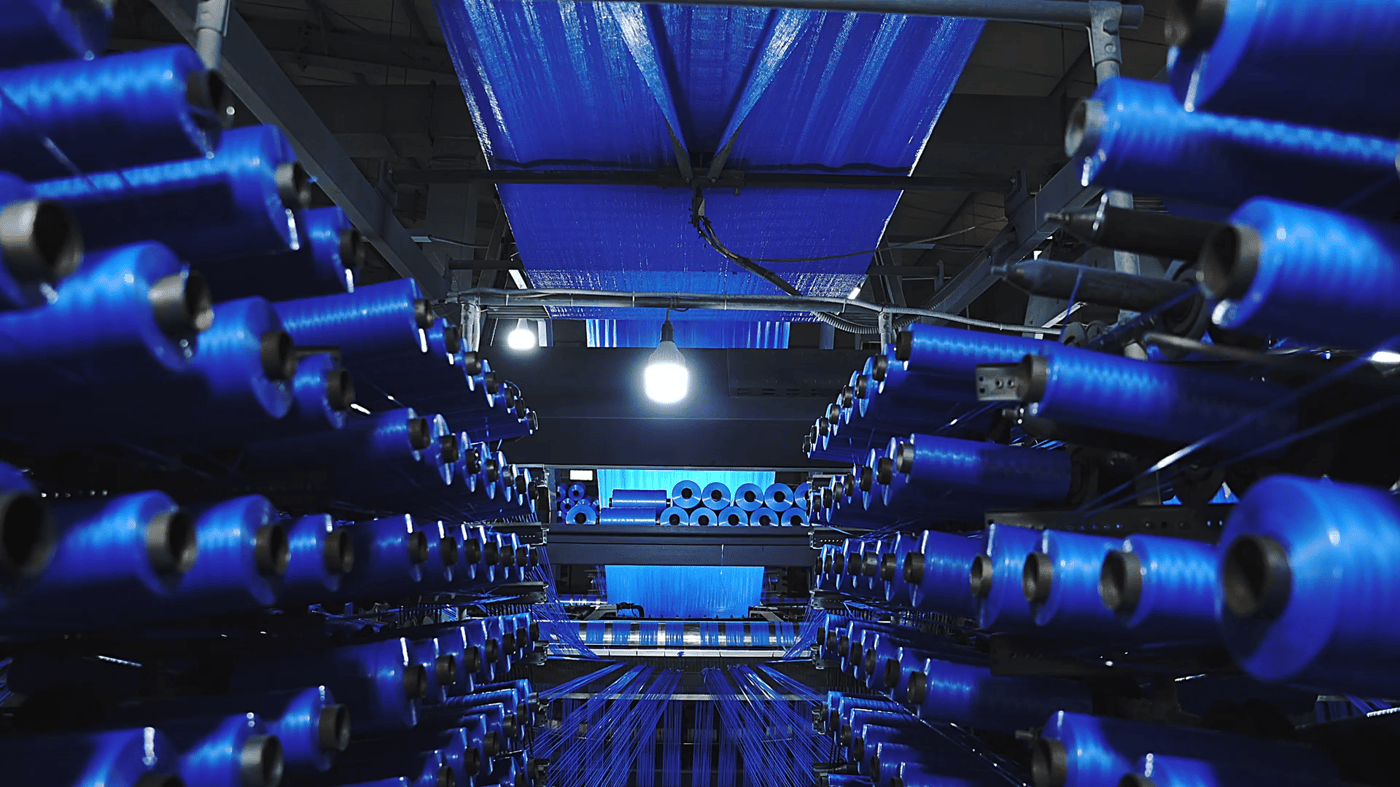
FRAKTA production is broken down into three stages: Raw material preparation, fabric construction and production of the bag. The first step is the sorting, washing and grinding of the plastic packaging and FRAKTA factory waste into small pieces. This is then melted down and made into a film, which is cut into strips before it is woven into fabric. Then, the fabric is coated, giving it a shiny, water-repellent finish, before it is welded into its beloved blue form.
Developing the new handle was also complex. Made from from the same material base, it is melted down and extruded into filaments. However, the recycled content makes the filaments more complex to weave, so making something as slim as a handle was tricky. Working together with suppliers, it’s now part of a seamless process, if you’ll pardon the pun.
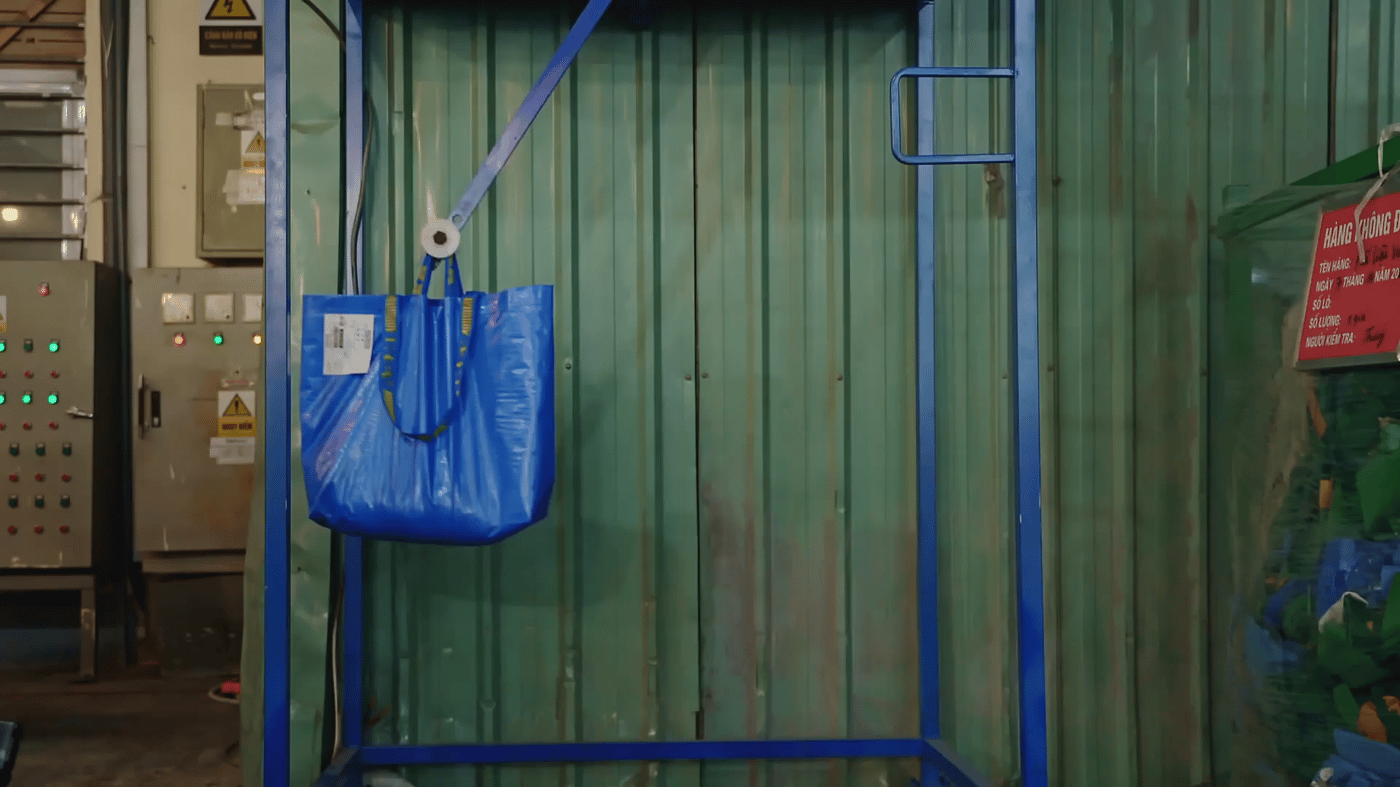
Testing the bag.
"One of the biggest challenges in the new production process was to create a coated fabric from recycled content. To achieve that was a real breakthrough.”
Anna Dal Santo
Product Development Engineer, IKEA of Sweden
A bag for life
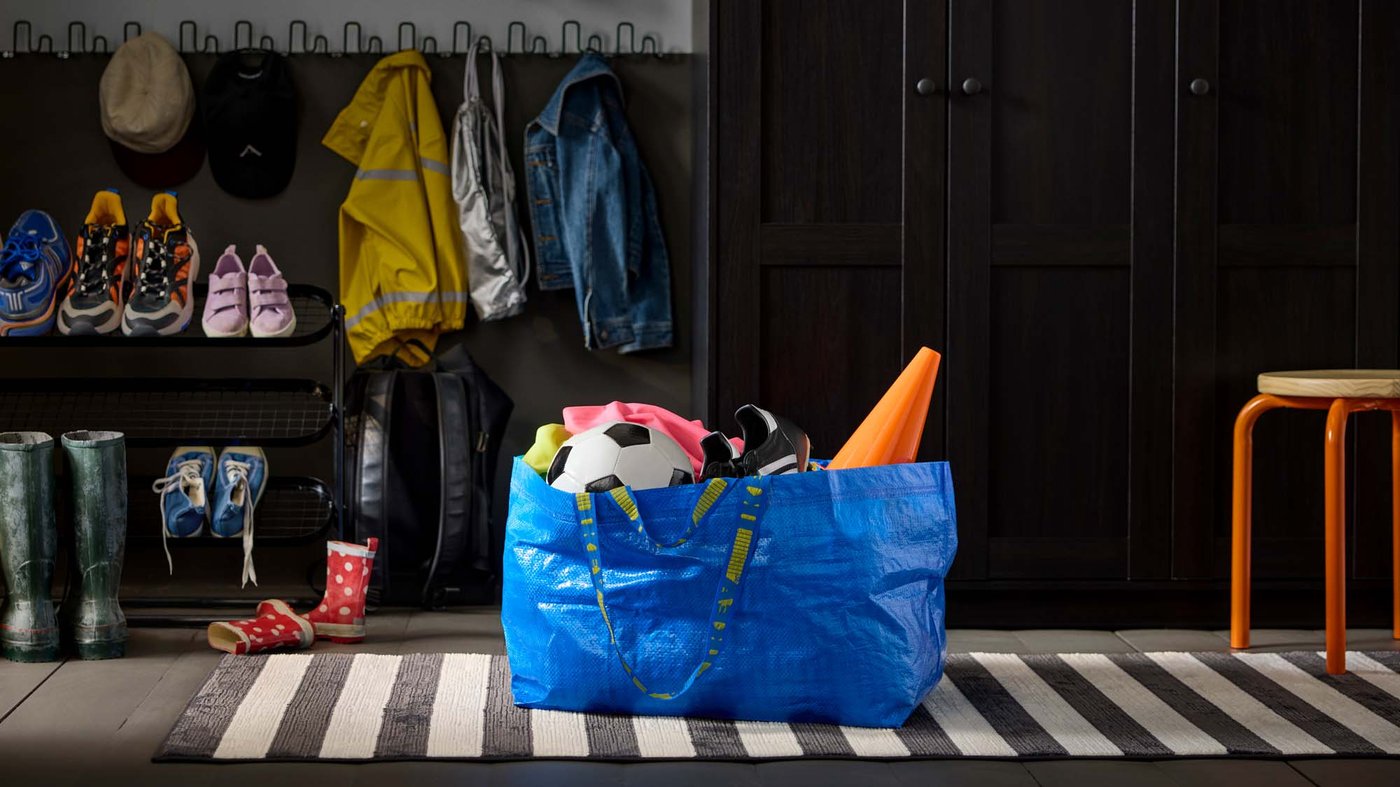
For three decades, the big blue FRAKTA carrier bag has become a reliable everyday companion. From shopping and laundry to moving home and even working out, there’s little this bag can’t handle, and the journey to make it even better in the future continues. Here’s to the next 30 years of FRAKTA!

[1] Material and production changes apply to the FRAKTA 36 litre and 71 litre carrier bags only, with plans to extend it to the rest of the FRAKTA family in the future.
[2] The updated FRAKTA was launched globally in April 2026, with the exception of all markets in Asia Pacific, Egypt and Kuwait, which will launch from October 2026.
Dig deeper into the big blue bag
Curious to know more about our everyday hero? Dig in and read more about the FRAKTA carrier bag, from past to present!