
Our view on protecting children's rights
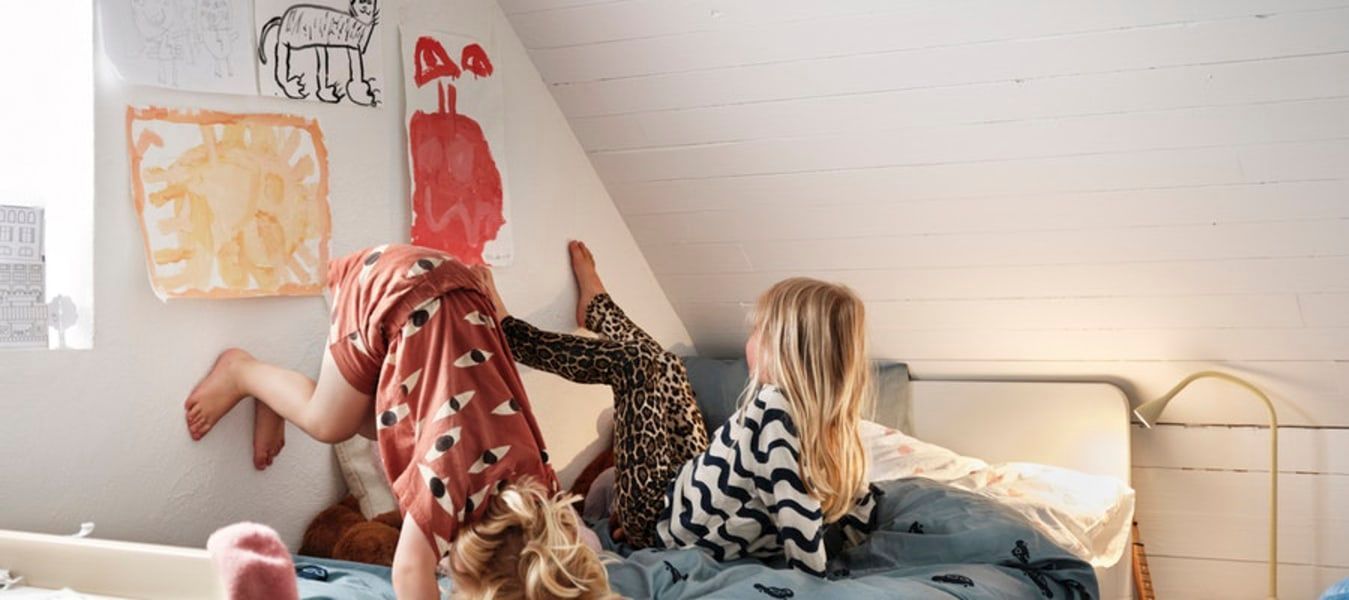
IKEA is committed to and keeps taking actions to integrate a child rights perspective into our business activities. This is one major task for IKEA to fulfil our actions on sustainability. We collaborate with and inspire others to take actions for protecting children's rights as well.
All childrengo to footnote[1] have rights, everywhere and always. At the same time, children are among the most vulnerable members of society and often lack a public voice. They are key stakeholders of the IKEA business – as members of the communities and environments where we operate, as users of our products and customers, as family members of co-workers, as young workersgo to footnote[2] and as future co-workers and IKEA leaders.
As a global business we have a big responsibility to demonstrate leadership and to be aware of our impact throughout the entire IKEA value chain – from how we source raw materials, all the way to design, production, marketing, and sales that impact the rights of children, directly and indirectly. Most importantly, in everything we do, we act in the best interest of children.
Based on the Children’s Rights and Business Principles and the UN Guiding Principles on Business and Human Rights, IKEA has identified key actions focusing on preventing risks for children, such as through our focus on the prevention of child labour, ensuring our products are safe, and strengthening child safeguarding practices. Actions also seek to promote the rights of children, through inspiring and enabling children to play and develop, actively seeking to involve them as stakeholders in our business.
We continuously review and develop our approach so that we can effectively address the most relevant risks to children and act where we as a business have the biggest impact. We recognise that it requires continuous effort to integrate children's rights into everything that we do.
Prevent child labour and support young workers
IKEA does not accept child labour.go to footnote[3] Children have the right to their childhood, and we take actions to protect this right. However, the current situation of child labour continues to be concerning. While the latest UN figures show certain progress in global efforts to end child labour, around 138 million children across the world are still affected. Among all children in child labour, two in five (54 million) perform hazardous work. These figures mask significant differences across regions, age groups, and between boys and girls.
The IKEA business has a long history of working to tackle the issue of child labour, dating back to the late 1990s when we established IWAY, the IKEA way of procuring products, services, materials and components. We promptly investigate and follow up on any suspected cases of child labour and keep challenging ourselves and our suppliers to do even better and to focus resources where they will make the most difference.
IKEA is a member of the ILO Child Labour Platform. The aim is to increase efforts on child labour due diligence and accelerate the collaboration with other partners to tackle issues in deeper supply chains.
Whilst we work actively to prevent and tackle the issue of child labour, we also recognise the opportunity to positively impact young people who are engaged in work – young workers. This group is in many parts of the world lacking access to education and access to decent working opportunities in formal work and instead, falling into informal work and hazardous work situations. IKEA takes actions to provide and promote learning and working opportunities for young people and tackle the exclusion that this group is facing. One example is from Southeast Asia and South Asia where we have initiated a programme offering several hundred young workers mentored employment at our suppliers in a number of countries in the region. We seek to scale up the programme to other countries, as well as further strengthen the inclusion of young workers in the IKEA supply chain in a systematic and continuous way, including providing decent workgo to footnote[4] and learning opportunities.
Side with children
To side with children means to actively involve and listen to children, and bring the voice of children and young people into the IKEA business. All children have the right to express their opinions and views in all matters that concern them. We believe that the voices of children and young people should be heard, both inside IKEA and in society at large, and we are playing a part of promoting their right to actively participate – for instance, we involve children in the process of product development for their inputs and ideas, etc.
To integrate children’s rights into our business also means addressing our impact on children through marketing and communication. We have specific guidelines on how to apply a children’s rights perspective in our marketing and communication.
In addition, we work with our partners to explore how we can strengthen policies and practices to offer a family-friendly workplace. These are some of the recent steps we have taken to strengthen our children’s rights approach in our value chain.
Inspire and enable children to develop
Play is a critical part of every child’s development. It contributes directly to health and well-being, cognitive development, self-esteem, and skills building. But around the world children are spending less and less time playing.
We believe children are the experts in telling us what they like and what they need. By having children participating in our product development, as well as other work processes, we learn from their needs, dreams, opinions, and ideas, which helps us develop an inclusive offer. Therefore, we actively involve children in focus groups in our product development process, and through our international digital panel – the Kids Advisory Panel – where we get input from 40 advisors in the age group of 6-14 from different parts of the world. This is one example of how we have moved away from guessing what children think to simply asking them!
We also want to promote children's right to play and act beyond our own operations together with others. In 2018, IKEA founded the Real Play Coalition together with Unilever, the LEGO Foundation and others. The goal was to create a movement that prioritises the importance of play as something that not only lets children be children, but also sparks the fire for a child’s development and learning. Through five years of events and collaboration, the Real Play Coalition inspired and connected a movement of people and organisations that provide millions of children with more time and space for play. Since then, we have continued our engagement to support the right to play. The IKEA Play Report 2024 contains the findings from an extensive international research study on play and playfulness at home.
Engage and work with others to realise children's rights
Beyond the work we do to integrate children's rights into our own operations, we also help influence change for children and advocate for their rights together with others. We take an active role in promoting children's rights through partnerships and other engagements.
The IKEA business has a long-standing relationship with UNICEF, in 2023 we announced a new partnership that will contribute towards further implementation of the child rights agenda with a focus on three areas: climate adaptation, family-friendly policies, diversity and inclusion, and children's rights in a digital world.
It is only by raising our voice together with others – suppliers, customers, governments, NGOs, and others – that we can achieve long-term improvement for children. We take measures to be a force for good and inspiration as we work towards our goal to always act in the best interest of children.
[1] A young worker is someone under the age of 18, and above the minimum legal working age, who is engaged in work. Source: ilo.org
[2] Child/children: every human being under 18 years old.
[3] Child labour is work that deprives children of their childhood, their potential, and their dignity – and that is harmful to physical and mental development.
[4] Decent work: should provide a fair income, security, social protection, rights at work, social dialogue, personal development, and social integration.